
How Can a Sump Pump Failure Flood a Basement During Heavy Rain?
When a sump pump fails during heavy rain, groundwater and storm-related seepage can begin filling the sump pit and then overflow into the basement, leading to standing water, wet flooring, soaked drywall, damaged contents, and conditions that may require emergency extraction, drying, plumbing repair, and restoration. A sump pump system is designed to move water away from the foundation before it floods the basement, but that protection can fail if the pump loses power, becomes overwhelmed, develops a mechanical problem, or has a blocked discharge line.
Heavy rain places more pressure on the foundation, increases groundwater levels, and may send a larger volume of water into the sump pit than normal. If the pump does not activate or cannot keep up, the basement can take on water quickly. What begins as a pump issue can escalate into a broader water damage problem affecting flooring, walls, insulation, stored items, appliances, and nearby finished areas.
Even if the water looks limited at first, the affected basement should be evaluated carefully. Moisture can spread beneath flooring, into wall cavities, behind baseboards, around appliances, and into porous materials that do not dry properly on their own.
Quick Answer
If a sump pump fails during heavy rain, the sump pit can overflow and water may enter the basement through floor-wall joints, cracks, drains, or low areas. Immediate concerns include standing water, electrical hazards, wet contents, flooring damage, humidity, and secondary mold risk if drying is delayed. Start by using electrical caution, documenting conditions, protecting contents when safe, and arranging emergency plumbing and water damage restoration when the basement has flooded or the source cannot be controlled quickly.
Key Takeaways
- A sump pump failure during heavy rain can allow groundwater and seepage to enter the basement quickly.
- Power loss, pump overload, switch failure, blocked discharge lines, and lack of maintenance are common causes.
- Standing basement water can damage drywall, flooring, trim, contents, appliances, and nearby finished spaces.
- Water may continue entering even after rain slows if groundwater remains high around the foundation.
- Electrical safety is a priority whenever water is near outlets, appliances, extension cords, or basement equipment.
- Removing visible water is only one step. Wet materials and concealed moisture still need inspection and drying.
- Prompt extraction and drying help reduce additional deterioration, odor, and mold-related concerns.
- Plumbing repair, pump repair or replacement, water extraction, drying, and restoration should be coordinated together.
Table of Contents
- Why sump pumps matter during heavy rain
- What happens after a sump pump fails
- Why sump pumps fail during storms
- Warning signs of sump pump failure
- What to do immediately
- What basement flooding can damage
- How professional extraction and drying work
- Whether the sump pump can be repaired or replaced
- How long cleanup and restoration may take
- What affects the restoration cost
- Insurance documentation considerations
- Northern Illinois and Southern Wisconsin risks
- Frequently asked questions
Why Does a Sump Pump Matter During Heavy Rain?
A sump pump is part of a basement water-control system designed to collect and discharge water before it spreads into the finished or unfinished basement. During heavy rain, more water may reach the drainage system around the foundation, increasing the amount entering the sump pit.
When the system is working correctly, the pump activates and sends water out through the discharge line to a safe drainage point away from the structure. When it fails, the pit can rise until water escapes into the basement or until seepage appears along the floor perimeter, foundation joints, or cracks.
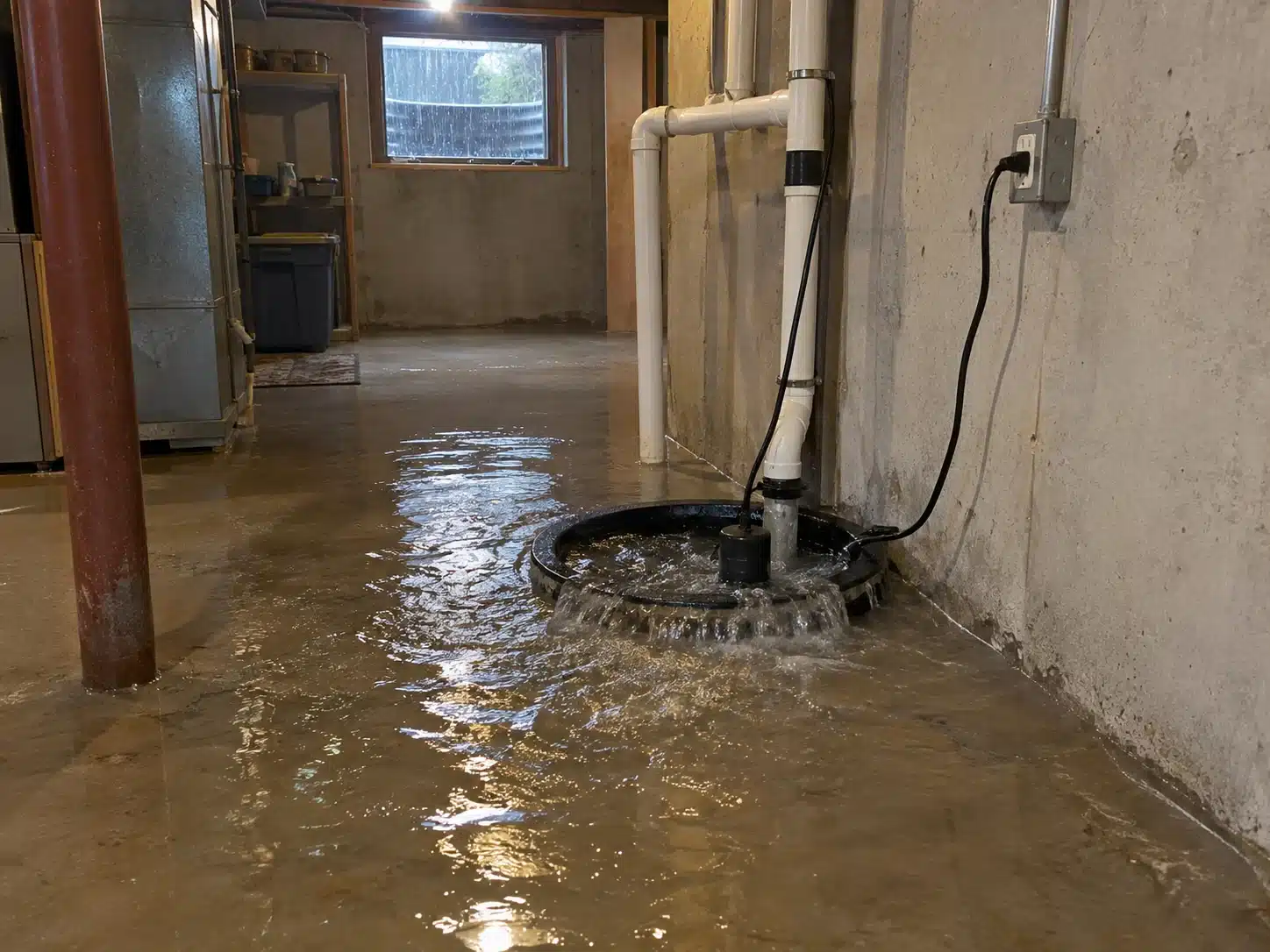
Heavy Rain Increases Hydrostatic Pressure
As the soil around the home becomes saturated, water pressure builds against the foundation. This can force moisture toward the basement drainage system and any vulnerable joints or openings.
If the pump is not removing water fast enough, the basement may begin taking on water even if there is no broken pipe inside the home.
The Problem May Continue After the Storm
Some property owners assume the risk ends once rainfall slows down. In reality, groundwater can remain elevated after the storm, which means the sump pit may continue filling for hours or longer. A failed pump can therefore cause continuing water intrusion even after the heaviest rain has passed.
What Happens After a Sump Pump Fails?
What happens next depends on how much water is entering the system, how long the failure goes unnoticed, and whether the basement is finished, partially finished, or unfinished.
Common results of sump pump failure during heavy rain include:
- Overflowing sump pit water
- Standing water on basement floors
- Water along the wall-floor joint
- Wet carpet, padding, laminate, vinyl, or hardwood
- Moisture reaching drywall, baseboards, framing, and insulation
- Damage to furniture, boxes, stored belongings, and appliances
- Elevated humidity and musty odor
- Possible mold growth if materials remain wet
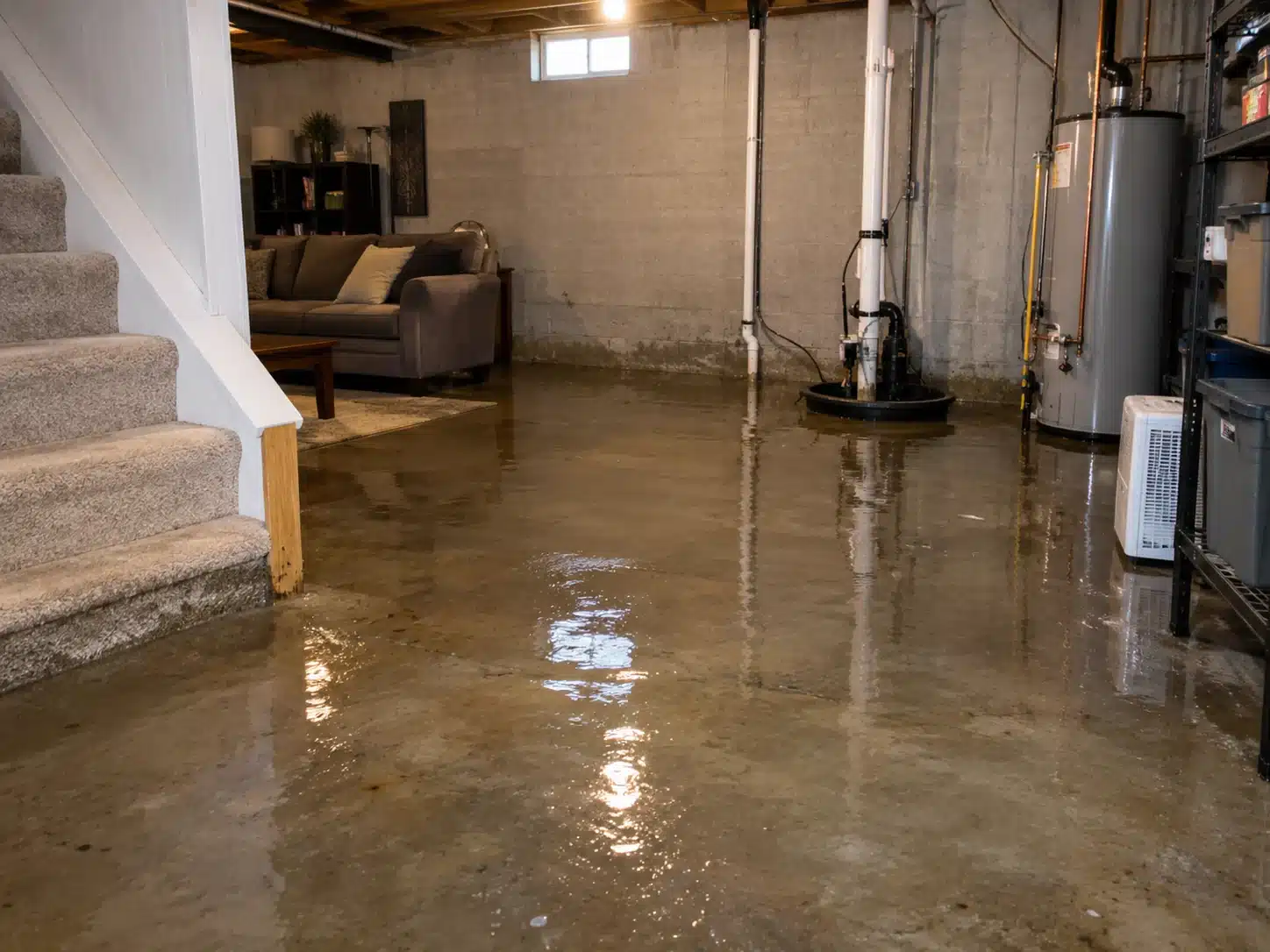
Finished Basements Often Suffer Hidden Damage
Carpet, padding, trim, drywall, and insulation can absorb or trap water. The visible puddle may be only part of the actual moisture boundary. Water can extend below flooring materials or behind finished walls.
Unfinished Basements Can Still Have Significant Losses
Even without finished flooring or wall coverings, water can affect stored contents, utility areas, appliances, framing, electrical components, and the lower portions of walls.
Why Do Sump Pumps Fail During Storms?
Heavy rain often exposes an existing weakness in the sump pump system. The pump may already have wear, debris buildup, or discharge problems that become obvious only when the basin fills rapidly.
Common Causes of Failure Include:
- Power outage during the storm
- Tripped breaker or unplugged pump
- Pump motor failure
- Float switch stuck, jammed, or not activating
- Pump capacity too small for the incoming water volume
- Discharge line blockage, freeze, or obstruction
- Check valve failure
- Backup pump or battery backup failure
- Age, corrosion, debris, or lack of maintenance
Power Loss Is a Major Risk During Storms
A sump pump may be mechanically sound but still stop protecting the basement if the home loses electricity during heavy rain. This is why some properties rely on battery backup or secondary systems.
An Overwhelmed Pump Can Act Like a Failed Pump
Sometimes the motor still runs, but the amount of incoming water exceeds the pump’s capacity. In that situation, the basin continues rising and the basement may still flood.
Discharge Problems Can Send Water Back Toward the Home
A clogged, crushed, disconnected, or poorly routed discharge line can prevent water from being expelled properly. Water may back up or cycle inefficiently instead of leaving the area.
What Are the Warning Signs of Sump Pump Failure?
Some failures are immediate and obvious. Others show warning signs before serious flooding occurs.
- Water level in the pit is high and not dropping
- The pump does not turn on when the pit fills
- The pump runs continuously without lowering the water enough
- Unusual noises, vibration, or humming
- Water appears on the basement floor near the sump area
- A damp or musty smell develops after rainfall
- The discharge line is not releasing water outside
- The backup system alarm activates
- Repeated cycling or short cycling occurs
A Dry Basement Yesterday Does Not Mean Today Is Safe
Sump pump issues often become noticeable only during periods of heavy rain or high groundwater. A system that seemed adequate during normal conditions may fail under storm load.
What Should You Do Immediately?
-
Use electrical caution first.
Do not walk through standing water if outlets, extension cords, appliances, or electrical equipment may be affected. Avoid touching wet electrical components.
-
Document the visible conditions.
Take photos or video of standing water, the sump area, damaged contents, flooring, appliances, wall damage, and any visible cause or overflow point.
-
Protect contents when safe.
Move boxes, furniture, rugs, electronics, and valuables out of the affected area if you can do so safely.
-
Check the sump pump only if conditions are safe.
A tripped breaker, unplugged cord, or visibly jammed float may indicate the issue, but do not attempt unsafe electrical work in wet conditions.
-
Call for emergency plumbing help.
If the pump has failed, the discharge is blocked, or the system is not operating properly, contact McMahon Services emergency plumbing for diagnosis and repair.
-
Arrange water extraction and drying.
Standing water and saturated materials should be addressed promptly. McMahon Services provides professional water extraction after flooding and broader water and sewage damage restoration.
-
Review immediate basement cleanup steps.
For practical first-response guidance, see McMahon Services’ article on basement flood cleanup first steps.
Safety Warning: Do not assume basement floodwater is harmless. Electrical hazards, contaminated water, slipping hazards, and damaged materials may all be present. If the source, safety condition, or extent of water damage is unclear, professional evaluation is the safest approach.
What Can Basement Flooding Damage?
| Affected Item or Material | Possible Damage | Restoration Consideration |
|---|---|---|
| Carpet and padding | Absorption, odor, staining, microbial growth, deterioration | May require extraction, lifting, specialty drying, cleaning, or removal depending on water condition and duration. |
| Drywall and insulation | Wicking, swelling, staining, hidden moisture, softening | Moisture inspection is needed to determine whether drying is possible or removal is required. |
| Laminate, wood, or vinyl flooring | Warping, cupping, swelling, adhesive failure, trapped moisture | Drying approach depends on material type, installation system, and length of exposure. |
| Baseboards and trim | Swelling, warping, finish damage, separation | Sound materials may sometimes be retained, while composite trim often requires replacement when swollen. |
| Stored belongings | Water exposure, staining, odor, contamination, material breakdown | Contents cleaning, pack-out, drying, or disposal may be necessary depending on the item and water condition. |
| Appliances and utilities | Electrical damage, corrosion, unsafe operation | Affected equipment should be evaluated before reuse. |
| Subfloor and framing | Elevated moisture, odor, long-term deterioration if not dried | Moisture mapping and structural drying help determine the actual wet boundary. |
Finished Materials Can Hide Moisture
Water does not always stay visible on the concrete floor. It can wick into drywall, move under flooring, and remain behind trim or inside insulation long after puddles are removed.
How Does Professional Basement Water Extraction and Drying Work?
Once the failed sump pump issue is being addressed, the next priority is removing water and stabilizing the damaged area. Professional response generally includes extraction, inspection, drying, and restoration planning.
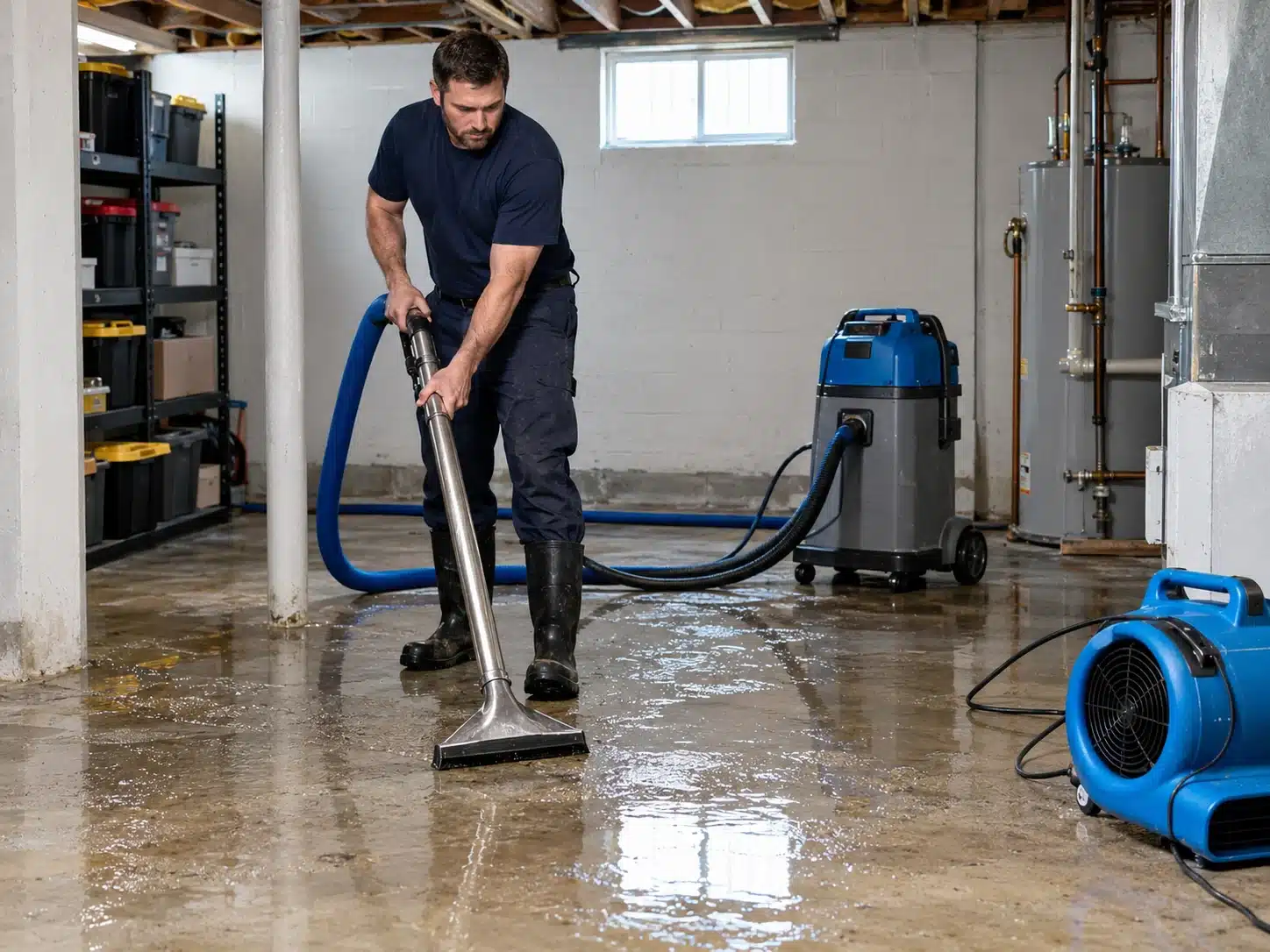
1. Water Extraction
Standing water is removed using equipment suited to the amount of flooding and the site conditions. Faster extraction helps limit additional absorption into nearby materials.
2. Moisture Inspection and Mapping
Technicians assess flooring, walls, baseboards, contents, and adjoining rooms to determine how far water has spread. This helps define the actual scope rather than treating only the visible puddle.
3. Removal of Unsalvageable Materials When Necessary
Some saturated materials can be dried and restored, while others may require removal due to damage, contamination, or inability to dry properly.
4. Structural Drying
Air movement, dehumidification, and monitored drying may be used as appropriate for the materials and moisture conditions present.
5. Cleaning and Restoration
After extraction and drying, the area may require cleaning, odor control, repairs, and reconstruction depending on the scope of loss.
McMahon Services provides coordinated response for both the immediate flood condition and the broader restoration process.
Can the Sump Pump Be Repaired or Does It Need Replacement?
The answer depends on why it failed. Some issues are related to a power interruption, float switch problem, discharge blockage, or maintenance issue. Other failures involve an aging or damaged pump that needs replacement.
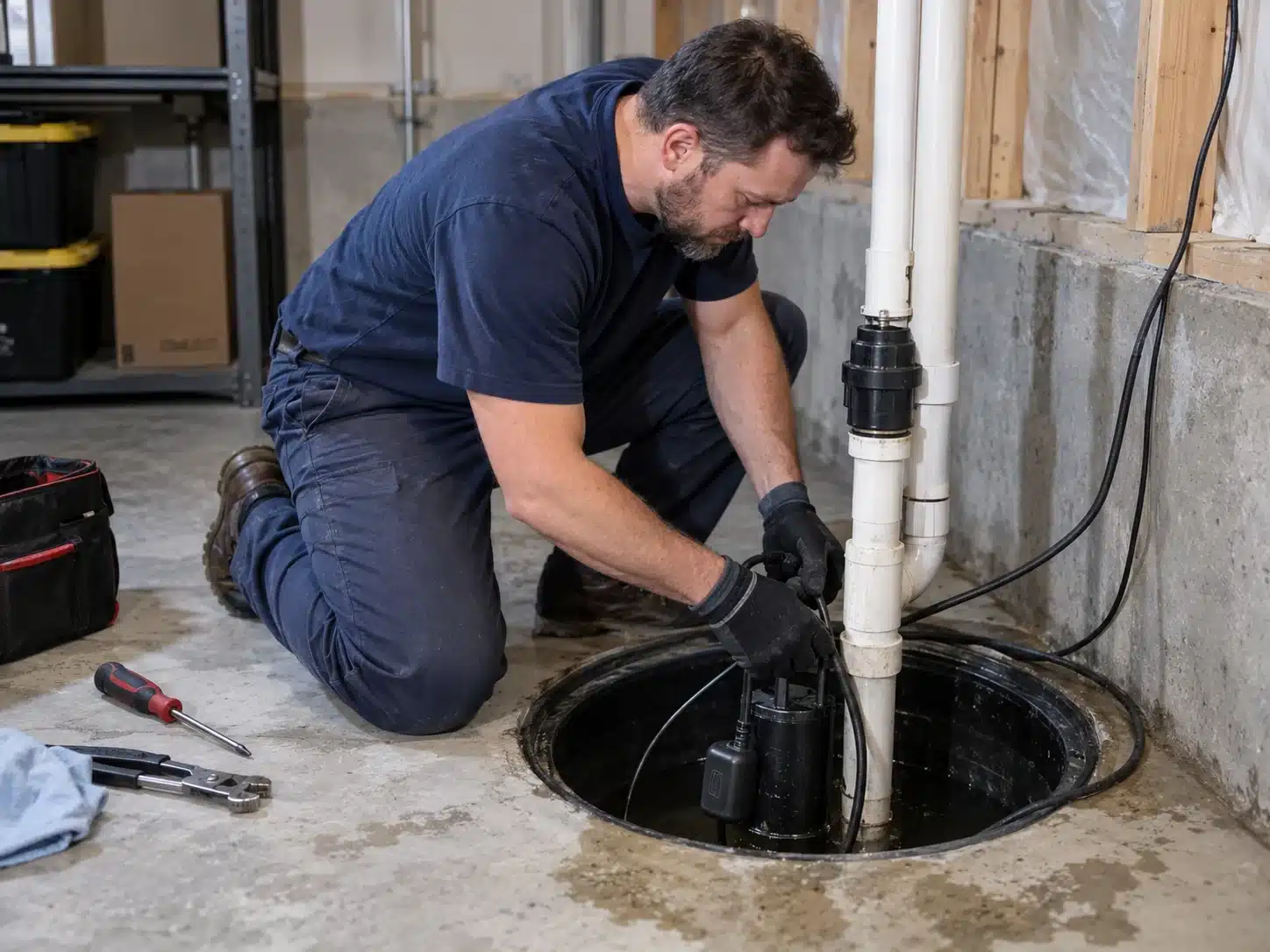
Repair May Be Possible When:
- The float switch is jammed or malfunctioning
- The discharge line is obstructed or disconnected
- A check valve issue is preventing proper flow
- The unit is otherwise in serviceable condition
Replacement May Be More Likely When:
- The motor has failed
- The pump is undersized for the property’s water load
- The system has repeated breakdowns
- The unit is old, corroded, or unreliable
- The property needs a backup system or upgraded setup
Prompt plumbing and system evaluation is important because the basement can continue taking on water until the drainage function is restored.
How Long Does Cleanup and Restoration Take?
There is no single timeline for all sump pump failures. A small amount of water in an unfinished basement may be resolved faster than a major loss affecting finished rooms, walls, flooring, and contents.
| Timeline Factor | Why It Matters |
|---|---|
| Amount of water | Greater flooding usually means more extraction time and more affected materials. |
| How long the flooding continued | Longer exposure allows water to spread farther and soak deeper into materials. |
| Finished versus unfinished basement | Finished spaces typically involve more materials that need inspection, drying, or reconstruction. |
| Pump repair or replacement | The water-control system must be restored to reduce continuing intrusion. |
| Drying progress | Rebuilding should wait until retained materials reach an appropriate dry condition. |
| Contents and reconstruction scope | Cleaning personal property and replacing damaged finishes can extend the project. |
The overall schedule should be based on extraction, pump-system correction, drying verification, and the repair scope rather than a fixed number of days.
What Affects the Cost of Sump Pump Failure Restoration?
The cost depends on more than the pump itself. The total scope may include emergency plumbing, extraction, drying, material removal, contents handling, and reconstruction.
Common cost factors include:
- Whether the sump pump needs repair or full replacement
- The amount of standing water in the basement
- How many rooms or materials were affected
- Whether the basement is finished
- Flooring, drywall, trim, and insulation damage
- Contents cleaning or disposal needs
- Electrical or appliance involvement
- Drying equipment and monitoring requirements
- Any odor, contamination, or secondary mold concerns
- The amount of reconstruction required after drying
A small visible wet area can still hide a larger moisture issue, while a wider wet area in an open unfinished basement may sometimes be easier to inspect and dry. Site-specific evaluation is needed for a dependable scope.
What Should You Document for an Insurance Claim?
Insurance coverage depends on the policy and the specific cause of loss. When it is safe to do so, document the conditions before cleanup progresses too far.
- The date and time the flooding was discovered
- Visible standing water and water lines
- The sump pit condition and pump status
- Any heavy rain or storm conditions occurring at the time
- Damaged flooring, walls, trim, and contents
- Utility or appliance involvement
- Plumbing or sump pump repair findings
- Extraction, drying, and restoration records
- Before-and-after photographs
- Receipts, invoices, and replacement estimates
Do not discard major damaged items before documenting them unless immediate removal is required for safety or sanitation reasons.
Why Is Sump Pump Failure a Serious Concern in Northern Illinois and Southern Wisconsin?
Homes and buildings throughout Hainesville, Lake County, Northern Illinois, Southern Wisconsin, and surrounding communities can experience strong storms, heavy seasonal rainfall, snowmelt, and periods of saturated ground conditions. These factors place extra stress on basement drainage systems.
Regional risks may include:
- Heavy spring and summer rainstorms
- Rapid snowmelt that raises groundwater
- Storm-related power outages
- Older homes with vulnerable basements or drainage limitations
- Finished basements containing carpet, drywall, and stored belongings
- Repeated water entry if drainage or pump issues are not fully corrected
During a major storm, a sump pump problem may not remain a small maintenance issue. It can quickly become an emergency basement flooding event requiring coordinated plumbing and restoration response.
Professional Tip: If the basement floods because the sump pump failed, fixing the pump alone is not enough. The floor, lower walls, trim, contents, and any concealed wet materials should still be evaluated so the property is dried and restored correctly.
Get Help After a Sump Pump Failure
A sump pump failure during heavy rain can lead to basement flooding, damaged contents, wet flooring, wall damage, and hidden moisture that continues affecting the property after the storm. Quick action helps reduce further damage and supports a more organized cleanup process.
McMahon Services & Construction Corp can coordinate sump pump diagnosis, emergency plumbing, water extraction, structural drying, and full water damage restoration for flooded basements and related storm damage.
The team serves homes and businesses throughout Hainesville, Lake County, Northern Illinois, Southern Wisconsin, and surrounding communities.
Call McMahon Services at (847) 566-4568 for 24/7 help with sump pump failure, basement flooding, heavy rain water damage, extraction, drying, and restoration.
Frequently Asked Questions About Sump Pump Failure During Heavy Rain
Can a basement flood quickly if the sump pump fails during a storm?
Yes. If heavy rain is filling the drainage system and the sump pump does not remove water, the sump pit can overflow and water may spread across the basement floor or enter through foundation joints and low areas.
Should I wait until the storm is over before calling for help?
No. If the basement is taking on water, the sump pump is not working, or water is rising in the pit, early response is important. The property may continue flooding during the storm and after it if groundwater stays high.
What usually causes a sump pump to fail during heavy rain?
Common causes include power outage, motor failure, stuck float switch, blocked discharge line, overwhelmed pump capacity, check valve problems, and poor maintenance.
Is removing the standing water enough?
No. Water extraction is only the first step. Wet floors, lower walls, trim, insulation, and stored contents may still require inspection and drying to address hidden moisture and prevent additional damage.
Can a finished basement have hidden damage even if only part of the floor looks wet?
Yes. Water can travel under flooring materials, wick into drywall, and remain behind baseboards or inside wall cavities. The visible wet area does not always show the full extent of the damage.
Does the sump pump always need to be replaced after a failure?
Not always. Some failures are repairable, such as a blocked discharge line or a switch issue. Replacement may be necessary when the pump motor has failed, the unit is old, or the system is undersized or unreliable.
Will insurance cover basement flooding caused by sump pump failure?
Coverage depends on the policy and the cause of loss. Property owners should document conditions carefully and review the situation with their insurance carrier or representative.
Who should I call after a sump pump failure floods my basement?
You may need both a plumbing professional to restore sump pump function and a water damage restoration company to handle extraction, drying, cleanup, and repair planning. McMahon Services can coordinate both needs.





0 Comments