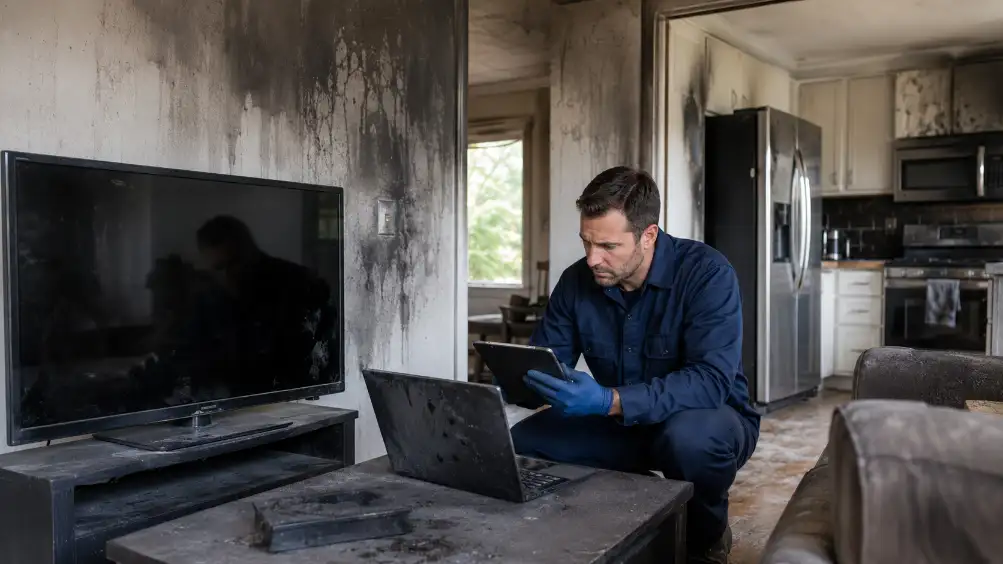
Can Electronics and Appliances Be Saved After Smoke Damage?
Electronics and appliances may sometimes be saved after smoke exposure, but they should not be powered on until their condition has been professionally evaluated. Smoke, soot, heat, ash, and firefighting water can affect exterior surfaces, cooling vents, wiring, circuit boards, connectors, motors, controls, insulation, batteries, and other internal components.
A television, computer, refrigerator, or small appliance may look undamaged even though smoke residue has entered through vents or openings. Fine particles can settle on internal components, while oily residue may adhere to surfaces and retain odor. Moisture from fire hoses or sprinkler systems can add electrical and corrosion concerns.
Whether an item can be restored depends on what burned, how close the device was to the fire, whether it was operating, the amount and type of residue, heat exposure, water involvement, replacement cost, data value, manufacturer requirements, and availability of qualified restoration or repair services.
Do not plug in, charge, test, or operate a fire-affected device simply because its exterior looks clean. Document it first and allow qualified professionals to determine whether inspection, specialized cleaning, data recovery, repair, or replacement is appropriate.
Quick Answer
Smoke damage to electronics does not automatically mean every device is permanently lost. Some items may be professionally cleaned, repaired, or recovered when heat, water, and internal damage are limited. Others may need replacement because of electrical hazards, corrosion, melted components, persistent contamination, manufacturer restrictions, or repair costs. Keep affected equipment off, photograph each item, preserve data and ownership records, and obtain professional evaluation before testing or disposal.
Key Takeaways
- Electronics can contain soot and smoke residue even when their exterior surfaces appear clean.
- Do not power on, charge, plug in, or test fire-affected equipment without professional clearance.
- Firefighting water may create additional electrical, corrosion, and safety concerns.
- Ordinary household cleaners, compressed air, and consumer vacuums may spread residue or damage components.
- Computers, phones, and storage devices may contain recoverable data even when the equipment cannot be restored.
- Large appliances require evaluation of electrical, mechanical, gas, ventilation, and water-related components.
- Photographs, serial numbers, receipts, model numbers, and professional reports may support an insurance claim.
- Restoration decisions should consider safety, cleanability, replacement cost, data value, warranty requirements, and expected reliability.
Table of Contents
- How smoke damages electronics
- Electronics and appliances commonly affected
- Warning signs of electronic smoke damage
- Should you turn affected devices on?
- Why different fires create different residues
- How firefighting water affects electronics
- What to do with electronics after a fire
- Mistakes to avoid
- How professional electronics restoration works
- When electronics may be restored or replaced
- Computer and data-recovery considerations
- How major appliances are evaluated
- How long evaluation and restoration may take
- Insurance documentation considerations
- Northern Illinois and Southern Wisconsin considerations
- Frequently asked questions
How Can Smoke and Soot Damage Electronics?
Electronic equipment contains openings for airflow, speakers, buttons, cables, cooling fans, ports, drives, and electrical connections. Smoke can enter these openings and settle on components that are difficult to inspect from the outside.
Smoke damage to electronics may involve several overlapping conditions:
- Fine particulate deposits on circuit boards and connectors
- Oily or sticky residue on internal and exterior surfaces
- Smoke odor absorbed by plastics, insulation, foam, and packaging
- Heat damage to wiring, housings, seals, screens, batteries, and adhesives
- Moisture from firefighting water or sprinkler discharge
- Ash and debris entering vents, fans, drives, and mechanical parts
- Corrosion developing on metal contacts and components
- Contamination from burned plastics, fabrics, batteries, chemicals, or building materials
Fine Particles Can Reach Internal Components
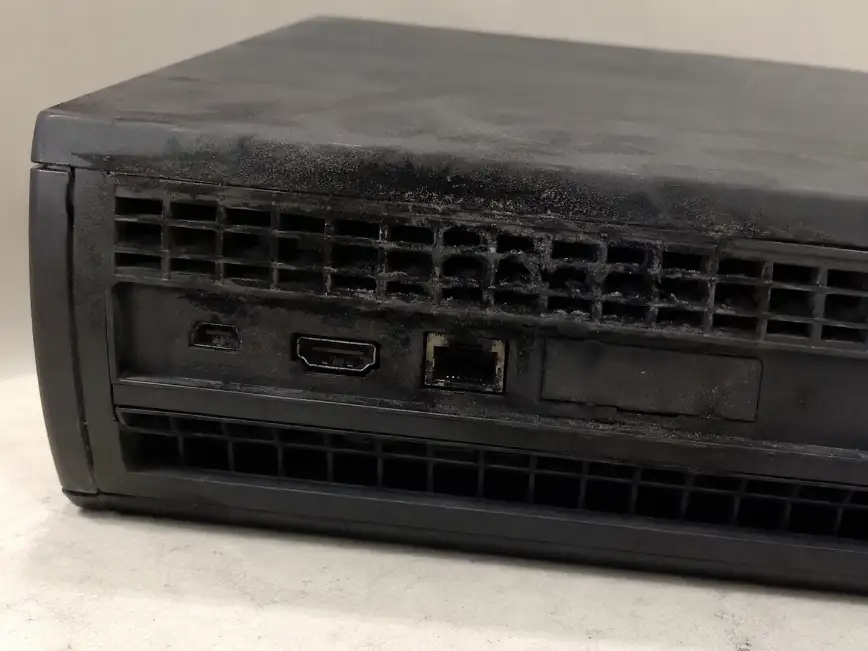
Soot may contain extremely small particles that move with smoke and indoor air currents. These particles can enter televisions, computers, gaming systems, audio equipment, printers, appliances, and other devices through ventilation openings.
A device does not need to be in the room where the fire started to be affected. Smoke may travel through hallways, door openings, wall cavities, HVAC pathways, attics, basements, and adjoining rooms.
McMahon Services explains how smoke can extend beyond the visible burn area in its guide to what to do after smoke damage in your home.
Residue Can Affect Electrical Connections
Soot and combustion residue may settle on connectors, contacts, circuit boards, switches, motors, power supplies, and other internal surfaces. The effect depends on the residue composition, concentration, moisture level, component design, and duration of exposure.
Moisture combined with residue may increase corrosion concerns. A device may initially operate and later develop intermittent failures, odor, overheating, electrical problems, or shortened service life.
Heat Can Damage Equipment Without Visible Flames
Electronics located near a fire may be exposed to temperatures high enough to damage plastic housings, screens, batteries, adhesives, seals, wire insulation, and internal components without producing obvious exterior burning.
Warped plastic, discoloration, cracked screens, melted connectors, unusual odor, or deformed casings may indicate heat exposure. Equipment with suspected thermal damage should not be operated.
Which Electronics and Appliances May Be Affected?
| Device Category | Possible Fire-Related Damage | Evaluation Consideration |
|---|---|---|
| Computers and laptops | Soot inside cooling systems, heat damage, water exposure, connector corrosion, and data-storage concerns | Equipment condition and data recovery should be evaluated separately |
| Televisions and monitors | Residue through vents, screen damage, odor, heat exposure, and internal electrical contamination | Cleaning feasibility depends on access, construction, value, and internal condition |
| Phones and tablets | Heat-damaged batteries, contaminated ports, screen damage, water intrusion, and data concerns | Do not charge devices with swelling, heat damage, odor, or moisture exposure |
| Gaming systems and audio equipment | Residue in fans, optical drives, speakers, controls, and circuit boards | Internal inspection may be required before testing |
| Refrigerators and freezers | Smoke odor, contaminated coils, controls, insulation, wiring, seals, and spoiled contents | Food safety, mechanical condition, electrical safety, and odor must be considered |
| Ovens, ranges, and microwaves | Heat damage, soot residue, contaminated ventilation pathways, wiring damage, and control failure | Gas and electrical components may require separate qualified inspections |
| Dishwashers and washing machines | Smoke residue, water exposure, control damage, damaged wiring, hoses, and motors | Electrical, plumbing, mechanical, and contamination conditions should be evaluated |
| Dryers and ventilation equipment | Soot, lint contamination, heat damage, damaged wiring, motors, controls, and vent pathways | The appliance and connected exhaust system may both require inspection |
| Small kitchen appliances | Residue in switches, motors, heating elements, food-contact areas, and internal cavities | Replacement may be more practical when cleaning cannot be verified |
| Office and security equipment | Contaminated printers, cameras, routers, storage devices, controls, and power supplies | Business continuity, stored data, security, and replacement time may affect priorities |
What Are the Warning Signs of Smoke-Damaged Electronics?
Do not rely only on whether a device appears burned. Possible signs of smoke, heat, or water damage include:
- Black, gray, brown, or oily residue around vents and openings
- A persistent smoke, plastic, chemical, or burned odor
- Discolored or warped housings
- Melted cables, plugs, buttons, ports, or connectors
- Cracked or cloudy screens
- Moisture droplets or water marks inside transparent areas
- Corrosion around battery compartments or electrical contacts
- Unusual noise from fans, motors, or mechanical parts
- A tripped breaker associated with an appliance or device
- Damaged power cords or insulation
- Battery swelling, leaking, deformation, or unusual heat
- Residue visible inside cooling openings
The absence of these signs does not confirm that the equipment is safe. Internal residue, heat exposure, or moisture may not be visible without disassembly and qualified inspection.
An Operating Device Is Not Automatically a Safe Device
A smoke-affected electronic item may turn on and appear to operate normally while residue or corrosion remains inside. Continued operation may contribute to electrical failure, overheating, odor, or additional component damage.
Testing should therefore be part of a controlled professional evaluation rather than an initial homeowner inspection.
Should You Turn Electronics or Appliances On After a Fire?
Do not turn on, plug in, charge, or test electronics and appliances exposed to fire, smoke, soot, heat, or firefighting water until they have been appropriately evaluated.
Operating affected equipment may:
- Create a shock or electrical fire hazard
- Cause a short circuit
- Damage components that might otherwise have been recoverable
- Move soot through cooling fans and internal air pathways
- Heat contaminated residue and produce additional odor
- Complicate data recovery
- Reduce the ability to document the original condition
- Conflict with manufacturer, insurer, or repair-provider requirements
The American Red Cross recommends disconnecting and checking appliances for damage before using them after a fire. Review the Red Cross guidance for checking a home after a fire.
Do Not Reach Through Water to Unplug Equipment
Leave electrical equipment alone when standing water, wet flooring, damaged outlets, exposed wires, or wet appliance connections are present. Do not step into water to reach a cord, breaker, or device.
Qualified electrical and restoration professionals should address unsafe conditions before equipment is moved or disconnected.
Why Do Different Fires Affect Electronics Differently?
The type of smoke residue depends on the fuel, fire temperature, oxygen supply, duration, and materials involved. A fast-burning wood fire can produce different residue from a smoldering upholstery fire, cooking fire, electrical incident, or burning plastic.
| Fire Condition | Possible Residue | Electronics Concern |
|---|---|---|
| Dry wood or paper fire | Fine, powder-like particulate residue | Particles may enter vents, cooling fans, drives, and connectors |
| Smoldering fabric or upholstery | Oily, sticky residue with persistent odor | Residue may adhere to internal and exterior components |
| Cooking or protein fire | Thin film that may be difficult to see but produces strong odor | Appliances and nearby electronics may retain odor without visible black soot |
| Plastic, rubber, or synthetic fire | Dark, oily, chemical residue | Specialized assessment and cleaning may be needed according to what burned |
| Electrical or appliance fire | Localized heat damage, melted insulation, soot, and component failure | The affected device may be the fire source and may require investigation or preservation |
A single fire may produce several residue types. Professional cleaning methods should be selected according to the material, equipment construction, residue, and restoration objective.
How Does Firefighting Water Affect Electronics?
Fire hoses, sprinkler systems, damaged plumbing, and rain entering through fire-created openings may expose electronics and appliances to water in addition to heat and smoke.
Water may enter:
- Power supplies and electrical panels
- Motors and compressors
- Switches, controls, and circuit boards
- Battery compartments
- Cooling vents and fans
- Ports, connectors, and cable openings
- Appliance insulation
- Displays, speakers, and internal cavities
Drying the exterior does not confirm that internal components are safe. Water may carry soot, ash, and other residue into the device and remain inside enclosed areas.
The Electrical Safety Foundation International recommends qualified evaluation of water-damaged electrical equipment because improper return to service can create shock and fire risks. Review the ESFI guidance for water-damaged electrical equipment.
McMahon Services provides water damage cleanup and structural drying when firefighting efforts leave flooring, walls, contents, and electrical areas wet.
What Should You Do With Electronics After a House Fire?
-
Wait for permission to enter.
Do not enter the property until emergency officials or other qualified authorities confirm that access is permitted.
-
Leave affected equipment off.
Do not power on, charge, plug in, reset, or test electronics and appliances.
-
Use electrical and battery caution.
Stay away from damaged wiring, wet outlets, swollen batteries, sparking equipment, and devices producing heat or unusual odor.
-
Photograph each item.
Take wide and close-up photographs showing the device, location, residue, heat damage, water exposure, cords, and surrounding room.
-
Record identifying information.
Document the brand, model, serial number, approximate purchase date, condition, accessories, and estimated replacement cost when available.
-
Preserve potential evidence.
Do not alter or discard an appliance or electronic item that may be connected to the origin of the fire until investigators and the insurance carrier provide direction.
-
Identify devices containing important data.
Mark computers, phones, external drives, servers, security systems, and business equipment that may require priority data recovery.
-
Arrange professional contents evaluation.
A restoration specialist can coordinate inventory, pack-out, cleaning, repair referrals, storage, data-recovery planning, and replacement documentation.
Safety Warning: Do not charge a heat-damaged or swollen battery, operate a wet appliance, reach into standing water, open electrical equipment, or use compressed air to blow soot from a device. Damaged lithium-ion batteries and electrical components require qualified handling.
What Mistakes Should You Avoid?
- Do not turn equipment on to check whether it still works. Testing may create a hazard or worsen internal damage.
- Do not use a household vacuum on electronics. Fine residue may become airborne, and ordinary equipment may create static or physical damage.
- Do not spray household cleaner into vents or ports. Liquid can damage internal components and spread residue.
- Do not blow soot out with compressed air. This can push residue deeper into the device or distribute it through the room.
- Do not wipe screens with an unknown chemical. Some coatings and display materials can be permanently damaged.
- Do not charge phones, laptops, tools, or battery packs exposed to heat or water. Batteries should be evaluated for damage.
- Do not discard equipment before documentation. The insurer may require model numbers, serial numbers, photographs, or inspection reports.
- Do not assume that odor alone proves the device is ruined. The odor source may be on packaging or surrounding materials rather than inside the equipment.
- Do not assume that cleaning guarantees long-term reliability. Safety, internal condition, manufacturer requirements, and testing results also matter.
How Are Smoke-Damaged Electronics Professionally Evaluated and Restored?
The professional process may involve fire-restoration contractors, contents specialists, electricians, appliance technicians, electronics repair providers, data-recovery companies, manufacturers, and insurance representatives.
The ANSI/IICRC S700 fire and smoke damage restoration standard includes assessment and restoration of contents affected by fire residue and odor.
1. Safety and Fire-Origin Considerations
Professionals determine whether equipment can be approached, moved, disconnected, or opened safely. Items connected to the cause of the fire may need to remain undisturbed for investigators.
2. Contents Documentation
Electronics and appliances are photographed and inventoried by room. Model numbers, serial numbers, accessories, visible damage, residue, and water exposure may be recorded.
McMahon Services provides additional documentation guidance in Fire or Water Damage Cleanup: 7 Things to Document.
3. Triage and Priority Identification
Items may be grouped according to safety, replacement cost, data importance, business need, contamination, accessibility, and restoration potential.
Computers with critical data, medical equipment, security devices, servers, and essential business systems may require specialized priority handling.
4. On-Site or Off-Site Evaluation
Some equipment can be assessed at the property. Other items may require controlled packing and transport to a specialist facility.
The decision depends on the property condition, available power, contamination, security, equipment type, and required testing tools.
5. Exterior Cleaning and Stabilization
Loose surface debris and residue may be removed using methods appropriate for the casing and finish. Exterior cleaning should not force contamination farther into ventilation openings.
6. Qualified Internal Inspection
Authorized technicians may open equipment to evaluate circuit boards, fans, motors, wiring, connectors, batteries, controls, power supplies, insulation, and internal contamination.
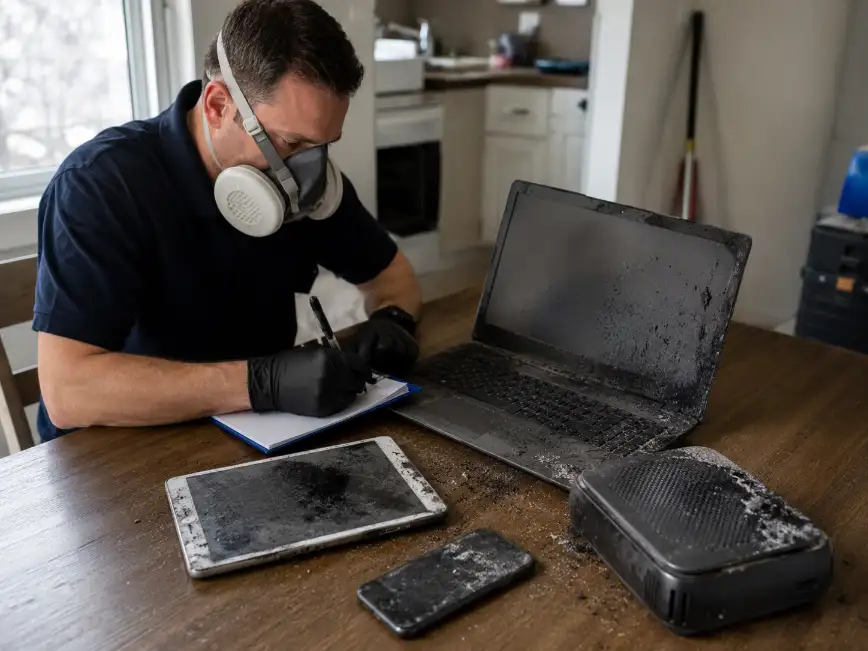
Disassembly should account for electrical hazards, stored energy, refrigerants, gas components, manufacturer requirements, and warranty conditions.
7. Specialized Cleaning
Cleaning methods are selected according to the equipment, component materials, residue, moisture exposure, and manufacturer guidance. Sensitive electronics require procedures different from those used on appliance housings or ordinary household surfaces.
8. Drying and Corrosion Control
Water-exposed components may require specialized drying and evaluation. Equipment should not be returned to service solely because visible moisture has disappeared.
9. Repair or Component Replacement
Damaged power supplies, wiring, motors, controls, connectors, batteries, displays, insulation, seals, and other components may require repair or replacement.
10. Controlled Testing
Testing should be conducted by qualified personnel after inspection, cleaning, drying, and necessary repairs are complete.
Testing may include electrical safety, function, temperature, airflow, mechanical operation, communication, display, controls, and data access according to the device.
11. Restoration or Replacement Recommendation
The final recommendation may consider safety, cleaning results, expected reliability, replacement cost, repair cost, data value, warranty status, parts availability, and insurer requirements.
12. Return, Storage, or Disposal
Restored equipment can be returned after the property is ready. Nonrestorable items should be documented and disposed of according to insurer instructions and applicable electronic-waste or battery requirements.
McMahon Services offers disaster restoration and contents-cleaning support for properties affected by fire, smoke, water, and mold.
When Can Electronics Be Restored or Require Replacement?
Restoration May Be More Appropriate When:
- The device was not directly burned or melted
- Heat exposure was limited
- Water did not significantly affect electrical components
- Residue is accessible and can be removed safely
- Replacement parts and qualified service are available
- The item has substantial monetary, data, business, or personal value
- Testing can verify safe and reliable operation
- Restoration is permitted by the manufacturer and insurer
Replacement May Be More Appropriate When:
- The device is burned, melted, charred, or structurally deformed
- Wiring, insulation, batteries, or circuit boards sustained severe heat damage
- Water and soot entered inaccessible components
- Corrosion is extensive or continuing
- Persistent odor or contamination cannot be removed
- Safety or reliability cannot be verified
- Repair costs approach or exceed replacement cost
- Parts, technical support, or qualified service are unavailable
- The manufacturer recommends replacement
The decision is not based solely on whether the device turns on. Safe operation, internal cleanliness, expected service life, warranty requirements, and repair economics must also be considered.
Can Data Be Recovered From a Fire-Damaged Computer or Phone?
Data may remain recoverable even when a computer, phone, tablet, server, or external drive cannot be returned to normal service.
Potentially recoverable items may include:
- Documents and business records
- Photographs and videos
- Accounting and customer files
- Email archives
- Security-camera recordings
- Design, project, and production files
- Contacts and messages
- Medical, legal, or property records
Do Not Repeatedly Attempt to Start the Device
Repeated power attempts can damage compromised storage devices or other components. Avoid charging, drying with heat, opening, shaking, or connecting the device to another computer.
Inform the restoration team and insurer that data recovery is a priority. A specialized provider may be able to remove or access the storage component without restoring the complete device.
Check Cloud and Backup Services
Some files may already be available through cloud storage, automatic backups, external drives, network storage, email accounts, or another synchronized device.
Confirm available backups before authorizing destructive testing, disposal, or replacement of storage equipment.
How Are Major Appliances Evaluated After a Fire?
Major household appliances combine electrical, mechanical, plumbing, gas, ventilation, and sometimes refrigeration systems. Their evaluation may therefore require more than surface cleaning.
Refrigerators and Freezers
Inspection may include wiring, controls, compressors, fans, coils, insulation, door seals, interior odor, exterior residue, water exposure, and food contamination.
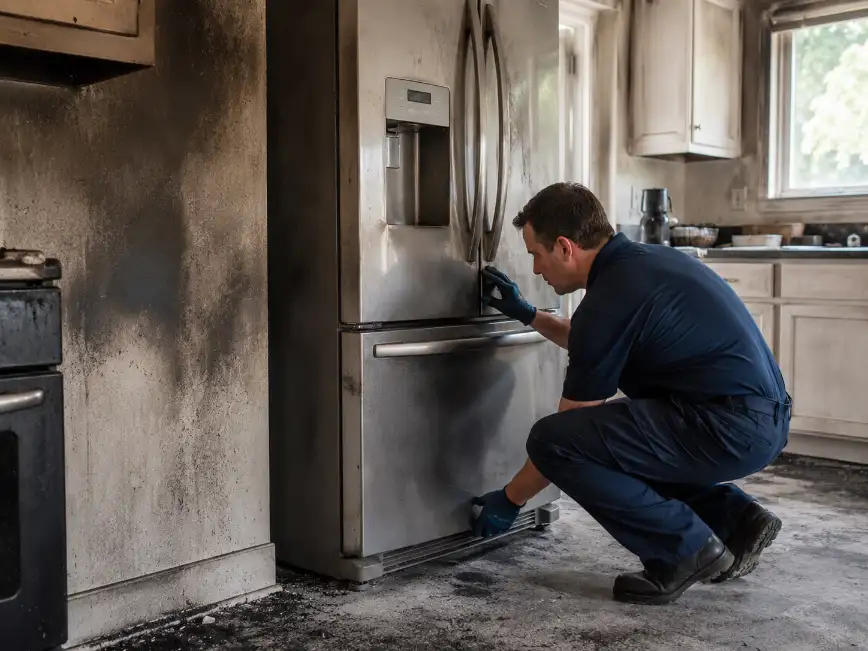
Food exposed to heat, smoke, soot, or unsafe temperatures should be handled according to public-health and insurance guidance rather than evaluated only by appearance.
Ranges, Ovens, and Microwaves
These appliances may contain electrical controls, heating elements, gas valves, igniters, fans, insulation, and ventilation pathways. Heat or smoke exposure can affect components that are not visible from the exterior.
Dishwashers and Washing Machines
Evaluation may include wiring, motors, pumps, hoses, controls, insulation, seals, and water remaining inside the appliance.
Clothes Dryers
Both the appliance and connected exhaust vent may require inspection. Soot, lint, heat, damaged wiring, motors, and duct conditions can affect safe operation.
Gas appliances should not be reconnected or operated until gas and electrical components have been inspected by qualified professionals.
How Long Does Electronics Evaluation and Restoration Take?
There is no universal timeline. A small contained fire may require limited documentation, cleaning, and inspection. A larger fire may involve hundreds of contents, off-site pack-out, data recovery, parts ordering, appliance repair, insurance review, and property reconstruction.
| Timeline Factor | Why It Matters |
|---|---|
| Number of affected items | A complete home or commercial inventory requires more documentation and handling. |
| Fire and residue type | Oily, chemical, wet, and mixed residues may require different procedures. |
| Heat and water exposure | Equipment affected by heat or water may require additional specialists and testing. |
| Data-recovery needs | Specialized recovery may be prioritized separately from equipment restoration. |
| Parts availability | Older or specialized equipment may require difficult-to-source components. |
| Manufacturer requirements | Authorized service or specific replacement procedures may be required. |
| Insurance authorization | Inspection, cleaning, testing, or replacement may require documentation and approval. |
| Property readiness | Restored electronics may need secure storage until the building is clean, dry, and repaired. |
A reliable schedule should be based on the inventory, specialist availability, inspection findings, cleaning results, testing, insurance requirements, and reconstruction progress.
What Should You Document for an Insurance Claim?
Insurance coverage, limits, exclusions, valuation methods, and claim requirements vary. Document electronics and appliances before cleaning, movement, disposal, or replacement whenever conditions are safe.
Useful documentation may include:
- Wide photographs showing where each item was located
- Close-up images of soot, heat, water, and physical damage
- Brand, model, and serial number
- Approximate purchase date and original cost
- Receipts, order records, warranties, and owner manuals
- Associated accessories, cables, remotes, batteries, and attachments
- Whether the device was operating during the fire
- Important data stored on computers, phones, or drives
- Professional inspection, cleaning, repair, and testing reports
- Replacement estimates for comparable equipment
- Reasons an item was considered nonrestorable
- Pack-out, transportation, storage, and data-recovery records
Do not discard equipment that may be related to the fire origin or required for insurer inspection. Ask the carrier whether it requires inspection, testing, salvage review, or possession of the damaged item.
McMahon Services can assist with fire-loss documentation, contents handling, smoke cleanup, and coordination as part of its fire and smoke damage restoration services.
Why Electronics Restoration Matters in Northern Illinois and Southern Wisconsin
Fire-damaged properties in Hainesville, Lake County, Northern Illinois, Southern Wisconsin, and surrounding communities may face additional seasonal conditions that affect electronics and appliances.
Winter recovery can become more complex when:
- Utilities are disconnected after the fire
- Freezing temperatures affect wet equipment and plumbing
- Temporary heat and power are required
- Snow or rain enters through damaged roofing and windows
- Electronic equipment is moved from a cold structure into a warm environment
- Restored contents require climate-controlled storage during reconstruction
Summer fires may involve high indoor humidity, firefighting water, and unavailable air conditioning. Moisture control remains important when electronics, appliances, walls, flooring, and contents are being evaluated.
Commercial properties may also need rapid planning for computers, servers, point-of-sale equipment, security systems, communications equipment, and production controls to reduce operational disruption.
Professional Tip: Separate the value of the device from the value of the information stored on it. A computer may not be economical to repair, while the documents, photographs, security footage, or business records on its storage device may still justify specialized data recovery.
Get Help With Smoke-Damaged Electronics and Contents
Smoke damage to electronics can involve hidden residue, heat exposure, water intrusion, electrical concerns, odor, data loss, and uncertain long-term reliability.
McMahon Services & Construction Corp provides 24/7 fire and smoke damage restoration for homes and businesses affected by soot, smoke odor, damaged contents, firefighting water, and structural damage.
The restoration process may include property inspection, contents documentation, pack-out coordination, soot cleaning, smoke-odor source removal, water extraction, structural drying, specialist referrals, damaged-material removal, and reconstruction.
When permanent repairs are required, McMahon Services can also coordinate cleanup and rebuilding after major property damage.
Call McMahon Services at (847) 566-4568 for 24/7 fire, smoke, soot, contents, and property-restoration assistance throughout Hainesville, Lake County, Northern Illinois, Southern Wisconsin, and surrounding service areas.
Frequently Asked Questions About Smoke Damage to Electronics
Can electronics still work after smoke exposure?
Some electronics may continue operating after smoke exposure, but this does not confirm that they are clean, safe, or reliable. Soot, moisture, heat damage, and corrosion may remain inside. The device should be professionally evaluated before it is powered on.
Should I turn on my television or computer after a house fire?
No. Do not plug in, charge, or test fire-affected electronics until they have been evaluated. Turning them on may create an electrical hazard, damage recoverable components, move soot through internal fans, or complicate data recovery.
Can soot be cleaned out of electronic devices?
Some devices can be professionally disassembled and cleaned when heat, water, and component damage are limited. The appropriate method depends on the device, residue, accessibility, manufacturer requirements, value, and ability to verify safe operation.
Can smoke damage cause electronics to fail later?
Yes. Residue, moisture, and corrosion may contribute to intermittent problems or delayed failure even when equipment initially operates. Professional inspection and testing help determine whether restoration is practical and reliable.
Can data be recovered from a smoke-damaged computer?
Data may be recoverable even when the complete computer cannot be restored. Do not repeatedly attempt to power it on. Identify important files and arrange evaluation by a qualified data-recovery provider.
Do appliances exposed to smoke need replacement?
Not always. Some appliances may be cleaned and repaired when heat, water, electrical, mechanical, and contamination damage are limited. Replacement may be appropriate when safety, cleanliness, odor removal, or reliable performance cannot be verified.
Can I clean smoke residue from electronics myself?
Homeowners should not spray cleaners into devices, use compressed air, vacuum internal components, or open equipment without proper qualifications. These actions may spread residue, damage components, create electrical hazards, or interfere with insurance documentation.
Who should inspect electronics after a house fire?
A fire-restoration contractor can assess property-wide smoke and contents damage. Qualified electronics technicians, electricians, appliance professionals, manufacturers, and data-recovery providers may also be needed depending on the equipment and type of damage.




0 Comments