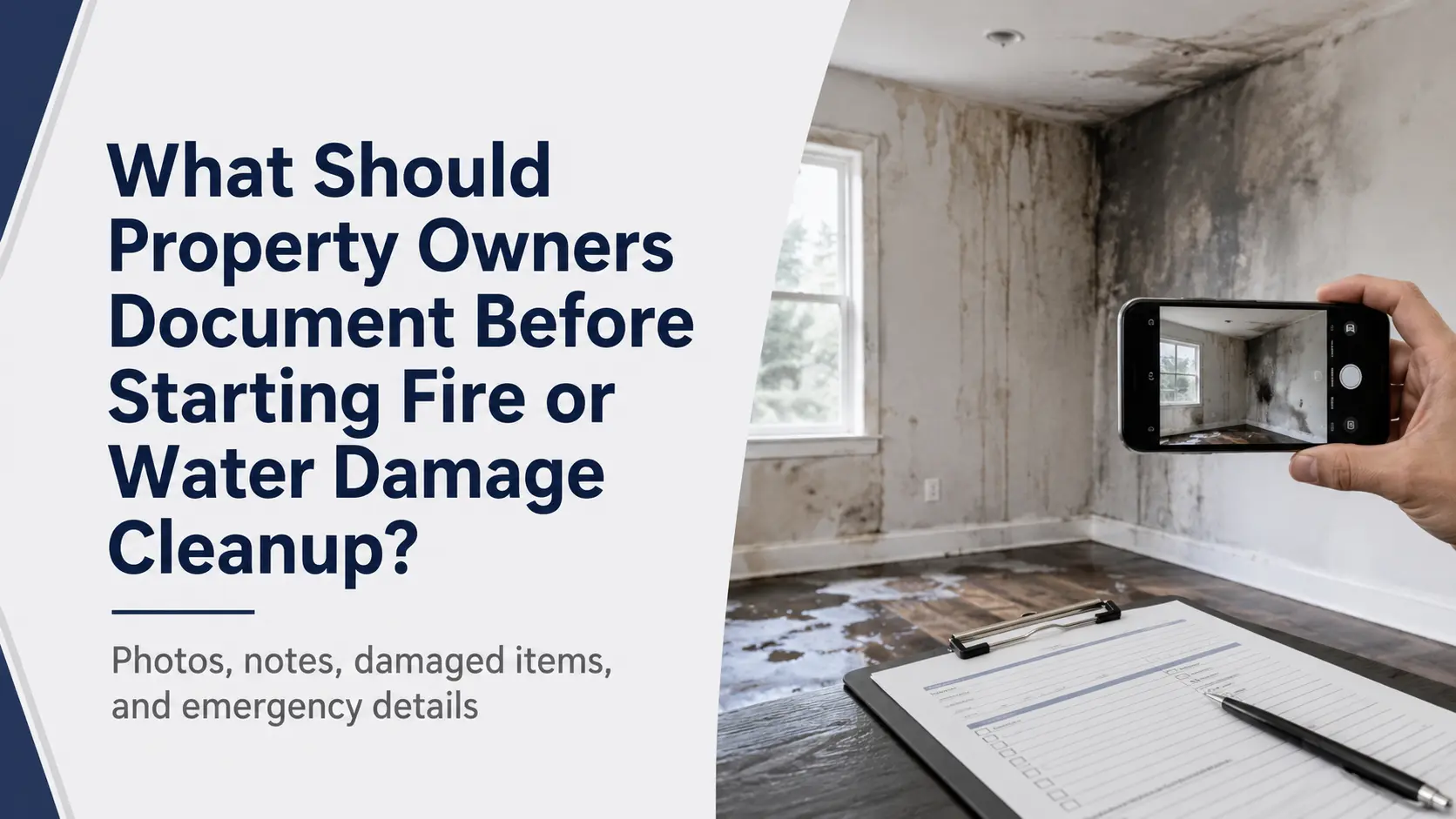
How to Document Before Fire or Water Damage Cleanup Starts
To document before fire or water damage cleanup, property owners should take wide photos, close-up photos, video walkthroughs, written notes, damaged item lists, receipts, and emergency service records before cleanup, drying, debris removal, or repairs begin. This creates a clearer record of what happened and what the property looked like before restoration work changes the scene.
After a fire, flood, pipe leak, sewage backup, storm event, or smoke damage incident, it is normal to want cleanup started immediately. Safety always comes first. If the area is unsafe, do not enter. When it is safe and reasonable to do so, taking a few minutes to document the property can make the restoration process more organized.
For homeowners, landlords, property managers, and business owners in Hainesville, Lake County, Northern Illinois, and Southern Wisconsin, good documentation can help show the condition of the property before emergency cleanup starts. It can also make communication easier with restoration teams, insurance representatives, tenants, building owners, and other decision-makers.
Key Takeaway
Before cleanup begins, document the damage with wide photos, close-up photos, video walkthroughs, written notes, damaged item lists, receipts, and dates. Do not delay urgent safety work, but avoid throwing away damaged materials or belongings until they are documented whenever it is safe and practical.
Why Documentation Matters Before Fire or Water Damage Cleanup
Fire and water damage can change quickly once cleanup starts. Standing water may be extracted, wet materials may be removed, smoke-damaged items may be packed out, and unsafe debris may need to be cleared. Because of this, property owners should create a record of the original condition as soon as it is safe.
Documentation does not replace an insurance inspection, adjuster review, or professional evaluation. It simply gives property owners a clearer record of what they saw, when they saw it, and what areas were affected before cleanup began.
For properties that need a planned response process, McMahon Services & Construction Corp provides an emergency response plan to help property owners and managers prepare for urgent restoration situations.
Quick Answer
Property owners should document fire or water damage before cleanup because damaged areas, debris, contents, moisture, and smoke residue may change once emergency work begins. Photos, videos, notes, and item lists create a useful record of the property’s condition before restoration starts.
What Photos and Videos Should You Take Before Cleanup Starts?
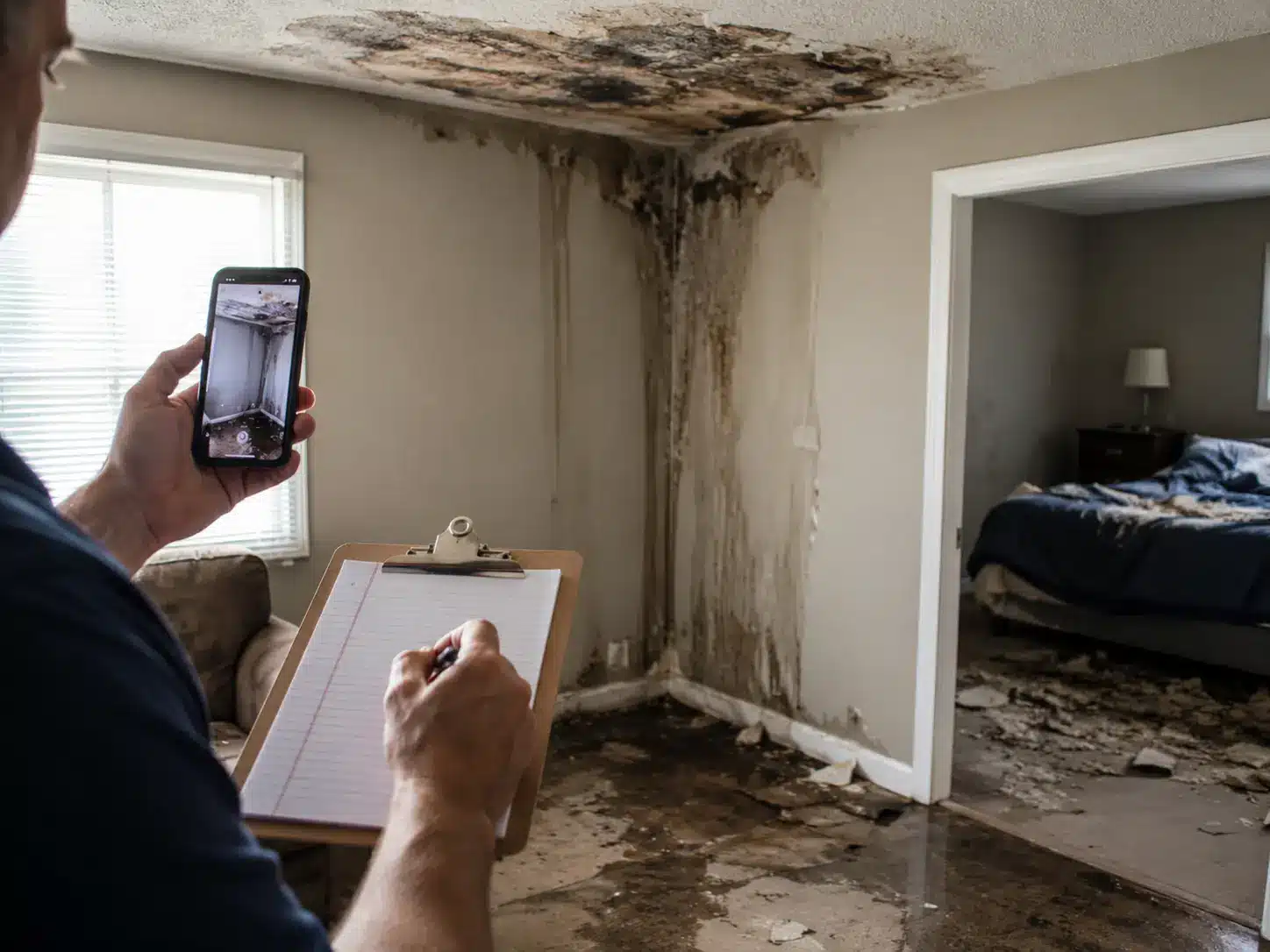
Photos and videos are often the easiest way to document property damage. Start with wide shots of each affected room, then take closer photos of specific damage. If possible, include ceilings, floors, walls, baseboards, cabinets, doorways, contents, appliances, and exterior areas that may be connected to the damage.
Photo Checklist for Property Owners
- Wide room photos: Capture the full room from multiple corners.
- Close-up damage photos: Take detailed images of stains, soot, standing water, damaged flooring, burned areas, or swollen materials.
- Source photos: If visible, document the pipe leak, roof opening, appliance failure, drain backup, or fire source area.
- Contents photos: Document furniture, electronics, equipment, inventory, documents, clothing, tools, and personal belongings.
- Exterior photos: Include roof damage, siding damage, broken windows, storm impact, or exterior water entry points if relevant.
- Utility areas: Document mechanical rooms, electrical panels, water heaters, sump pumps, laundry rooms, and basements when safe.
A slow video walkthrough can also help. State the date, time, property address, room name, and what you are seeing as you move through the affected areas. Keep the video steady and avoid disturbing damaged materials while recording.
Ready.gov property documentation guidance recommends keeping records and inventories that can help property owners prepare before disaster-related damage occurs. The NAIC homeowners claim guidance also notes that photos, videos, and damaged property lists can be useful when organizing a claim.
What Written Notes Should Property Owners Save?
Written notes are helpful because photos do not always explain the full situation. A stain on a ceiling may not show when the leak started. A wet floor may not show whether the water came from a pipe, storm, appliance, or sewage backup. Notes help connect the timeline.
Details Worth Writing Down
- Date and time the damage was discovered
- Possible cause of the damage
- Rooms or areas affected
- Weather conditions if storm damage may be involved
- Visible water, soot, smoke residue, odor, staining, or debris
- Any emergency steps already taken
- Names of people contacted, including restoration teams, plumbers, roofers, property managers, or insurance representatives
- Photos or videos taken and where they are saved
Keep notes simple and factual. Avoid guessing if you are not sure what caused the problem. For example, instead of writing “mold from roof leak,” you could write “musty odor and ceiling stain noticed after heavy rain.”
Documentation Tip
Write down when the damage was discovered, where it appeared, what may have caused it, what emergency steps were taken, and who was contacted. Clear notes help organize the restoration timeline before fire or water damage cleanup begins.
How Should You Track Damaged Items?
Contents can be one of the most difficult parts of a fire or water damage event. Furniture, electronics, business equipment, inventory, clothing, tools, documents, and stored belongings may need to be cleaned, moved, discarded, or evaluated.
Before moving or disposing of damaged items, document them when it is safe. Take photos, write down item names, note the room where each item was located, and save receipts or purchase records if available.
Damaged Item List Example
- Item name or description
- Brand, model, or serial number if visible
- Room or location
- Type of damage, such as water, smoke, soot, odor, or heat exposure
- Approximate age of item if known
- Receipt, invoice, or proof of purchase if available
- Photo or video file name if you are organizing records digitally
For businesses and managed properties, this step may include equipment, tenant areas, files, fixtures, supplies, and inventory. If items need to be moved quickly for safety or cleanup access, photograph them first whenever possible.
What Is Different for Fire Damage and Water Damage Documentation?
Fire damage and water damage both require documentation, but the details can be different. Fire damage may involve smoke odor, soot residue, heat damage, burned materials, damaged contents, and water used during firefighting. Water damage may involve standing water, wet drywall, damaged flooring, sewage backup, moisture behind walls, and affected contents.
For Fire and Smoke Damage
Document soot patterns, smoke staining, burned areas, affected rooms, odor concerns, damaged contents, and areas where firefighting water may have entered. McMahon Services provides fire and smoke damage restoration for properties affected by fire, smoke, soot, and related cleanup needs.
For Water and Sewage Damage
Document the water source if visible, affected rooms, flooring, baseboards, walls, ceilings, belongings, and any areas with odor or possible contamination. McMahon Services also provides water and sewage damage restoration services for properties dealing with leaks, flooding, sewage cleanup, and related restoration concerns.
In some emergencies, fire and water damage happen together. For example, a property may have smoke and soot damage along with water damage from firefighting efforts. In that situation, document both types of damage before cleanup changes the scene.
When Should You Call for Emergency Restoration Help?
Call for emergency restoration help when the property has standing water, sewage backup, active leaking, smoke damage, fire damage, electrical concerns, unsafe debris, strong odors, wet building materials, or damage affecting multiple rooms. Do not enter an unsafe structure, and do not touch electrical systems, contaminated water, or unstable materials.
Property owners should not delay urgent safety work just to take more photos. If the situation is dangerous, leave the area and wait for qualified help. Documentation is important, but safety comes first.
McMahon Services & Construction Corp is based at 44 W Belvidere Rd, Hainesville, IL 60030, and serves property owners throughout Hainesville, Lake County, Northern Illinois, and Southern Wisconsin. The company is open 24 hours for emergency restoration needs.
To start the next step, property owners can request a quote or call McMahon Services at 847-566-4568.
Quick Decision Guide
Call a restoration company if fire, smoke, water, sewage, or storm damage has affected building materials, contents, or multiple rooms. Take photos and notes if it is safe, but do not delay emergency safety work.
Frequently Asked Questions About Fire or Water Damage Documentation
Should I take photos before fire or water damage cleanup starts?
Yes, if it is safe. Take wide photos, close-up photos, and videos before cleanup begins. This helps create a record of the affected areas and damaged items before materials are moved, dried, cleaned, or removed.
What should I document after water damage?
Document the water source if visible, affected rooms, flooring, drywall, baseboards, ceilings, furniture, stored items, and any odors or stains. Also write down when the damage was discovered and what emergency steps were taken.
What should I document after fire damage?
Document burned areas, smoke staining, soot residue, odor concerns, damaged contents, affected rooms, and any water damage connected to firefighting efforts. Do not disturb unsafe debris or damaged materials.
Should I throw away damaged items before an insurance review?
Do not throw away damaged items until they are documented whenever it is safe and practical. Some items may need to be removed quickly for safety, but photos, videos, and item lists can still help create a record.
Can McMahon Services help with emergency cleanup?
Yes. McMahon Services & Construction Corp provides emergency restoration support for fire damage, smoke damage, water damage, sewage cleanup, and related property restoration needs in Hainesville, Lake County, Northern Illinois, and Southern Wisconsin.
Conclusion
Before starting fire or water damage cleanup, property owners should document the scene with photos, videos, written notes, damaged item lists, receipts, and emergency service details. Good documentation helps organize the timeline and shows what the property looked like before cleanup began.
The most important rule is safety first. Do not enter unsafe areas, touch electrical hazards, disturb contaminated water, or move unstable materials. When the area is safe, document what you can and contact a qualified restoration team for next steps.
For 24-hour emergency restoration support in Hainesville, Lake County, Northern Illinois, and Southern Wisconsin, call McMahon Services & Construction Corp at 847-566-4568 or visit McMahon Services & Construction Corp.




0 Comments