Water Mitigation vs. Restoration vs. Reconstruction
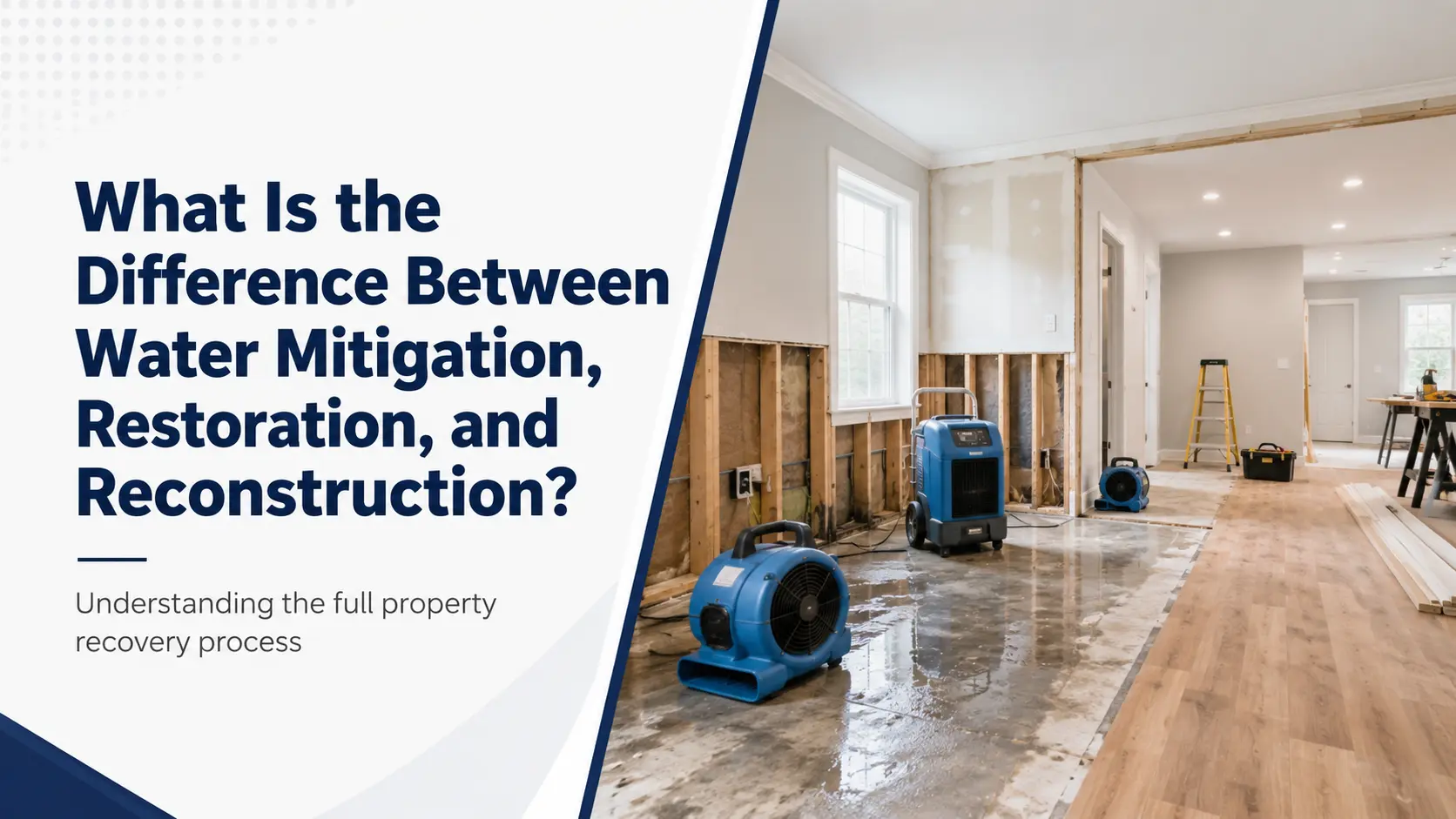
Water mitigation, restoration, and reconstruction are connected parts of property recovery, but they are not the same service. Mitigation helps stop damage from spreading. Restoration focuses on cleanup, drying, removal, deodorizing, and stabilizing the affected property. Reconstruction is the repair or rebuilding phase when damaged materials must be replaced.
After a pipe leak, flood, sewage backup, storm event, fire, or smoke damage incident, property owners may hear all three terms during the same conversation. This can be confusing, especially when emergency cleanup and permanent repairs are needed at the same time.
For homeowners, landlords, property managers, and business owners in Hainesville, Lake County, Northern Illinois, and Southern Wisconsin, understanding water mitigation vs. restoration vs. reconstruction can help clarify the recovery process. It also explains why some properties only need extraction and drying, while others require material removal, repairs, or complete rebuilding.
Key Takeaway
Mitigation controls immediate damage, restoration cleans and stabilizes the affected property, and reconstruction repairs or rebuilds damaged areas. A minor water leak may only require mitigation and restoration, while major water, sewage, fire, smoke, storm, or mold-related damage may also require reconstruction.
What Is the Difference Between Water Mitigation, Restoration, and Reconstruction?
The main difference is the purpose of each phase. Mitigation is about controlling immediate damage. Restoration is about cleaning, drying, removing damaged materials, and recovering the affected property. Reconstruction is about repairing, replacing, or rebuilding areas that cannot be restored through cleanup alone.
A simple way to understand the process is:
- Mitigation: Stop the damage from spreading.
- Restoration: Clean, dry, remove, deodorize, and stabilize affected areas.
- Reconstruction: Repair, replace, or rebuild damaged building materials.
McMahon Services & Construction Corp provides restoration and cleaning services for properties affected by water, fire, smoke, mold, storm, and related damage. Depending on the severity of the loss, the recovery process may also include construction or reconstruction.
Quick Answer
Water mitigation prevents additional damage, restoration cleans and dries the affected property, and reconstruction repairs or rebuilds damaged materials. The correct service depends on how far the damage spread and whether the affected materials can be cleaned, dried, or safely retained.
Mitigation, Restoration, and Reconstruction Compared
| Service Phase | Main Purpose | Common Work Included |
|---|---|---|
| Mitigation | Limit additional damage | Water extraction, source control, emergency material removal, moisture checks, and drying equipment |
| Restoration | Clean and stabilize the property | Drying, cleaning, deodorizing, debris removal, contents handling, smoke cleanup, and mold-related work |
| Reconstruction | Repair or rebuild damaged areas | Replacing drywall, flooring, insulation, cabinets, trim, roofing, siding, framing, and finishes |
These services may happen as separate phases, but they are often part of one coordinated recovery process. The scope depends on the source of damage, the materials affected, the length of exposure, and the condition of the property after emergency work is complete.
What Does Water Mitigation Include?
Water mitigation is usually the first response after water enters a property. The goal is to limit additional damage and reduce the chance that moisture will spread into walls, floors, ceilings, insulation, cabinets, furnishings, or stored contents.
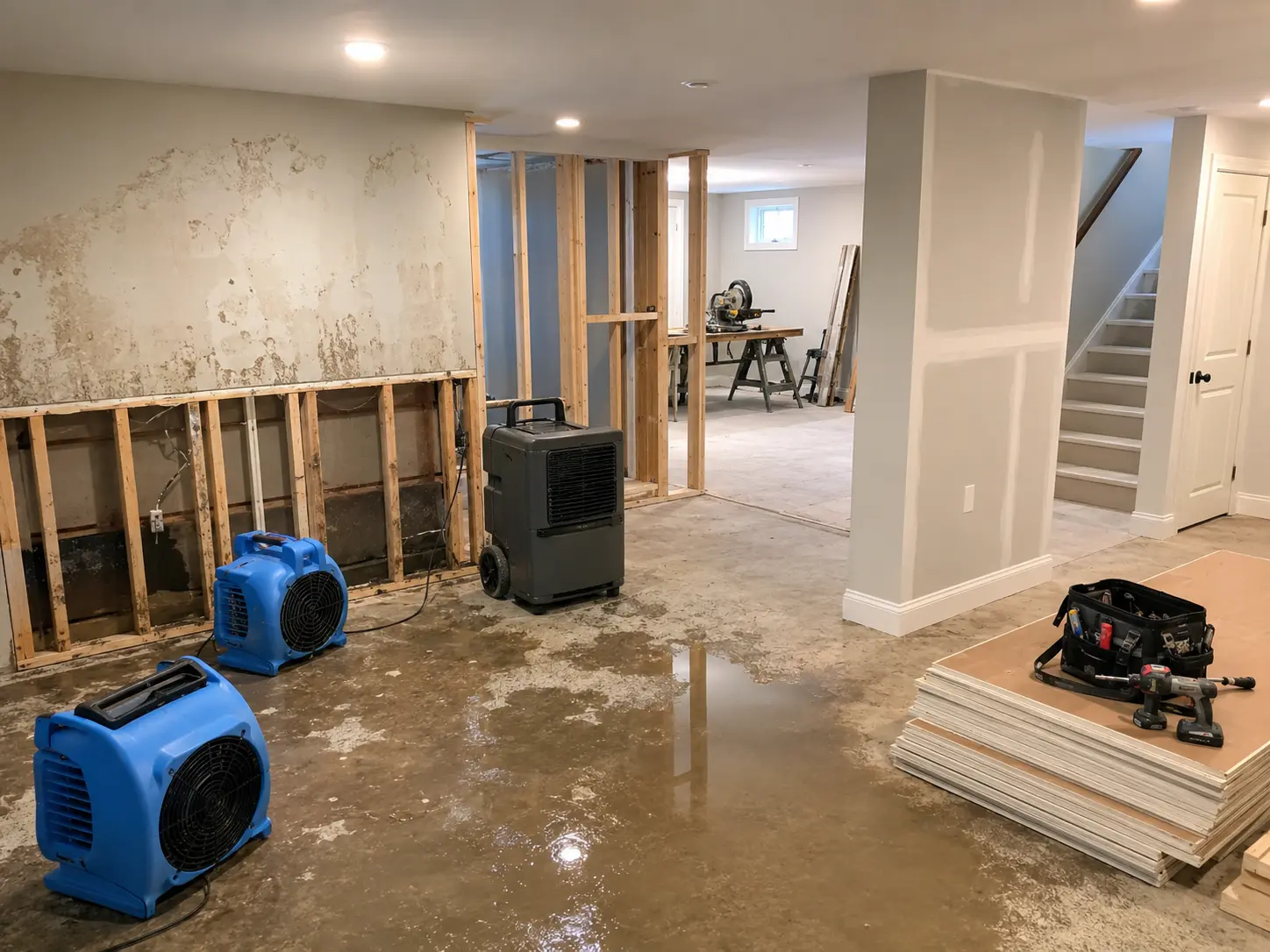
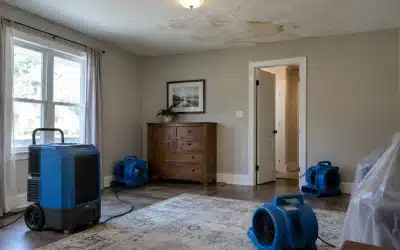
Mitigation begins with controlling the situation when it is safe to do so. This may include stopping the water source, extracting standing water, protecting unaffected areas, moving contents, removing materials that cannot be retained, and setting up professional drying equipment.
Common Water Mitigation Steps
- Identifying or stopping the water source when possible
- Removing standing water from affected areas
- Moving or protecting furniture and contents
- Checking walls, flooring, ceilings, cabinets, and baseboards for moisture
- Removing materials that cannot be safely dried or cleaned
- Installing air movers, dehumidifiers, or other drying equipment
- Monitoring moisture levels throughout the drying process
- Documenting affected areas and emergency work performed
The IICRC S500 water damage restoration standard describes professional procedures and precautions for water damage restoration in residential, commercial, and institutional buildings. This is important because water damage is not always visible on the surface. Moisture may move behind walls, beneath flooring, inside cavities, and into materials that appear dry from the outside.
For active leaks, flooding, sewage backups, or water intrusion, McMahon Services provides water and sewage damage restoration services to help property owners respond to urgent moisture and contamination concerns.
What Does Property Restoration Include?
Restoration is the cleanup and recovery phase after the immediate damage has been controlled. Depending on the situation, it may include structural drying, cleaning, damaged material removal, debris removal, odor control, contents handling, smoke cleanup, mold-related services, and preparation for permanent repairs.
Restoration does not always mean that every damaged area is rebuilt. In many cases, the goal is to return the property to a cleaner, drier, safer, and more stable condition before repair work begins. The exact scope depends on the type of damage, how long materials were exposed, and whether they can be successfully cleaned or dried.
Examples of Restoration Work
- Drying wet areas after leaks, flooding, or sewage events
- Cleaning smoke and soot residue after a fire
- Removing damaged drywall, insulation, flooring, or trim when necessary
- Addressing odors caused by smoke, moisture, sewage, or contaminated materials
- Cleaning affected contents or preparing items for pack-out
- Addressing mold-related concerns after prolonged moisture exposure
- Preparing damaged rooms for repair or reconstruction
Restoration may be required after water damage, fire damage, smoke damage, storm damage, sewage backup, or mold concerns. For properties affected by smoke, soot, fire suppression water, or lingering odors, McMahon Services provides fire and smoke damage restoration.
What Restoration Accomplishes
Restoration is the cleanup and stabilization process after damage occurs. It may include drying, cleaning, odor control, debris removal, contents handling, smoke and soot cleanup, or mold-related work before permanent repairs are completed.
When Is Reconstruction Needed?
Reconstruction is needed when damaged building materials cannot be restored through cleaning, drying, or minor repairs. This phase may include replacing drywall, flooring, cabinets, trim, insulation, framing, siding, roofing, ceilings, or other structural and finish materials.
Not every restoration project requires reconstruction. A small clean-water leak caught early may only need extraction, drying, and limited material removal. A larger event involving prolonged moisture, sewage, fire, smoke, storm damage, mold, or structural damage may require a more extensive repair and rebuilding plan.
Reconstruction May Be Needed When:
- Drywall, flooring, insulation, or ceiling materials cannot be safely dried
- Cabinets, trim, walls, or floors are swollen, warped, cracked, or deteriorated
- Fire or smoke damaged permanent building materials
- Storm damage affected roofing, siding, windows, or exterior components
- Water spread into multiple rooms or building levels
- Emergency demolition left open walls, ceilings, or flooring
- Structural framing or support materials require repair
- The property needs finishing work after restoration is complete
McMahon Services & Construction Corp also provides construction services for properties that need repair, rebuilding, or reconstruction after emergency cleanup and restoration.
How Do Mitigation, Restoration, and Reconstruction Work Together?
These phases may overlap, but they are easiest to understand as a sequence. First, the property is stabilized and additional damage is limited. Next, affected areas are cleaned, dried, and evaluated. Finally, damaged materials are repaired or rebuilt when necessary.
Example: A Broken Pipe in a Finished Basement
The mitigation phase may include stopping the water source, extracting standing water, moving contents, removing saturated carpet padding, and setting up drying equipment.
The restoration phase may include moisture monitoring, cleaning, odor control, drying wall cavities, and removing materials that cannot be retained.
The reconstruction phase may include replacing drywall, baseboards, flooring, insulation, and paint after the area is dry and ready for repairs.
Example: Fire and Smoke Damage in a Kitchen
The restoration phase may include debris removal, smoke and soot cleaning, odor control, contents handling, and water removal from firefighting efforts. If cabinets, drywall, flooring, framing, or electrical components were damaged, reconstruction may be required after cleanup.
Ready.gov disaster recovery guidance encourages property owners to take practical steps after a disaster to begin returning the home and community to normal. In a restoration setting, this often means moving from emergency response to cleanup, followed by repair planning and reconstruction when needed.
Property Recovery Process
The recovery process usually begins with mitigation, continues with restoration, and ends with reconstruction when permanent repairs are needed. Mitigation controls the damage, restoration cleans and stabilizes the property, and reconstruction rebuilds damaged areas.
When Should Property Owners Call for Help?
Property owners should call for professional help when water, fire, smoke, sewage, storm, or mold-related damage affects building materials, contents, or multiple rooms. Early response is especially important when there is standing water, strong odor, visible staining, soft drywall, damaged flooring, smoke residue, contaminated water, or uncertainty about how far the damage has spread.
Homeowners, landlords, property managers, and business owners should consider the following questions:
- Is water still entering the property?
- Are walls, ceilings, floors, cabinets, or baseboards wet, soft, stained, or warped?
- Is there smoke, soot, or persistent odor after a fire?
- Did sewage or potentially contaminated water affect the property?
- Are damaged materials likely to require removal?
- Did water or smoke spread into more than one room or level?
- Will repairs or reconstruction be needed after cleanup?
If the answer is yes to any of these questions, professional mitigation, restoration, or construction support may be necessary.
McMahon Services & Construction Corp is based at 44 W Belvidere Rd, Hainesville, IL 60030, and serves property owners throughout Hainesville, Lake County, Northern Illinois, and Southern Wisconsin. The company is available 24 hours for emergency restoration needs and can be reached at 847-566-4568.
Frequently Asked Questions About Mitigation, Restoration, and Reconstruction
Is water mitigation the same as water restoration?
No. Water mitigation focuses on controlling the immediate situation and preventing additional damage. Water restoration includes the broader cleanup, drying, removal, recovery, and stabilization process after the initial damage is controlled.
What comes first, mitigation or restoration?
Mitigation usually comes first because active water and immediate damage must be controlled before full cleanup and restoration can continue.
Does every water damage project need reconstruction?
No. Some water damage situations only require extraction, drying, cleaning, and limited material removal. Reconstruction is needed when damaged materials must be repaired, replaced, or rebuilt.
Is replacing drywall considered restoration or reconstruction?
Removing damaged drywall may be part of the restoration process, while installing and finishing new drywall is generally part of reconstruction.
Can fire damage require both restoration and reconstruction?
Yes. Fire damage may require restoration for debris removal, smoke and soot cleaning, odor control, and contents handling. Reconstruction may then be needed to replace damaged walls, ceilings, flooring, cabinets, roofing, framing, or other building components.
Who should I call if my property needs cleanup and repairs?
Property owners should contact a restoration company that can assess both emergency cleanup and permanent repair needs. McMahon Services & Construction Corp provides restoration, cleaning, and construction support for properties affected by water, fire, smoke, sewage, storm, mold, and related damage.
Get Help With Property Mitigation, Restoration, and Reconstruction
Water mitigation, restoration, and reconstruction are different phases of the property recovery process. Mitigation limits additional damage. Restoration cleans, dries, removes damaged materials, and stabilizes the property. Reconstruction repairs or rebuilds areas that cannot be restored through cleanup alone.
Understanding the difference helps property owners know what to expect after water, fire, smoke, sewage, storm, or mold-related damage. A minor incident may only require extraction and drying. A larger loss may require emergency mitigation, restoration, material removal, repairs, and reconstruction.
For 24-hour emergency restoration and construction support in Hainesville, Lake County, Northern Illinois, and Southern Wisconsin, call McMahon Services & Construction Corp at 847-566-4568 or visit McMahon Services & Construction Corp.




0 Comments