
How Can a Hail-Damaged Roof Leak Even When the Shingles Look Normal?
Yes, hail damage can contribute to a roof leak even when shingles do not appear visibly broken from the ground. Hail can bruise asphalt shingles, loosen protective granules, damage flashing, affect roof vents, crack sealant, or create small fractures that are difficult to see without a close inspection. Water may then enter during later storms and travel through roofing layers, attic insulation, framing, walls, or ceilings before the leak becomes obvious indoors.
A roof does not need a large missing shingle or visible hole to allow water intrusion. Small impact damage may affect the shingle surface, edges, seals, flashing, penetrations, or underlying roofing components while leaving the overall roof appearance relatively normal.
This is why interior water stains appearing after a hailstorm should not be dismissed simply because the roof looks intact from the yard. The roof and the interior moisture pathway may both require evaluation.
Quick Answer
Hail can damage a roof without creating an obvious missing or broken shingle. Impact may bruise shingles, remove granules, weaken seals, damage flashing, crack roof components, or create small openings that allow water to enter during later rain. Signs may include new ceiling stains, attic moisture, damp insulation, musty odor, peeling paint, or water appearing after storms. A professional roof inspection and interior moisture evaluation can help determine whether hail damage created a hidden leak and whether water restoration is also needed.
Key Takeaways
- Hail damage is not always visible from the ground.
- A shingle can be bruised or fractured without appearing completely broken.
- Flashing, vents, roof penetrations, sealants, and other components may also be damaged by hail.
- A roof leak may not appear until a later rainstorm drives water through the damaged area.
- Water can travel through roof decking, insulation, framing, walls, and ceilings before becoming visible indoors.
- A small ceiling stain does not necessarily reveal the location or size of the roof problem.
- Hidden moisture can contribute to damaged drywall, insulation, wood framing, flooring, and mold growth when it remains unresolved.
- Roof inspection and interior water damage restoration may both be necessary after significant hail and storm damage.
Table of Contents
- How hail damages a roof
- Why hail damage may not be visible
- Which roof components can be damaged
- Why a roof may start leaking later
- Warning signs of a hidden roof leak
- Where roof water can travel
- What to do after hail and interior water damage
- Mistakes to avoid
- How professional roof inspection works
- How interior moisture inspection works
- Whether the roof can be repaired or needs replacement
- How interior water damage is restored
- How long roof and water damage repairs may take
- What affects the restoration cost
- Insurance documentation considerations
- Northern Illinois and Southern Wisconsin hail risks
- Frequently asked questions
How Can Hail Damage a Roof?
Hailstones strike the roof with varying force depending on their size, density, wind speed, roof slope, roofing material, and the condition of the roof before the storm.
Asphalt shingles are designed to withstand normal weather exposure, but severe hail can damage the surface or underlying structure without necessarily tearing the shingle away.
Hail Can Bruise Asphalt Shingles
A hail impact may compress or fracture the asphalt layer beneath the protective granules. The damaged area can feel soft or bruised even when the shingle remains in place.
These impact areas may become more vulnerable to future rain, temperature changes, wind, and normal aging.
Granule Loss Can Expose the Shingle Surface
Asphalt shingles use mineral granules to protect the underlying asphalt from weathering and ultraviolet exposure. Hail can loosen or remove these granules.
Some granule loss occurs naturally as roofs age, so professional evaluation is important when determining whether observed conditions are consistent with storm damage.
Impact Can Affect More Than Shingles
Roofing systems also contain flashings, vents, pipe boots, ridge components, skylights, gutters, sealants, metal surfaces, and other materials that may show hail impact differently.

Why Might Hail Damage Not Be Visible From the Ground?
Roof damage can be difficult to identify from ground level because many hail-related defects are small, subtle, or located on roofing components that cannot be seen clearly without safe roof access.
Hidden or Subtle Damage May Include:
- Small shingle bruises
- Localized granule loss
- Fine cracks in asphalt material
- Loosened or compromised shingle seals
- Damaged flashing
- Cracked pipe boots
- Damage around vents
- Small punctures or dents in roofing accessories
- Compromised sealant around roof penetrations
Roof Slope and Height Can Hide Damage
Steep roofs, two-story homes, dormers, valleys, low-slope additions, and complex roof designs may have areas that are impossible to inspect accurately from the ground.
Attempting to climb onto a storm-damaged roof without appropriate training and safety equipment can also be dangerous.
Damage May Exist Under the Surface
A shingle can remain visually intact while impact affects the asphalt mat or underlying layer. This type of damage may not create an immediate opening but can weaken the roof assembly.
Which Roof Components Can Be Damaged by Hail?
A complete storm inspection should look beyond the field shingles because water often enters around transitions, penetrations, edges, and flashing systems.
| Roof Component | Possible Hail Damage | Why It Matters |
|---|---|---|
| Asphalt shingles | Bruising, granule loss, cracking, fractured mat | Damaged areas may become more vulnerable to future water intrusion. |
| Flashing | Dents, loosened edges, damaged sealant, displaced sections | Flashing protects roof transitions and penetrations where leaks commonly develop. |
| Pipe boots | Cracking, splitting, damaged seals | Openings around plumbing vents can allow rain into the roof assembly. |
| Roof vents | Dents, cracks, displaced covers, damaged flashing | Damage can create direct or indirect water pathways into the attic. |
| Skylights | Cracks, seal failure, frame or flashing damage | Water may enter around the glazing or surrounding roof transition. |
| Gutters and downspouts | Dents, loose connections, displacement | Drainage problems can allow additional water to collect near roof edges or foundations. |
Why Can a Hail-Damaged Roof Start Leaking Days or Weeks Later?
A hailstorm does not always create an immediate visible leak. Damage may weaken roofing components first, and later rainfall can reveal the problem.
The Roof May Need Another Storm to Expose the Leak
A small fracture or compromised seal may not allow noticeable water during the original hail event. Wind-driven rain in a later storm may reach the damaged area from a different direction or at greater volume.
Repeated Wetting Can Expand the Damage
A small amount of water entering the attic may initially be absorbed by insulation or wood framing. Repeated rain can eventually saturate those materials until water reaches drywall or other visible surfaces.
Water Can Travel Before It Drips Indoors
Once water passes through the roof covering, it may follow roof decking, rafters, trusses, nails, pipes, electrical penetrations, or insulation before reaching a ceiling.
This can delay visible evidence and make the leak appear far from the original hail damage.
What Are the Warning Signs of a Hidden Roof Leak After Hail?
Interior evidence may appear before the roof damage is obvious from outside.
Possible Warning Signs Include:
- New brown, yellow, or gray ceiling stains
- Water rings that grow after rain
- Bubbling or peeling ceiling paint
- Soft or sagging drywall
- Damp attic insulation
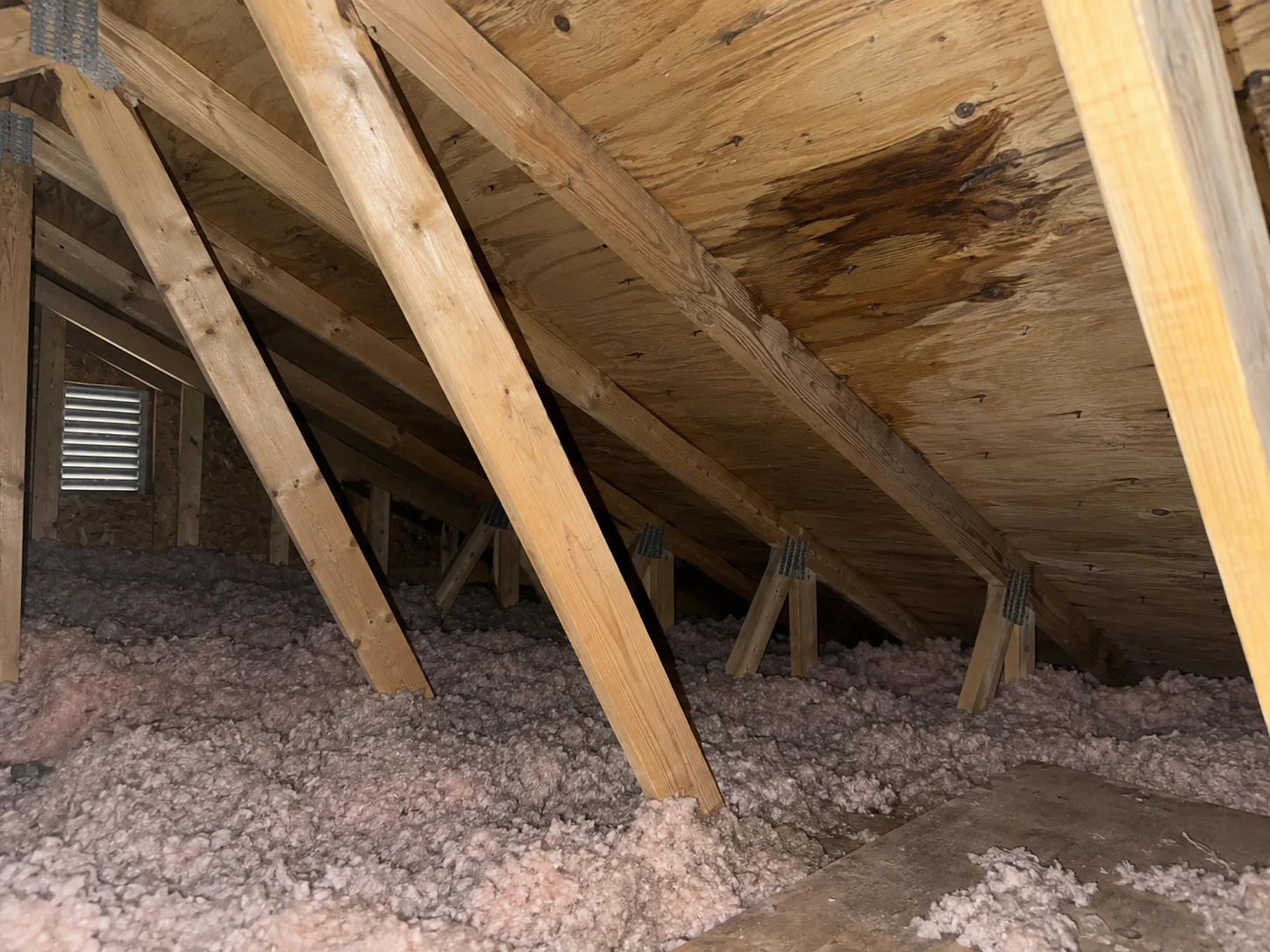
- Dark staining on roof decking or rafters
- Musty odor in an attic or upper room
- Water staining around a skylight or vent
- Wet wall areas near the ceiling
- Moisture appearing only during wind-driven rain
- Recurring stains after repainting
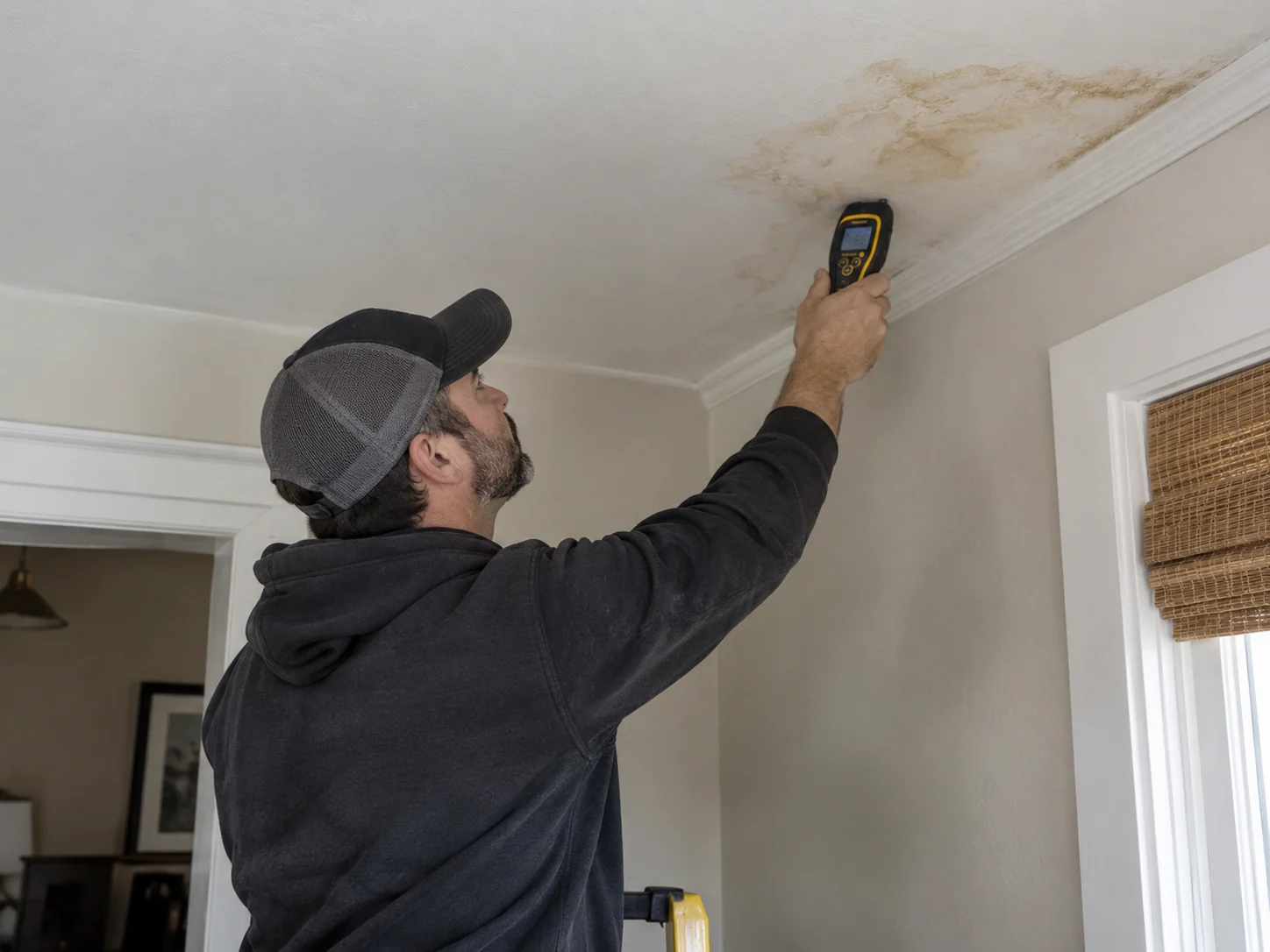
A Small Ceiling Stain Can Represent a Larger Hidden Area
Water may spread across the upper side of drywall or through insulation before enough moisture reaches the finished surface to create a stain.
The visible mark should therefore be treated as an indicator of where water became visible, not necessarily the exact location or full extent of the leak.
Where Can Water Travel After Entering Through a Hail-Damaged Roof?
After water passes through the exterior roofing system, gravity and building materials determine where it moves next.
Water may affect:
- Roof decking
- Rafters and trusses
- Attic insulation
- Ceiling drywall
- Interior wall cavities
- Electrical boxes and light fixtures
- Upper-floor walls
- Cabinets and built-ins
- Flooring and subflooring below
Insulation Can Hide a Roof Leak
Fiberglass or cellulose insulation may absorb or redirect small amounts of water, delaying visible dripping into the room below.
Wet insulation can also slow drying and keep roof framing and ceiling materials damp.
Water Can Move Down Interior Walls
Once moisture reaches a wall cavity, it may travel around framing and utility openings. A roof leak can therefore create wall or flooring damage below the original roof penetration.
McMahon Services explains these pathways in its guide to hidden water damage after storms.
What Should You Do After Hail if You Suspect a Roof Leak?
-
Stay off a potentially damaged roof.
Hail, rain, loose granules, damaged shingles, steep slopes, and weakened roofing materials can create fall hazards.
-
Document exterior storm conditions from the ground.
Photograph visible hail, damaged gutters, siding, windows, fallen debris, and roof conditions that can be observed safely.
-
Document interior water damage.
Photograph ceiling stains, dripping, peeling paint, wet insulation, damaged contents, and any affected walls or flooring.
-
Move vulnerable contents when safe.
Relocate furniture, electronics, rugs, artwork, and belongings away from active dripping or wet areas.
-
Use electrical caution.
Do not use ceiling fixtures, outlets, fans, or electrical equipment that may have been exposed to water.
-
Arrange a professional roof inspection.
McMahon Services provides storm damage restoration, roofing, and siding services for properties affected by hail, wind, and severe weather.
-
Evaluate hidden interior moisture.
When water has entered the attic or living space, interior materials should be inspected rather than waiting for additional staining to appear.
-
Begin water mitigation when necessary.
McMahon Services also provides water damage restoration when roof leaks affect insulation, ceilings, walls, flooring, or other building materials.
Safety Warning: Do not climb onto a wet, steep, icy, hail-covered, or visibly damaged roof to search for impact marks. Stay clear of sagging ceilings and avoid wet electrical fixtures. Roof inspection and emergency protection should be performed using appropriate safety procedures.
What Mistakes Should You Avoid After Hail Damage?
- Do not assume the roof is undamaged because no shingles are missing. Hail damage may be subtle or affect flashing and other components.
- Do not ignore a small ceiling stain. Moisture may be spreading through insulation, decking, framing, or walls.
- Do not simply repaint the ceiling. The roof source and hidden moisture should be addressed first.
- Do not wait for another major leak before requesting inspection. Repeated rainfall can increase interior damage.
- Do not walk on a storm-damaged roof without appropriate precautions. Wet or damaged roofing can be hazardous.
- Do not replace ceiling drywall before correcting the roof leak. New materials may become wet again.
- Do not assume attic insulation is dry because the ceiling looks dry. Moisture may remain concealed above the finished surface.
- Do not discard damaged materials before documenting them. Photographs and repair records may be useful for insurance review.
How Is a Hail-Damaged Roof Professionally Inspected?
A professional storm inspection evaluates both the roofing surface and components that may allow water intrusion.
1. Exterior Property Review
Inspectors may look for hail impact on gutters, downspouts, siding, vents, flashing, metal components, and other exterior surfaces that can provide context about the storm.
2. Roof Surface Inspection
Shingles are evaluated for bruising, granule loss, cracking, missing tabs, seal damage, and other storm-related conditions.
3. Flashing and Penetration Inspection
Areas around vents, chimneys, skylights, valleys, walls, pipes, and roof transitions are inspected because leaks frequently develop around penetrations and flashing systems.
4. Roof Edge and Drainage Review
Gutters, roof edges, downspouts, and drainage pathways may be checked for storm impact or conditions that contribute to water problems.
5. Interior or Attic Correlation
When a leak is suspected, exterior findings can be compared with attic staining, wet insulation, ceiling damage, or other interior evidence.
How Is Hidden Interior Water Damage Checked After a Roof Leak?
Once water enters through a damaged roof, inspection should extend beyond the roof surface when there are signs of interior moisture.
Attic Inspection
Roof decking, rafters, trusses, insulation, vents, and penetrations may be checked for staining, dampness, deterioration, and water pathways.
Ceiling and Wall Inspection
Ceiling drywall, wall surfaces, trim, and nearby rooms may be inspected for staining, softness, swelling, or elevated moisture.
Moisture Measurements
Moisture meters may help identify damp building materials and compare affected areas with similar dry materials.
Connected Areas Should Be Considered
Water from an attic can enter wall cavities and travel to lower portions of the structure. Inspection may therefore include rooms below or beside the original ceiling stain.
A Moisture Meter Does Not Locate the Roof Defect by Itself
Moisture readings identify wet materials but do not necessarily reveal the exact roof opening. Exterior roof inspection and interior moisture mapping should be considered together.
Can Hail-Damaged Roofing Be Repaired, or Does the Roof Need Replacement?
The answer depends on the extent and distribution of the damage, roof age, roofing system, affected components, and whether isolated repairs can restore the system reliably.
Repair May Be More Appropriate When:
- Damage is localized
- Only a limited number of shingles or components are affected
- The surrounding roof remains serviceable
- Flashing or a roof penetration can be repaired independently
- Replacement materials can integrate appropriately with the existing roof
Broader Replacement May Be Considered When:
- Hail damage is widespread across multiple roof slopes
- Many shingles show impact damage
- The roof is already significantly aged or deteriorated
- Multiple components and penetrations are compromised
- Repair would not provide a reliable long-term roof system
The correct scope requires site-specific evaluation rather than assuming every hailstorm requires full roof replacement or, conversely, that a visually intact roof requires no repairs.
How Is Interior Water Damage Restored After a Hidden Roof Leak?
Roof repair stops additional weather intrusion, but water already inside the building may require separate restoration.
1. Correct the Roof Source
The damaged roofing, flashing, vent, penetration, or other source should be repaired or temporarily protected as appropriate.
2. Remove Standing Water When Present
Visible water is extracted from affected interior areas when necessary.
3. Map Hidden Moisture
Ceilings, walls, insulation, framing, flooring, and adjoining areas are evaluated to determine how far water traveled.
4. Remove Materials That Cannot Be Restored
Wet insulation, deteriorated drywall, swollen trim, damaged ceiling materials, or other unsalvageable products may require controlled removal.
5. Dry Retained Materials
Structurally sound framing, decking, and other materials may be dried using appropriate air movement, dehumidification, and monitoring.
6. Address Mold When Necessary
When a roof leak remains hidden long enough for mold to develop, remediation may need to be incorporated into the restoration plan.
McMahon Services explains this connection further in its guide to whether a small roof leak can cause mold.
7. Reconstruct Damaged Interior Finishes
After the roof is repaired and retained materials are dry, insulation, drywall, ceiling texture, paint, trim, and other finishes can be restored.
How Long Do Hail Roof Repairs and Interior Water Restoration Take?
There is no universal timeline because a localized roof repair with a small ceiling stain is very different from widespread hail damage that causes attic, insulation, ceiling, wall, and flooring damage.
| Timeline Factor | Why It Matters |
|---|---|
| Extent of hail damage | Localized impact generally requires less roofing work than widespread damage. |
| Roof complexity | Valleys, skylights, dormers, chimneys, and multiple roof slopes can add inspection and repair requirements. |
| Interior water spread | Wet insulation, ceilings, walls, and flooring increase the restoration scope. |
| Drying progress | Reconstruction should wait until retained materials reach an appropriate dry condition. |
| Weather | Continued rain or severe weather may affect roof access and emergency protection. |
| Reconstruction scope | Drywall, insulation, ceiling finishes, paint, flooring, or other interior repairs add project stages. |
The overall project should progress according to roof stabilization, moisture conditions, drying results, material condition, and reconstruction requirements rather than a fixed number of days.
What Affects the Cost of Hail Damage and Hidden Roof Leak Restoration?
The cost depends on both the roofing damage and any water damage created inside the structure.
Common cost factors include:
- The size and pitch of the roof
- Roofing material
- Number of affected roof slopes
- Extent of hail impact
- Flashing, vent, skylight, or penetration repairs
- Emergency roof protection
- Roof decking damage
- Wet attic insulation
- Ceiling and drywall damage
- Interior wall moisture
- Water extraction and structural drying
- Mold remediation if the leak remained hidden
- Interior reconstruction and painting
A small roof defect can still create significant interior damage when water remains hidden for an extended period. Conversely, visible exterior hail damage does not always mean extensive interior water intrusion occurred.
A site-specific inspection is necessary to establish a reliable roofing and restoration scope.
What Should You Document for an Insurance Claim After Hail Damage?
Insurance coverage depends on the policy, storm event, age and condition of the roof, cause of the leak, and other circumstances. Property owners should contact their insurance carrier or representative regarding coverage and claim requirements.
When conditions are safe, document:
- The date and approximate time of the hailstorm
- Visible hailstones when available
- Exterior siding, gutter, downspout, or roof-related damage
- Interior ceiling and wall stains
- Active dripping or water intrusion
- Wet attic insulation
- Damaged contents
- Roof inspection findings
- Temporary roof protection
- Moisture readings and drying records
- Materials removed during restoration
- Roofing and interior repair estimates
Document Damage Before Repairs When Conditions Allow
Photographs of exterior impact, roof components, attic moisture, ceiling damage, and affected contents can help preserve the condition before emergency work or permanent repairs change the scene.
Necessary emergency steps should not be delayed when waiting would allow additional property damage.
Why Is Hidden Hail Damage a Concern in Northern Illinois and Southern Wisconsin?
Homes and commercial buildings throughout Hainesville, Lake County, Northern Illinois, Southern Wisconsin, and surrounding communities can experience severe thunderstorms, hail, high winds, heavy rain, snow, ice, and rapid seasonal weather changes.
Regional storm conditions can create several related roofing problems:
- Hail impact to asphalt shingles
- Wind-driven rain entering damaged roofing
- Damaged flashing and roof penetrations
- Gutter and drainage damage
- Repeated rainfall after the initial hailstorm
- Wet attic insulation
- Ceiling and wall water damage
- Freeze-thaw conditions affecting existing roof vulnerabilities
A roof may appear normal from the ground immediately after a storm while small impact damage remains unnoticed. Later rainfall can reveal the problem through attic moisture, ceiling stains, or interior leaks.
McMahon Services provides storm damage restoration, roofing, and siding services along with water damage restoration throughout Northern Illinois, Southern Wisconsin, and surrounding service areas.
Professional Tip: After a significant hailstorm, do not use missing shingles as the only test for roof damage. Hail can affect shingle surfaces, flashing, vents, penetrations, and seals without creating an obvious hole. If new ceiling stains or attic moisture appear after the storm, evaluate both the roof and the interior water pathway.
Get Help With Hail Damage and Hidden Roof Leaks
Hail damage can create roofing problems that are difficult to identify from the ground. Small impact areas, damaged flashing, compromised vents, or weakened shingles can allow water into the attic and interior during later rainstorms.
McMahon Services & Construction Corp can coordinate storm damage inspection, roofing and siding repairs, emergency weather protection, hidden moisture evaluation, water extraction, structural drying, damaged-material removal, and interior reconstruction when a roof leak causes water damage.
The team serves homes and businesses throughout Hainesville, Lake County, Northern Illinois, Southern Wisconsin, and surrounding communities.
Call McMahon Services at (847) 566-4568 for help with hail damage, hidden roof leaks, storm damage, ceiling water damage, roofing repairs, and property restoration.
Frequently Asked Questions About Hail Damage and Hidden Roof Leaks
Can hail cause a roof leak without breaking the shingles?
Yes. Hail can bruise shingles, remove granules, weaken the asphalt layer, affect seals, or damage flashing and roof penetrations without creating an obvious broken shingle. Water may begin entering during the hailstorm or during later rainfall.
How can I tell if hail damaged my roof if I cannot see anything from the ground?
Possible clues include dents on gutters or other exterior components, new attic moisture, ceiling stains, water appearing after rain, or other storm damage around the property. A professional roof inspection may be necessary because subtle shingle and flashing damage can be difficult to identify from ground level.
Can a hail-damaged roof start leaking weeks later?
Yes. Some impact damage weakens roofing materials without creating immediate visible leakage. Later rain, wind, temperature changes, or repeated wetting can reveal the damaged area and allow water to enter the structure.
Does a ceiling stain show exactly where the roof is leaking?
Not necessarily. Water can travel along roof decking, rafters, trusses, pipes, insulation, and other building components before reaching the ceiling. The visible stain may be several feet away from the actual roof entry point.
Should I replace the ceiling drywall if the roof leaked?
Not automatically. Ceiling drywall may sometimes be dried when exposure is limited and the material remains structurally sound. Replacement becomes more likely when drywall is sagging, soft, swollen, mold-affected, deteriorated, or blocking access to wet insulation.
Can a small hail-related roof leak cause mold?
Yes. A small leak can create mold-related concerns when drywall, insulation, framing, roof decking, or other materials remain damp. Hidden leaks can be especially problematic because moisture may continue for multiple storms before the damage is discovered.
Should I climb onto my roof to look for hail damage?
Roof inspection after a storm can involve fall hazards, loose granules, wet surfaces, steep slopes, and damaged materials. Homeowners can document visible conditions from the ground, but close roof inspection is better handled using appropriate safety procedures.
Who should I call if hail damaged my roof and caused interior water damage?
A storm damage and roofing contractor can evaluate the exterior roof system, while water damage restoration may be necessary for wet insulation, ceilings, walls, flooring, and other interior materials. McMahon Services can coordinate both the roofing and interior restoration portions of a hail-related loss.




0 Comments