How Does Emergency Board-Up Protect a Fire-Damaged Property?
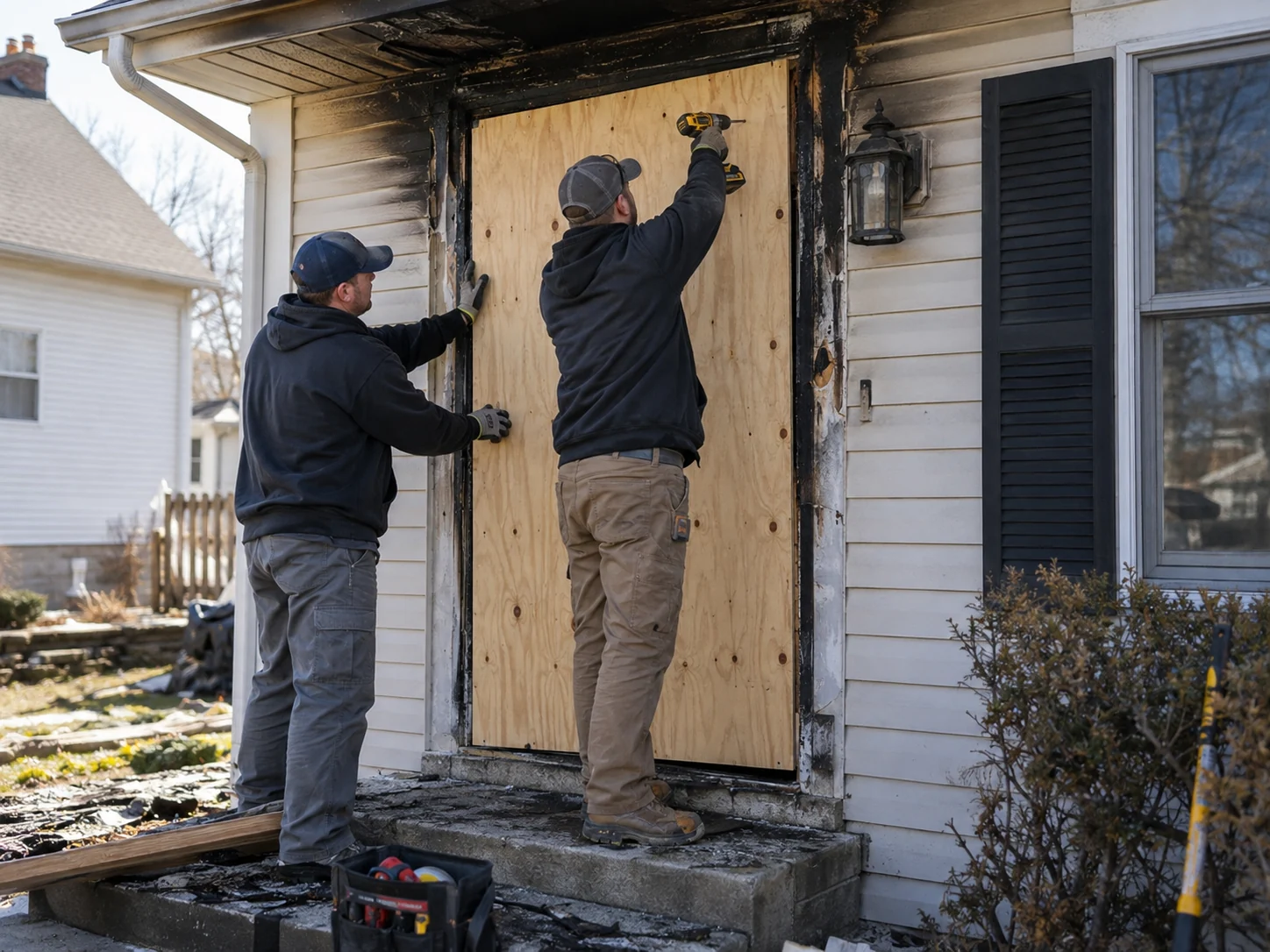
Emergency board-up is the process of temporarily securing windows, doors, wall openings, roof openings, and other vulnerable parts of a property after a fire. It is commonly needed when firefighters, heat, smoke, falling debris, broken glass, or structural damage leave the building exposed to weather, unauthorized entry, animals, or additional property damage.
Board-up work does not repair the fire damage permanently. Its purpose is to stabilize and protect the property while the damage is assessed, insurance documentation is completed, cleanup begins, and permanent reconstruction is planned.
A fire-damaged building may also have water damage from firefighting, smoke and soot contamination, damaged electrical systems, weakened framing, broken windows, roof openings, and debris throughout the structure. Emergency securing is therefore often one of the first restoration steps after the fire department determines that restoration personnel can safely approach the property.
Quick Answer
Emergency board-up is typically needed after a fire when windows, doors, walls, roofing, or other exterior openings are damaged and leave the property exposed. Temporary boards, tarps, barriers, or other protective measures help reduce weather intrusion, unauthorized access, animal entry, and additional damage while fire restoration and reconstruction are organized. Do not enter or begin securing a fire-damaged building until emergency personnel have determined that access is appropriate.
Key Takeaways
- Emergency board-up temporarily protects a fire-damaged property before permanent repairs begin.
- Broken windows, damaged doors, roof openings, wall openings, and compromised access points may need to be secured.
- Board-up should not begin until emergency responders have released the property for appropriate access.
- Fire damage often includes smoke, soot, debris, and firefighting water in addition to burned materials.
- Temporary securing can help reduce rain, snow, wind, animals, vandalism, and unauthorized entry.
- Roof tarping or other weather protection may be required when fire or firefighting creates roof openings.
- Board-up is not a substitute for structural repair, smoke cleanup, water mitigation, or reconstruction.
- Documentation before and during emergency protection can support restoration planning and insurance review.
Table of Contents
- What emergency board-up includes
- When board-up is needed after a fire
- What parts of the property may need securing
- Why emergency securing matters
- Why fire department clearance comes first
- What homeowners should do after a fire
- How firefighting water affects the property
- What happens to smoke and soot damage
- How professional emergency board-up works
- Temporary protection versus permanent repairs
- Mistakes to avoid after a fire
- What happens after board-up
- How long fire restoration may take
- What affects the restoration cost
- Insurance documentation considerations
- Northern Illinois and Southern Wisconsin considerations
- Frequently asked questions
What Does Emergency Board-Up Include After a Fire?
Emergency board-up is a temporary property-protection service performed after windows, doors, roof sections, walls, or other openings are damaged.
The exact scope depends on the building and the extent of fire damage, but emergency securing may include:
- Boarding broken windows
- Securing damaged exterior doors
- Covering wall openings
- Temporarily protecting roof openings
- Installing tarps when appropriate
- Restricting unsafe entry points
- Protecting openings created during firefighting operations
- Securing detached or damaged exterior components
- Establishing temporary barriers around unsafe areas
The objective is not to make the property look finished. The goal is to reduce additional exposure until restoration professionals can evaluate the complete loss and permanent repairs can begin.
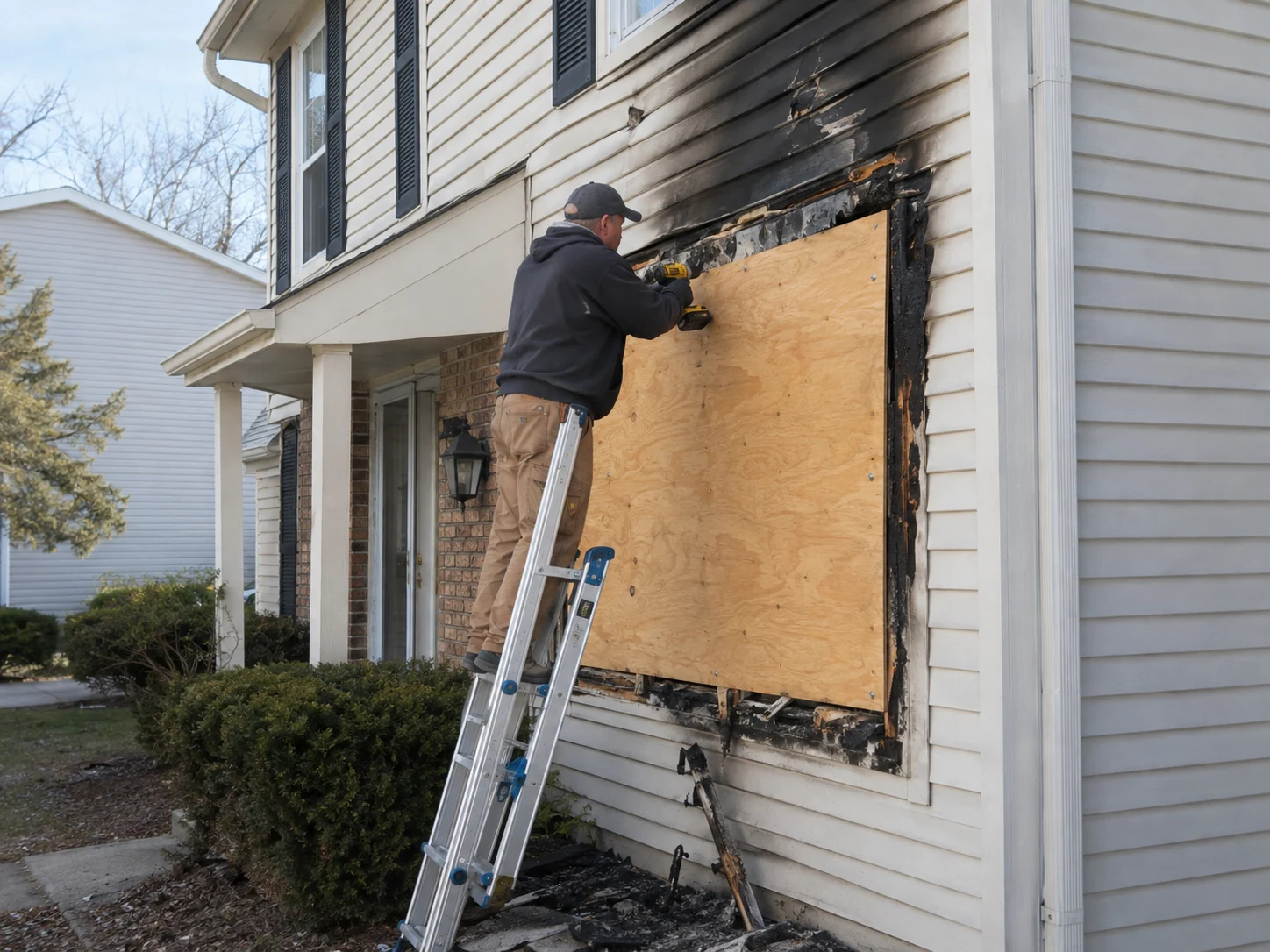
Board-Up Is a Temporary Stabilization Measure
Plywood, temporary barriers, tarps, and other protective materials are used to secure vulnerable openings until the damaged components can be permanently repaired or replaced.
The board-up should be coordinated with the larger restoration plan so temporary materials do not interfere unnecessarily with inspection, drying, smoke cleanup, or reconstruction.
When Is Emergency Board-Up Needed After a Fire?
Board-up is commonly appropriate when the building envelope has been opened or damaged enough that the property can no longer be secured normally.
Common Situations Include:
- Windows shattered by heat or firefighting activity
- Exterior doors damaged or forced open
- Roof sections opened during ventilation
- Fire damage creating holes in exterior walls
- Garage doors damaged or inoperable
- Broken skylights
- Damaged siding or exterior panels exposing the interior
- Openings that allow rain or snow into the structure
- Areas that cannot be locked securely
- Unsafe sections that need temporary access restriction
Even a Small Opening Can Create Additional Damage
A broken window or damaged roof section may appear minor compared with the fire itself, but the opening can allow rain, snow, wind, debris, birds, rodents, and unauthorized people into the structure.
If the property will remain unoccupied while restoration is planned, temporary securing becomes especially important.
Which Parts of a Fire-Damaged Property May Need to Be Secured?
Emergency board-up is not limited to windows. Restoration professionals evaluate the exterior envelope and access points to identify areas that leave the structure vulnerable.
| Area | Possible Fire Damage | Temporary Protection |
|---|---|---|
| Windows | Broken glass, warped frames, heat damage | Board-up until glazing and framing can be replaced |
| Exterior doors | Burned panels, broken locks, forced entry damage | Temporary securing or board-up where normal locking is not possible |
| Roof | Fire openings, ventilation cuts, damaged shingles, decking, or framing | Temporary tarp or other weather protection when structurally appropriate |
| Exterior walls | Burn-through, removed siding, damaged sheathing | Temporary panels or barriers until reconstruction |
| Garage openings | Damaged garage door, tracks, opener, or wall structure | Temporary closure or restricted access |
| Skylights | Broken glazing, heat damage, roof opening | Temporary weather protection where safe and appropriate |
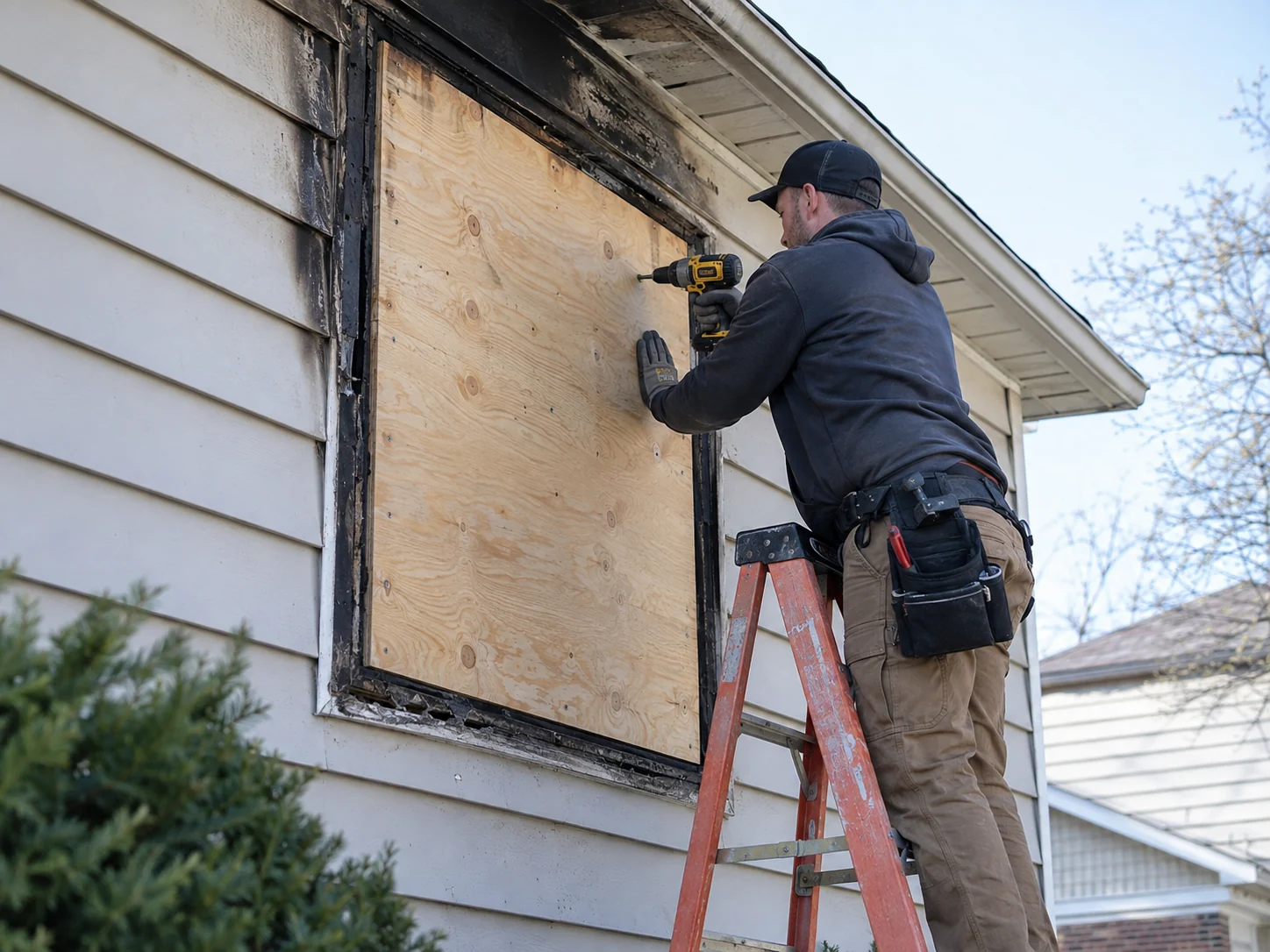
Boarding a Fire-Damaged Window Requires More Than Covering the Glass
The surrounding frame, wall, siding, and structural attachment points should be considered before temporary panels are installed. Heat damage may weaken materials around the opening.
Why Is Emergency Board-Up Important After a Fire?
Fire can leave a building vulnerable even after flames are extinguished. Emergency securing helps reduce additional losses while the restoration project moves forward.
1. Weather Protection
Open windows, damaged roofing, and exterior wall openings may allow rain or snow into the structure.
Additional water can compound existing damage to:
- Ceilings
- Drywall
- Insulation
- Flooring
- Cabinets
- Contents
- Wood framing
2. Property Security
A building that cannot be locked normally may be vulnerable to unauthorized entry, vandalism, or theft.
Temporary securing helps restrict access until permanent doors, windows, and exterior assemblies are repaired.
3. Animal and Debris Control
Birds, rodents, insects, leaves, snow, and wind-driven debris can enter through exposed openings and create additional cleanup problems.
4. Protection During Insurance and Restoration Planning
Fire restoration may involve inspections, estimates, contents evaluation, demolition planning, drying, smoke cleanup, permitting, and reconstruction. Temporary property protection helps reduce additional damage while those steps are underway.
Why Must Emergency Responders Clear the Property Before Board-Up Begins?
A fire-damaged structure can contain hazards that are not obvious from outside.
Potential hazards include:
- Unstable roofing
- Weakened floors and stairs
- Burned structural framing
- Falling ceilings
- Broken glass
- Damaged electrical systems
- Gas-line concerns
- Hot spots
- Smoke and soot contamination
- Standing firefighting water
Property owners should not enter simply because the visible fire is out. Access should follow the direction of the fire department and other authorities responsible for the scene.
Structural Damage May Not Be Visible From the Ground
Roof rafters, trusses, joists, wall framing, and connections can lose strength when exposed to heat and fire. A surface that appears intact may not be safe to walk on or attach temporary protection to.
Safety Warning: Do not enter, climb on, or attempt to board up a fire-damaged structure before emergency personnel have determined that appropriate access is permitted. Damaged roofs, floors, walls, electrical systems, broken glass, smoke residue, and hidden hot spots can create serious hazards.
What Should a Homeowner Do Immediately After a Fire?
-
Follow fire department instructions.
Do not re-enter the property until emergency personnel indicate that access is appropriate.
-
Confirm that everyone is accounted for.
Personal safety takes priority over belongings or building protection.
-
Contact the insurance carrier or representative.
Report the loss and ask about immediate documentation and emergency mitigation requirements.
-
Document exterior conditions when safe.
Take photographs or video of damaged windows, doors, roofing, siding, smoke staining, firefighting openings, and visible water damage.
-
Arrange emergency property securing.
If windows, doors, walls, or roofing are open, a restoration contractor can evaluate board-up and weather-protection needs after the property is released for appropriate access.
-
Address water damage promptly.
Firefighting water may remain in flooring, walls, ceilings, insulation, and contents after the fire is extinguished.
-
Begin fire and smoke damage assessment.
Smoke, soot, heat, water, and structural damage should be evaluated before cleaning or reconstruction begins.
What Happens to Firefighting Water After a House Fire?
Fire suppression can introduce significant amounts of water into a structure. Water may collect on floors, run through wall cavities, travel between levels, soak insulation, and reach areas that were not directly burned.
Possible water-affected materials include:
- Drywall
- Ceilings
- Carpet and padding
- Hardwood flooring
- Subflooring
- Insulation
- Cabinets
- Wood framing
- Furniture and contents
McMahon Services explains the drying and restoration issues in its guide to firefighting water damage after a house fire.
Board-Up and Water Mitigation May Happen in the Same Emergency Phase
Temporary exterior protection helps reduce new weather-related water entry while restoration technicians address water already inside the building.
Extraction, material removal, moisture inspection, and structural drying may need to begin before permanent fire repairs are completed.
What Happens to Smoke and Soot Damage After the Property Is Secured?
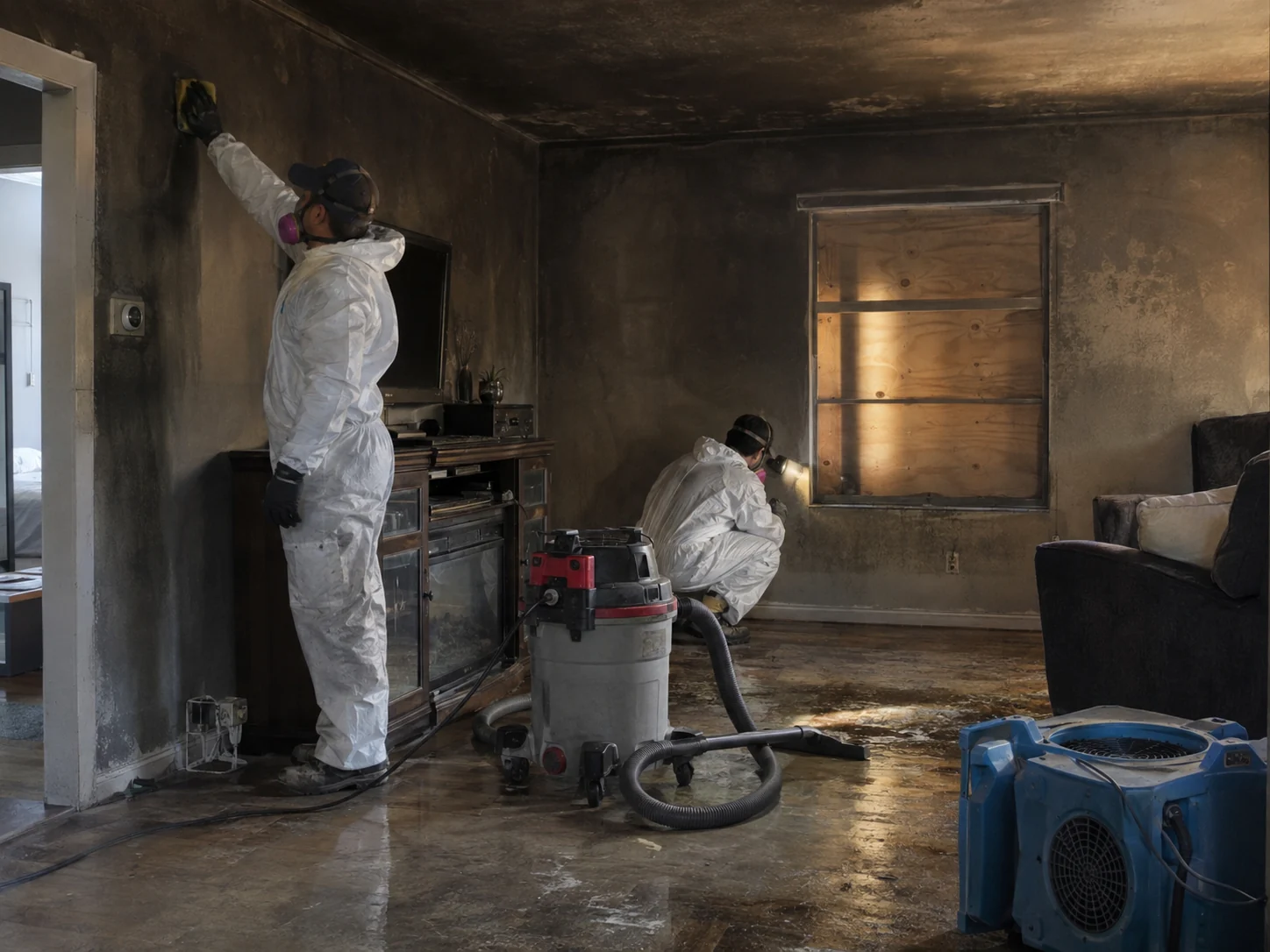
Board-up protects openings, but it does not remove smoke residues or odors inside the building.
Smoke and soot can affect:
- Walls and ceilings
- Cabinets and trim
- Flooring
- Furniture
- Electronics
- Clothing and textiles
- HVAC components
- Personal contents
Different Areas Can Have Different Smoke Residues
Heat, airflow, burned materials, fire location, and building layout affect where smoke travels and how residues deposit.
Some rooms may have heavy soot while others show only odor or a light film.
McMahon Services provides more information about these effects in its guide to smoke damage in your home.
How Does Professional Emergency Board-Up Work?
The exact procedure depends on the fire damage, structural condition, building design, and instructions from emergency personnel.
1. Exterior Safety Assessment
The team evaluates visible damage, access routes, broken glass, roof conditions, structural concerns, utilities, and locations that require temporary protection.
2. Identify Vulnerable Openings
Windows, doors, wall openings, garage openings, roof penetrations, and other exposed sections are documented.
3. Remove or Control Loose Hazards When Appropriate
Loose glass or unstable debris may need controlled handling before temporary materials can be installed.
4. Install Temporary Board-Up
Protective panels may be installed over damaged openings using methods suited to the remaining structure and future reconstruction needs.
5. Protect Roof Openings When Necessary
Temporary roof protection may be used when fire or firefighting operations leave the structure vulnerable to precipitation.
6. Document the Emergency Work
Photographs and records can show which openings were secured and what conditions existed before restoration began.
7. Transition Into Cleanup and Restoration
After the building is protected, restoration can proceed with water mitigation, debris removal, smoke and soot cleaning, material evaluation, and reconstruction planning.
Is Emergency Board-Up a Permanent Repair?
No. Board-up and tarping are temporary stabilization measures designed to protect the structure until permanent restoration can be completed.
Temporary Emergency Work May Include:
- Plywood over broken windows
- Temporary door securing
- Roof tarps
- Temporary wall protection
- Access barriers
Permanent Repairs May Include:
- Window replacement
- Exterior door replacement
- Roof framing and roofing repairs
- Siding and sheathing replacement
- Structural framing repair
- Drywall replacement
- Insulation replacement
- Flooring repairs
- Electrical and mechanical repairs
- Painting and finish work
McMahon Services provides cleanup and rebuild services when fire damage requires both emergency mitigation and permanent reconstruction.
What Mistakes Should You Avoid After a House Fire?
- Do not enter before the property is released for access. Structural, electrical, fire, and air-quality hazards may remain.
- Do not climb onto a damaged roof. Fire can weaken decking, rafters, trusses, and connections.
- Do not assume broken windows are the only openings that matter. Roof and wall damage may also expose the structure.
- Do not ignore firefighting water. Wet building materials may require extraction and structural drying.
- Do not wipe soot from every surface using household methods. Improper cleaning can spread or embed residues.
- Do not reconnect or operate fire-damaged electrical equipment. Electrical components should be evaluated before use.
- Do not begin permanent rebuilding before the damage scope is established. Hidden fire, smoke, and water damage may need to be addressed first.
- Do not discard major damaged items before documentation. Photograph materials and contents when conditions allow.
What Happens After Emergency Board-Up?
Once the structure is temporarily protected, the restoration process can move from emergency stabilization into cleanup and rebuilding.
1. Fire Damage Assessment
Burned materials, structural components, smoke pathways, contents, utilities, and affected rooms are evaluated.
2. Water Extraction and Drying
Standing firefighting water is removed and wet structural materials are identified.
3. Debris Removal
Burned and unsalvageable materials may be removed in a controlled manner after documentation and project planning.
4. Smoke and Soot Cleaning
Retained surfaces and contents are evaluated for appropriate cleaning based on residue, material, and condition.
5. Odor Treatment
Odor reduction generally requires removal of damaged source materials and appropriate cleaning rather than simply masking the smell.
6. Structural and Building-System Repairs
Framing, roofing, plumbing, electrical, HVAC, insulation, drywall, windows, doors, flooring, and other building components may require repair or replacement.
7. Reconstruction
Once cleanup, drying, and structural preparation are complete, permanent construction repairs can restore the damaged areas.
McMahon Services provides fire and smoke damage restoration covering emergency response, cleanup, smoke and soot restoration, and coordination of repairs after residential and commercial fires.
How Long Does Fire Cleanup and Reconstruction Take?
There is no universal fire restoration timeline. A small contained fire with limited smoke and water damage may require less work than a structural fire affecting roofing, framing, utilities, multiple rooms, and contents.
| Timeline Factor | Why It Matters |
|---|---|
| Structural damage | Roof, wall, floor, or framing repairs can substantially expand the project. |
| Firefighting water | Wet materials may require extraction, demolition, and drying before reconstruction. |
| Smoke spread | Smoke and soot may affect rooms well beyond the burn area. |
| Contents | Cleaning, inventory, packing, storage, or replacement of contents adds project stages. |
| Utilities | Electrical, plumbing, gas, and HVAC systems may require inspection and repair. |
| Permits and reconstruction | Larger rebuilding projects may require design, permits, inspections, material ordering, and multiple trades. |
Board-up may be completed during the emergency stage, while the full cleanup and reconstruction process continues based on the damage assessment and repair requirements.
What Affects the Cost of Emergency Board-Up and Fire Restoration?
The cost depends on both the immediate property-protection work and the larger restoration scope.
Common factors include:
- Number and size of windows or doors requiring temporary protection
- Roof openings or tarp requirements
- Structural instability
- Accessibility of damaged areas
- Emergency labor requirements
- Amount of firefighting water
- Smoke and soot contamination
- Debris removal
- Contents cleaning or replacement
- Electrical, plumbing, HVAC, and roofing damage
- Structural framing repairs
- Permanent window, door, roof, siding, and interior reconstruction
A house with only several broken windows may require a relatively limited board-up scope, while a severe fire affecting roofing, walls, utilities, and multiple rooms can require substantial stabilization and rebuilding.
A site-specific assessment is necessary before developing a reliable fire restoration scope.
What Should You Document for a Fire Insurance Claim?
Coverage depends on the policy and circumstances of the loss. Property owners should communicate directly with their insurer or representative regarding claim requirements and coverage.
When conditions allow, document:
- The date and time of the fire
- Fire department information or incident documentation when available
- Exterior fire damage
- Broken windows and doors
- Roof and siding damage
- Interior fire and smoke damage
- Firefighting water damage
- Damaged contents
- Areas boarded or temporarily protected
- Emergency restoration invoices
- Water extraction and drying records
- Smoke and soot cleanup documentation
- Materials removed during restoration
- Reconstruction estimates
Photograph Before and After Board-Up When Possible
Photographs showing the condition of broken windows, doors, wall openings, and roofing before temporary protection can help document why emergency securing was necessary.
Additional photographs after board-up show the steps taken to protect the building while the restoration process moves forward.
Why Is Fast Property Protection Important in Northern Illinois and Southern Wisconsin?
Fire-damaged properties in Hainesville, Lake County, Northern Illinois, Southern Wisconsin, and surrounding communities may be exposed to changing weather conditions shortly after a loss.
Regional concerns can include:
- Heavy rain
- Winter snow
- Freezing temperatures
- Strong winds
- Freeze-thaw cycles
- Storms entering through damaged roofing and windows
When fire damage leaves a roof, window, door, or wall opening exposed, weather can create a second layer of property damage before permanent repairs begin.
Cold weather can create additional problems when firefighting water remains inside an unheated structure. Wet materials, damaged plumbing, and open exterior assemblies may require prompt stabilization and planning.
McMahon Services provides fire and smoke damage restoration, water mitigation, emergency property protection, cleanup, and rebuilding services throughout Northern Illinois, Southern Wisconsin, and surrounding service areas.
Professional Tip: Emergency board-up should protect the property without becoming the end of the restoration plan. After the building is secured, address firefighting water, smoke and soot residue, damaged materials, structural concerns, utilities, and reconstruction before permanent finishes are installed.
Get Help Securing and Restoring a Fire-Damaged Property
A house fire can leave windows broken, doors damaged, roofing open, structural materials exposed, and the interior vulnerable to additional weather and security problems. Emergency board-up provides temporary protection while the complete fire damage restoration scope is developed.
McMahon Services & Construction Corp can coordinate emergency property securing, firefighting water extraction, structural drying, smoke and soot cleanup, damaged-material removal, contents-related restoration, and permanent reconstruction.
The team serves homes and businesses throughout Hainesville, Lake County, Northern Illinois, Southern Wisconsin, and surrounding communities.
Call McMahon Services at (847) 566-4568 for 24/7 help with emergency board-up, fire damage cleanup, smoke damage, firefighting water, and property restoration.
Frequently Asked Questions About Emergency Board-Up After a Fire
What is emergency board-up after a fire?
Emergency board-up is temporary protection installed over damaged windows, doors, wall openings, and other vulnerable areas after a fire. It helps secure the building and reduce additional exposure while cleanup and permanent repairs are planned.
When should a fire-damaged house be boarded up?
Board-up may be needed when fire, heat, firefighting operations, or structural damage leave windows, doors, roofing, walls, or other exterior openings unsecured. Work should begin only after emergency personnel allow appropriate access to the property.
Does every house fire require board-up?
No. A fire that does not damage the exterior envelope or normal security of the property may not require extensive board-up. The need depends on broken openings, roof damage, door damage, building security, and weather exposure.
Can I board up my house myself after a fire?
Fire-damaged buildings can contain unstable roofing, weakened floors, broken glass, electrical hazards, smoke residues, and hidden structural damage. Property owners should not enter or attempt board-up before emergency personnel permit access. Professional securing is particularly appropriate when structural or roof damage is involved.
Does emergency board-up stop smoke damage?
No. Board-up protects exterior openings but does not remove soot, smoke residue, or odor already inside the building. Fire and smoke restoration requires separate inspection and cleaning.
What happens if firefighting water is inside the house?
Standing water should be removed and wet materials evaluated for drying or removal. Firefighting water may spread into drywall, insulation, flooring, subfloors, ceilings, framing, and contents even in areas that were not directly burned.
How long do boards stay on a fire-damaged property?
There is no universal timeline. Temporary protection generally remains until permanent windows, doors, roofing, walls, or other exterior components can be safely repaired. The schedule depends on damage assessment, insurance coordination, permits, structural repairs, and reconstruction.
Who should I call for emergency board-up and fire restoration?
A fire damage restoration contractor can evaluate temporary property protection along with water mitigation, smoke and soot cleanup, damaged-material removal, and reconstruction needs. McMahon Services can coordinate emergency stabilization and the subsequent cleanup and rebuilding process.




0 Comments