How Does Firefighting Water Cause Secondary Damage After a House Fire?
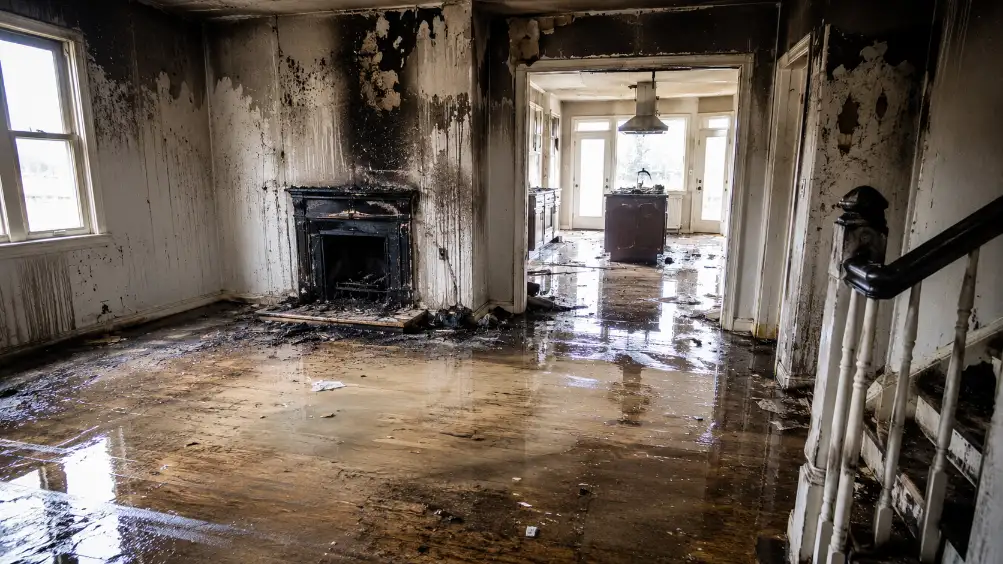
Firefighting water damage occurs when water used by fire hoses, automatic sprinklers, and other suppression methods saturates a property during or after a fire. The water can soak ceilings, drywall, insulation, flooring, cabinets, framing, furniture, electrical components, appliances, and personal belongings. It may also travel into wall cavities, lower floors, basements, and rooms that were never directly touched by flames.
The fire may be extinguished, but property damage can continue when water remains inside porous or concealed materials. Wet building materials may swell, sag, separate, corrode, stain, weaken, or develop mold. Water can also mix with soot, ash, smoke residue, and burned debris, creating contaminated runoff that is more difficult to clean than an ordinary household leak.
Effective restoration must address the fire, smoke, soot, suppression water, structural safety, wet contents, electrical concerns, odor, and permanent repairs as one coordinated project. Removing visible water without checking concealed spaces can leave moisture behind. Cleaning smoke residue without drying the property may also trap odor and contamination inside wet materials.
Quick Answer
Firefighting water can continue damaging a home after the flames are out by saturating porous materials, spreading soot-contaminated residue, weakening ceilings and finishes, corroding metal, and creating conditions for mold. Do not enter until the property has been cleared for safe access. Document the damage, avoid affected electrical and HVAC systems, and arrange prompt water extraction, moisture inspection, structural drying, smoke cleaning, and repair planning.
Key Takeaways
- Fire hoses and sprinkler systems can send water far beyond the room where the fire occurred.
- Walls and floors may look dry while moisture remains in insulation, framing, subflooring, and concealed cavities.
- Wet soot and ash can smear, stain, and penetrate porous building materials.
- Saturated drywall, insulation, carpet padding, engineered flooring, and composite cabinets may require removal.
- Electrical equipment exposed to heat, smoke, soot, or water should not be energized without professional evaluation.
- Fire cleanup and structural drying must be coordinated before reconstruction begins.
- Prompt water extraction and humidity control can reduce continuing deterioration and mold-related damage.
- Photographs, inventories, moisture readings, drying records, and professional reports may support an insurance claim.
Table of Contents
- What firefighting water damage is
- How suppression water spreads through a home
- How secondary damage develops
- Building materials that may be affected
- What happens when water mixes with soot and ash
- What to do after the fire department leaves
- Mistakes to avoid
- How professional fire and water restoration works
- What may be restored or replaced
- How long structural drying may take
- Can mold grow after a house fire?
- Electrical and HVAC concerns
- Insurance documentation considerations
- Northern Illinois and Southern Wisconsin considerations
- Frequently asked questions
What Is Firefighting Water Damage?
Firefighting water damage refers to water-related deterioration that occurs when a structure is exposed to fire hoses, automatic sprinklers, portable extinguishing equipment, or water used during overhaul and fire suppression.
The amount of water depends on the size and location of the fire, building design, suppression system, length of the emergency response, and whether hidden hot spots must be cooled after the visible flames are extinguished.
Common sources include:
- High-volume fire department hoses
- Automatic sprinkler systems
- Portable fire suppression equipment
- Water applied to concealed hot spots
- Water used while opening burned walls and ceilings
- Plumbing pipes or appliance lines damaged by heat
- Broken sprinkler pipes, heads, or fittings
- Rain or snow entering through damaged roofing or windows
McMahon Services includes water cleanup and removal as part of its fire and smoke damage restoration services because fire suppression frequently leaves both visible and concealed moisture inside a damaged home or commercial building.
Suppression Water Is Not an Ordinary Household Spill
Water used during a fire may pass through burned drywall, soot, ash, insulation, roofing, ceiling debris, damaged furniture, plastics, electronics, and other materials before collecting on a floor or reaching a lower level.
The condition of the water depends on what burned and where it traveled. A restoration team must evaluate both the moisture and the residue carried by the water before deciding which materials can be cleaned, dried, restored, or retained.
The Fire May Create Additional Water Entry Points
Heat and firefighting operations may leave openings in the roof, windows, doors, siding, and exterior walls. Plumbing and utility connections may also be damaged.
Even after the original suppression water is removed, rain, snow, and melting ice may continue entering the structure. Emergency board-up, temporary roof covering, plumbing isolation, and property securing may be necessary to prevent further damage.
How Does Firefighting Water Spread Through a Home?
Water follows gravity, seams, openings, penetrations, and the path of least resistance. A fire on an upper level may cause substantial water damage on the floors below even when those rooms were not directly burned.
Suppression water may travel through:
- Open stairways and hallways
- Floorboard seams and flooring transitions
- Ceiling openings and recessed light fixtures
- Wall cavities and plumbing chases
- HVAC registers and mechanical openings
- Cabinet bases and appliance openings
- Electrical boxes and wiring pathways
- Gaps around pipes, vents, and structural framing
- Damaged roof decking, sheathing, and exterior walls
A puddle on the floor does not show the complete moisture boundary. Water may remain beneath flooring, behind baseboards, inside wall insulation, above ceilings, under cabinets, and around structural framing after visible standing water has been removed.
Lower Floors Can Sustain Significant Water Damage
Water applied on an upper floor may soak through the floor assembly and enter the ceiling below. It can affect ceiling drywall, insulation, light fixtures, electrical boxes, wall cavities, cabinets, furniture, and flooring across multiple levels.
Water may also collect in basements and utility rooms where electrical panels, furnaces, water heaters, laundry equipment, sump pumps, freezers, and stored belongings are located.
Firefighting Openings Expose Concealed Materials
Firefighters may open walls and ceilings to locate hidden flames and hot spots. These openings are necessary for fire control but can allow water to reach framing, insulation, wiring, and adjacent cavities.
Those exposed areas later require inspection, debris removal, cleaning, moisture evaluation, structural drying, and reconstruction.
How Does Secondary Damage Develop After the Fire?
Secondary damage is deterioration that continues after the immediate emergency. It develops when water, soot, smoke residue, elevated humidity, and damaged materials remain inside the structure.
1. Porous Materials Continue Absorbing Water
Drywall, insulation, wood, carpeting, padding, upholstery, cabinets, paper products, and other porous materials can continue absorbing moisture after visible standing water is removed.
Water may also wick into materials above or beside the original wet area. This can expand the damage boundary and affect rooms or wall sections that initially appeared dry.
2. Ceilings and Walls May Sag or Lose Strength
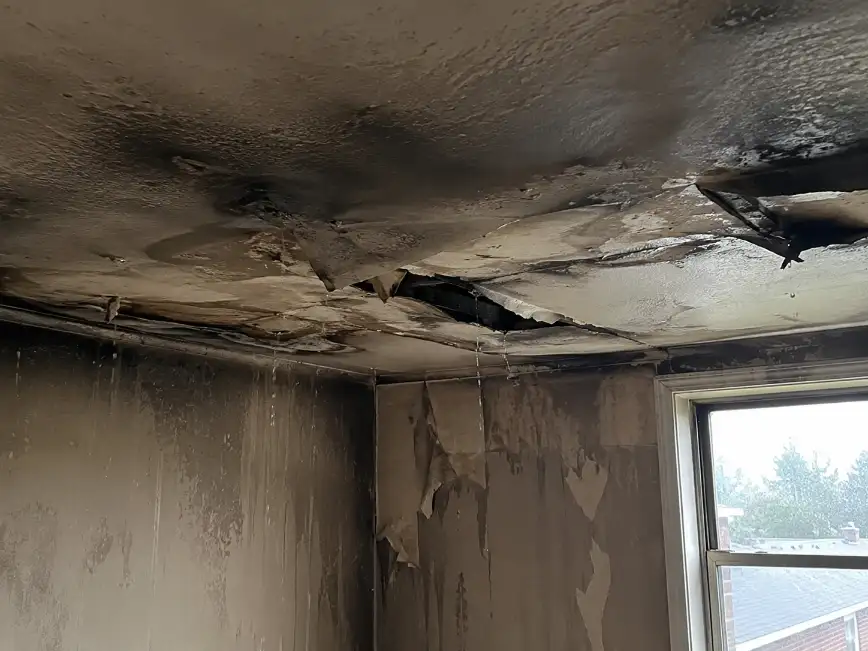
Drywall can soften, swell, sag, separate at seams, or pull away from fasteners after absorbing water. Ceiling insulation can also retain substantial moisture and add weight above the drywall.
A bulging, sagging, or heavily stained ceiling may be unstable. Do not stand beneath it, touch it, or attempt to drain it without professional guidance.
3. Flooring, Cabinets, and Wood Materials Can Swell
Hardwood may cup, buckle, stain, or lift from the subfloor. Engineered flooring can swell or delaminate. Laminate and composite cabinet materials may separate, expand, or lose their original shape.
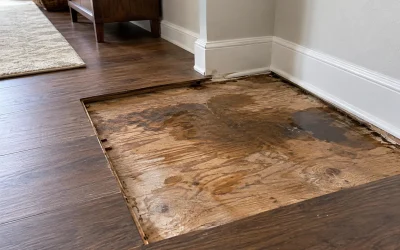
Water can remain beneath flooring and cabinet toe-kicks after the visible surface appears dry. Controlled access may be required to inspect and dry those concealed areas.
4. Metal Components May Corrode
Water, humidity, soot, and combustion residue may contribute to corrosion of fasteners, fixtures, appliances, electrical components, HVAC equipment, tools, and metal finishes.
Internal corrosion may not be visible immediately. Electrical and mechanical components should not be considered safe simply because their exterior surfaces look dry.
5. Paint, Veneer, and Adhesive May Fail
Paint may blister, peel, stain, or separate from drywall. Flooring adhesive can release. Veneer may separate from cabinets or furniture. Composite materials may swell or lose structural integrity.
Heat exposure can make certain finishes and bonding systems more vulnerable to water because they may already have been weakened by the fire.
6. Moisture Can Become Trapped Behind Finishes
Vinyl flooring, tile, wall coverings, cabinets, sealed wood, and other finishes can slow evaporation. The exposed surface may feel dry while water remains inside the materials underneath.
Trapped moisture can lead to recurring odor, staining, adhesive failure, material movement, deterioration, and mold growth.
7. Indoor Humidity Can Affect Dry Areas
Large volumes of indoor water can raise relative humidity throughout the structure. Wood, fabrics, furniture, paper, books, and other materials outside the visible water-loss area may absorb moisture from the air.
Professional dehumidification helps control the indoor environment while saturated building materials are extracted and dried.
Which Building Materials May Be Damaged?
| Material or System | Possible Secondary Damage | Restoration Consideration |
|---|---|---|
| Drywall and ceilings | Swelling, sagging, staining, softened gypsum, damaged seams, and concealed moisture | Sound material may sometimes be dried. Sagging, burned, contaminated, or deteriorated sections may require removal. |
| Insulation | Saturation, compression, smoke odor, soot contamination, and reduced insulating performance | Wet or contaminated insulation may require removal so the cavity can be cleaned and dried. |
| Hardwood and engineered flooring | Cupping, buckling, staining, adhesive failure, and delamination | Salvageability depends on contamination, flooring construction, exposure time, and subfloor condition. |
| Carpet and padding | Saturation, soot transfer, odor, staining, and contamination | Carpet may need lifting. Wet padding and contaminated porous materials may require disposal. |
| Cabinets and vanities | Swelling, veneer separation, finish damage, soot residue, and water beneath toe-kicks | Controlled removal may be needed to inspect walls and flooring behind fixed cabinets. |
| Structural framing | Elevated moisture, staining, odor, charring, and possible loss of structural capacity | Framing must be evaluated for both fire damage and moisture before cleaning, drying, repair, or replacement. |
| Electrical systems | Water intrusion, corrosion, damaged insulation, contaminated components, and short-circuit risk | Do not energize affected equipment until it has been evaluated by a qualified electrician. |
| HVAC equipment and air pathways | Smoke residue, water exposure, wet insulation, corrosion, and odor distribution | Inspection should address both smoke movement and moisture exposure. |
| Furniture and personal contents | Water staining, swelling, smoke odor, soot contamination, corrosion, and mold risk | Contents should be inventoried and evaluated according to material, condition, contamination, and value. |
What Happens When Firefighting Water Mixes With Soot and Ash?
Soot is not ordinary dust. It may contain fine carbon particles, oils, acids, metals, and residue from burned wood, plastics, fabric, insulation, electronics, furniture, roofing, and other materials.
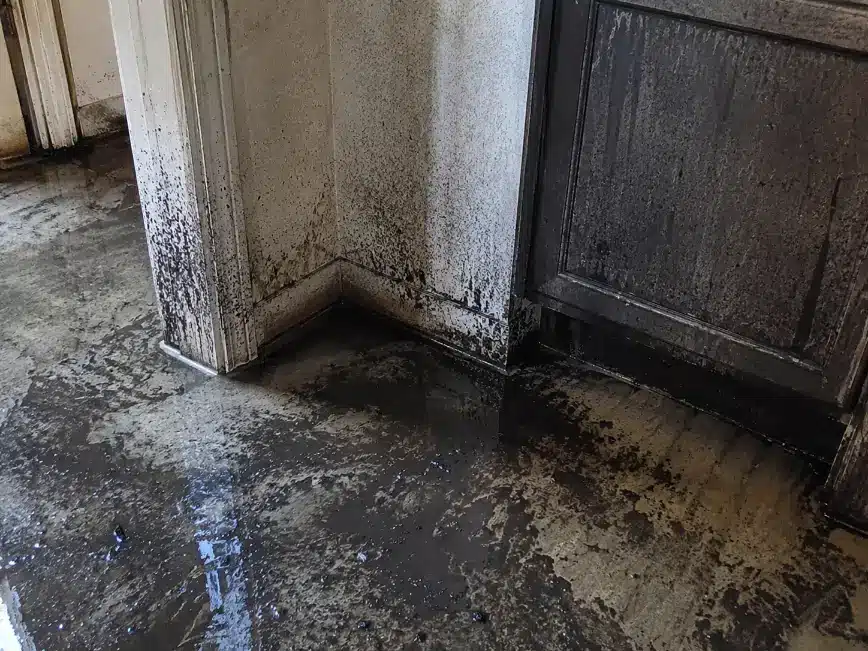
When water mixes with soot or ash, it may create dark runoff, oily films, streaking, stains, and contaminated residue. This mixture can move across floors, soak into drywall, enter carpets, stain cabinets, and spread into rooms below the fire.
Wet Soot Can Smear and Penetrate Surfaces
Some dry soot can be removed using specialized dry-cleaning procedures. Once the residue becomes wet, it may smear across painted walls, wood grain, flooring, fabric, carpet, and drywall paper.
Uncontrolled wiping, mopping, or extraction may spread the residue into a larger area. Professional fire and water restoration should therefore be planned together rather than handled as two unrelated cleanup projects.
Smoke Odor Can Become Trapped Inside Wet Materials
Wet drywall, insulation, carpet padding, cabinets, upholstered furniture, and unfinished wood can absorb smoke odor. Drying alone may not remove the soot or combustion residue responsible for the odor.
At the same time, deodorizing without drying the affected materials leaves the moisture problem unresolved. Cleaning, source removal, structural drying, and odor management must be properly sequenced.
McMahon Services discusses how smoke can affect rooms, contents, vents, and concealed areas in its guide to smoke damage after a house fire.
What Should You Do After the Fire Department Leaves?
-
Wait for permission to enter.
Do not enter until fire officials or another qualified authority confirms that access is permitted. Structural instability, electrical hazards, damaged utilities, hot spots, smoke residue, and contaminated water may remain.
-
Contact your insurance carrier.
Report the loss and ask about emergency mitigation, property securing, temporary housing, contents documentation, and claim requirements.
-
Call a professional fire and water restoration company.
Prompt help is especially important when there is standing water, a sagging ceiling, soaked flooring, wet insulation, electrical exposure, or damage across multiple rooms or levels.
-
Document the condition when it is safe.
Photograph burned areas, soot deposits, standing water, wet walls, ceilings, flooring, cabinets, contents, vents, and damaged exterior openings.
-
Stay away from wet or damaged ceilings.
Bulging, sagging, or heavily stained ceiling materials may collapse without warning.
-
Keep electrical systems and appliances off.
Do not turn on lights, outlets, appliances, electronics, or HVAC equipment exposed to heat, soot, smoke, or water.
-
Limit movement through affected rooms.
Foot traffic can spread soot, wet residue, ash, debris, and contamination into cleaner areas.
-
Protect the building from additional weather exposure.
Broken windows, roof openings, and damaged walls may require professional board-up or temporary covering.
McMahon Services provides a room-by-room documentation guide in Fire or Water Damage Cleanup: 7 Things to Document.
Safety Warning: Do not enter standing water near electrical equipment, walk beneath a sagging ceiling, touch exposed wiring, disturb unstable debris, or operate appliances and HVAC systems that may have been exposed to fire or water.
What Mistakes Should You Avoid?
- Do not assume the damage ended when the fire was extinguished. Moisture, soot, corrosion, odor, and deterioration can continue.
- Do not use an ordinary household vacuum on soot or ash. Fine particles may pass through the machine or become airborne.
- Do not use household fans before the area is evaluated. Airflow may spread soot, ash, odor, contaminated dust, or mold spores.
- Do not turn on the HVAC system. Smoke residue or suppression water may have affected filters, ducts, insulation, and mechanical equipment.
- Do not paint over wet drywall or smoke stains. Moisture and residue must be addressed before priming, sealing, and repainting.
- Do not install new flooring over a damp subfloor. Trapped moisture can cause renewed swelling, odor, adhesive failure, or mold.
- Do not discard damaged materials before documenting them. Photograph and inventory items unless immediate removal is required for safety.
- Do not enter restricted sections of the property. Fire-damaged roofs, floors, stairs, and ceilings may be unstable.
- Do not separate soot cleaning from water restoration. The work must be coordinated so residue is not spread and moisture is not concealed.
How Does Professional Fire and Water Restoration Work?
Professional recovery combines fire damage assessment, water extraction, structural drying, soot cleaning, contents handling, electrical and mechanical evaluation, odor management, and reconstruction.
1. Safety and Structural Assessment
The property is evaluated for unstable structural components, electrical hazards, damaged utilities, standing water, fire debris, contaminated materials, and restricted areas.
Engineers, electricians, plumbers, HVAC contractors, roofing professionals, or other specialists may be involved depending on the damage.
2. Emergency Property Protection
Broken windows, roof openings, damaged doors, and exposed walls may require board-up, temporary roof covering, fencing, or other security and weather-protection measures.
3. Damage Documentation
Technicians document fire, soot, smoke, water, structural, and contents damage before major cleanup changes the condition of the property.
The project record may include visible water lines, burned materials, residue patterns, wet rooms, exterior openings, and affected belongings.
4. Standing Water Extraction
Once the site is safe, standing water is removed from floors, carpets, basements, lower levels, and other accessible areas.
Prompt professional water extraction reduces the volume of water available to soak farther into porous building materials.
5. Moisture Mapping
Restoration technicians evaluate ceilings, walls, flooring, subflooring, cabinets, insulation, framing, and nearby rooms to determine how far the suppression water traveled.
Moisture readings may be compared with similar unaffected materials to guide drying, demolition, and repair decisions.
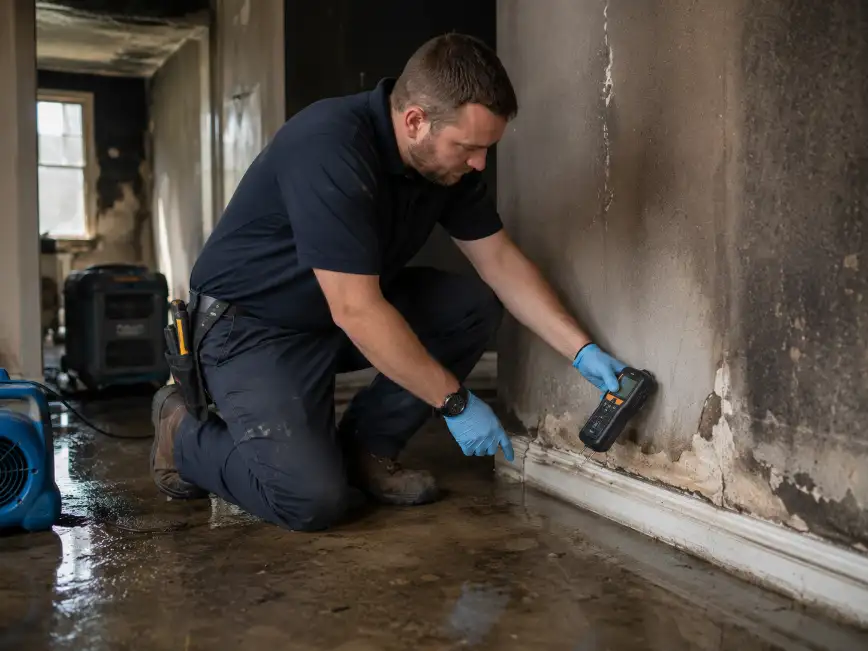
6. Removal of Unsafe or Unrestorable Materials
Charred debris, sagging ceilings, contaminated insulation, deteriorated drywall, ruined carpet padding, burned contents, and other materials that cannot be safely restored may require controlled removal.
Removing damaged materials can provide access to concealed moisture, soot deposits, wiring, framing, and wall cavities.
7. Controlled Structural Drying
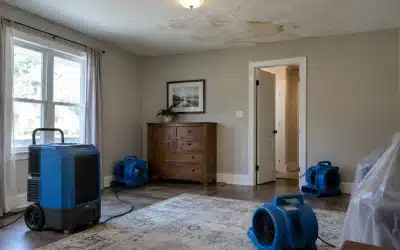
Professional air movement, dehumidification, temperature management, and moisture monitoring are used to dry materials that can be retained.
Equipment placement must account for electrical safety, open structural areas, smoke contamination, water movement, and the material being dried.
8. Soot and Smoke Cleaning
Residue is evaluated according to what burned, how smoke traveled, and which materials were affected. Walls, ceilings, cabinets, fixtures, flooring, masonry, and contents may require different cleaning methods.
Soot and odor-producing residue should be addressed before permanent painting, sealing, refinishing, or reconstruction.
9. Contents Inventory and Restoration
Furniture, clothing, electronics, documents, artwork, appliances, tools, and personal belongings are inventoried and evaluated.
Some items may be cleaned on-site. Others may require pack-out, specialized cleaning, drying, deodorization, storage, or replacement.
10. Electrical and HVAC Evaluation
Qualified professionals inspect affected electrical systems, appliances, HVAC equipment, filters, vents, duct pathways, and mechanical components before they are returned to service.
11. Drying and Cleaning Verification
Moisture levels, material condition, soot removal, odor, and structural stability are evaluated before reconstruction begins.
McMahon Services explains the sequence from emergency response through permanent repairs in Water Mitigation vs. Restoration vs. Reconstruction.
12. Reconstruction
After the structure is safe, clean, and dry, damaged drywall, insulation, flooring, cabinets, trim, paint, roofing, siding, and structural components can be repaired or replaced.
McMahon Services provides cleanup and rebuilding after major property damage when the fire requires both emergency restoration and permanent construction work.
What Materials Can Be Saved After Firefighting Water Damage?
Some wet materials and belongings can be restored, while others must be removed. The decision depends on fire exposure, water condition, saturation, construction, structural integrity, smoke contamination, and drying progress.
Materials May Be More Likely to Be Restored When:
- They remain structurally sound
- They were not heavily burned or charred
- Water exposure was limited and addressed promptly
- They can be safely accessed, cleaned, and dried
- Soot and odor can be removed without damaging the material
- Moisture readings show consistent drying progress
- Restoration is safe and practical compared with replacement
Removal or Replacement May Be More Likely When:
- Drywall or ceiling materials are sagging, crumbling, burned, or heavily saturated
- Insulation contains water, soot, smoke odor, or fire debris
- Flooring is delaminated, buckled, contaminated, or detached
- Cabinets and composite materials are swollen or separating
- Structural wood is charred, weakened, or unable to be dried
- Porous materials retain smoke odor or contamination after cleaning
- Mold is present inside materials or concealed cavities
- The material blocks access to wet areas beneath or behind it
Partial repairs may be possible when the damage is limited. Larger fires may require substantial removal and reconstruction before the property can be safely occupied.
How Long Does Structural Drying Take After a Fire?
There is no universal drying timeline. A small contained fire with limited sprinkler discharge may require less drying than a multilevel fire involving hoses, wet insulation, soaked flooring, opened walls, and a flooded basement.
| Drying Factor | Why It Matters |
|---|---|
| Amount of suppression water | A larger volume may affect more rooms, levels, and concealed materials. |
| Time before extraction | Longer exposure allows water to travel deeper into porous materials and cavities. |
| Material type | Drywall, wood, insulation, concrete, flooring, and cabinets absorb and release moisture differently. |
| Fire and soot contamination | Some materials require cleaning or removal before effective drying can continue. |
| Access to concealed areas | Walls, ceilings, cabinets, and flooring may require controlled openings to release trapped moisture. |
| Weather exposure | Open roofing or windows may introduce additional rain, snow, cold air, or humidity. |
| Power and HVAC availability | Damaged utilities may require temporary power, heating, or alternative drying arrangements. |
Drying should be based on repeated moisture measurements and material condition rather than a predetermined number of days.
The EPA recommends drying wet building materials within 24 to 48 hours whenever possible to reduce the likelihood of mold growth. This does not mean every fire-damaged structure will be completely dry in that period. It means extraction and moisture control should begin promptly and continue until the affected materials reach an appropriate dry condition.
Review the EPA guidance for water-damaged building materials.
Can Mold Grow After a House Fire?
Yes. Mold can develop when firefighting water remains inside drywall, insulation, wood, carpeting, cabinets, furniture, and concealed building cavities.
Fire-damaged properties can be especially difficult to dry because utilities may be disconnected, roofing or windows may be open, structural areas may be inaccessible, and wet materials may also contain soot, ash, or burned debris.
Possible warning signs include:
- A musty odor developing after the fire
- Dark or discolored areas on wet drywall or wood
- Visible growth near baseboards, flooring, ceilings, or wall openings
- Soft or deteriorating building materials
- Moisture remaining beneath flooring or cabinets
- Recurring high humidity inside closed rooms
- Wet insulation or concealed wall cavities
Visible mold should not be aggressively disturbed. Extensive, concealed, or contaminated growth may require professional containment, controlled removal, HEPA filtration, cleaning, and drying.
McMahon Services provides professional mold removal and remediation services when fire-related water damage leads to visible or concealed mold concerns.
How Can Firefighting Water Affect Electrical and HVAC Systems?
Electrical Systems
Water can enter outlets, switches, junction boxes, light fixtures, appliances, electrical panels, and wiring pathways. Fire heat, smoke residue, and suppression water may affect the same electrical component at the same time.
Do not reset breakers, plug in appliances, operate wet switches, or energize fire-affected equipment. A qualified electrician should determine what can be safely returned to service and what must be repaired or replaced.
Heating and Cooling Systems
Smoke and soot may enter return vents, supply ducts, filters, air handlers, and insulation. Suppression water may also reach mechanical equipment, duct interiors, controls, and nearby building materials.
Do not operate the HVAC system until it has been evaluated. Turning it on may redistribute smoke residue, odor, dust, or moisture throughout the property.
What Should You Document for an Insurance Claim?
Insurance coverage and claim requirements vary. When entry is permitted and conditions are safe, document both the fire damage and the firefighting water damage.
Useful documentation may include:
- Photographs and video of every affected room
- Burned materials, smoke staining, soot deposits, and ash
- Standing water and visible water lines
- Wet walls, ceilings, flooring, insulation, and cabinets
- Water damage on lower levels beneath the fire area
- Damaged appliances, electronics, furniture, and personal property
- Roof, window, door, siding, and structural openings
- A room-by-room contents inventory
- Temporary housing, board-up, storage, and emergency mitigation receipts
- Moisture readings, drying logs, photographs, and professional reports
- Materials removed and the reason removal was necessary
- Fire department, electrical, plumbing, HVAC, and contractor records
Do not delay emergency safety or mitigation work solely to collect more documentation. Safety comes first, but take photographs before conditions change whenever it is reasonable and safe.
Why Firefighting Water Damage Matters in Northern Illinois and Southern Wisconsin
Homes and businesses in Hainesville, Lake County, Northern Illinois, Southern Wisconsin, and nearby communities may face additional restoration challenges during freezing, wet, or stormy weather.
Winter conditions can complicate fire recovery when:
- Broken windows or roof openings expose the property to snow and freezing temperatures
- Plumbing freezes after utilities are disconnected
- Wet materials dry more slowly inside an unheated structure
- Suppression water freezes on stairs, walkways, or exterior surfaces
- Temporary heating and electrical power are required for restoration equipment
- Ice, snowmelt, or rain continues entering through fire-damaged openings
Warm-weather fires can create different challenges, including high indoor humidity, rapid microbial growth, and additional storm exposure.
Regardless of the season, prompt property securing, water extraction, moisture inspection, structural drying, soot cleaning, and repair planning are important.
Professional Tip: Do not begin drywall, flooring, cabinet, or paint repairs until the structure has been inspected for concealed moisture. Rebuilding too early can trap firefighting water behind new finishes and lead to recurring odor, material deterioration, or mold.
Get Help With Firefighting Water and Fire Damage
A house fire can leave several overlapping forms of property damage, including burned materials, soot, smoke odor, suppression water, wet contents, electrical concerns, damaged utilities, and structural openings.
McMahon Services & Construction Corp provides 24/7 fire and smoke damage restoration services for homes and businesses affected by flames, soot, smoke, firefighting water, damaged contents, and structural damage.
The restoration process may include emergency property protection, water extraction, moisture mapping, controlled structural drying, debris removal, soot cleaning, odor management, contents handling, mold remediation, and reconstruction.
McMahon Services also provides water damage cleanup, repair, and restoration services when fire hoses, sprinklers, damaged plumbing, or weather exposure leave wet building materials behind.
Call McMahon Services at (847) 566-4568 for 24/7 fire, smoke, and water damage assistance throughout Hainesville, Lake County, Northern Illinois, Southern Wisconsin, and surrounding service areas.
Frequently Asked Questions About Firefighting Water Damage
Why is there so much water damage after a house fire?
Fire hoses, sprinklers, and other suppression methods may release enough water to soak ceilings, walls, insulation, flooring, cabinets, and contents. Water can also travel through structural openings and affect lower floors or rooms that were not directly burned.
Is water used to extinguish a fire considered clean water?
Not automatically. Suppression water may contact soot, ash, burned building materials, chemicals, insulation, debris, and damaged contents as it moves through the property. The water and affected materials should be professionally evaluated.
How soon should firefighting water be removed?
Water extraction and moisture control should begin as soon as the property is safe to enter and professionals are authorized to work. Prompt action can reduce additional saturation, swelling, corrosion, odor, and mold-related damage.
Can firefighting water cause mold?
Yes. Mold may grow when drywall, insulation, wood, carpet, cabinets, and other materials remain damp. The EPA recommends drying water-damaged materials within 24 to 48 hours whenever possible to reduce the likelihood of mold growth.
Does wet drywall always need to be removed after a fire?
No. Some drywall may be dried when it remains structurally sound, cleanable, and accessible. Removal is more likely when it is burned, sagging, swollen, contaminated, mold-affected, or blocking access to wet insulation and wall cavities.
Can hardwood flooring be saved after fire suppression water?
Some hardwood flooring may be dried and restored when the water is addressed promptly and the boards and subfloor remain sound. Replacement is more likely when the floor is severely buckled, contaminated, delaminated, burned, mold-affected, or unable to dry completely.
Should I turn on the heat or air conditioning to dry the house?
No HVAC system affected by fire, smoke, soot, or water should be operated without professional clearance. The system may contain residue, damaged components, wet insulation, or electrical hazards that require evaluation.
Who handles both fire cleanup and water damage restoration?
A full-service disaster restoration contractor can coordinate fire damage assessment, water extraction, structural drying, soot cleaning, contents handling, odor management, material removal, and reconstruction. Electricians, plumbers, HVAC contractors, engineers, and other specialists may also be involved.




0 Comments