
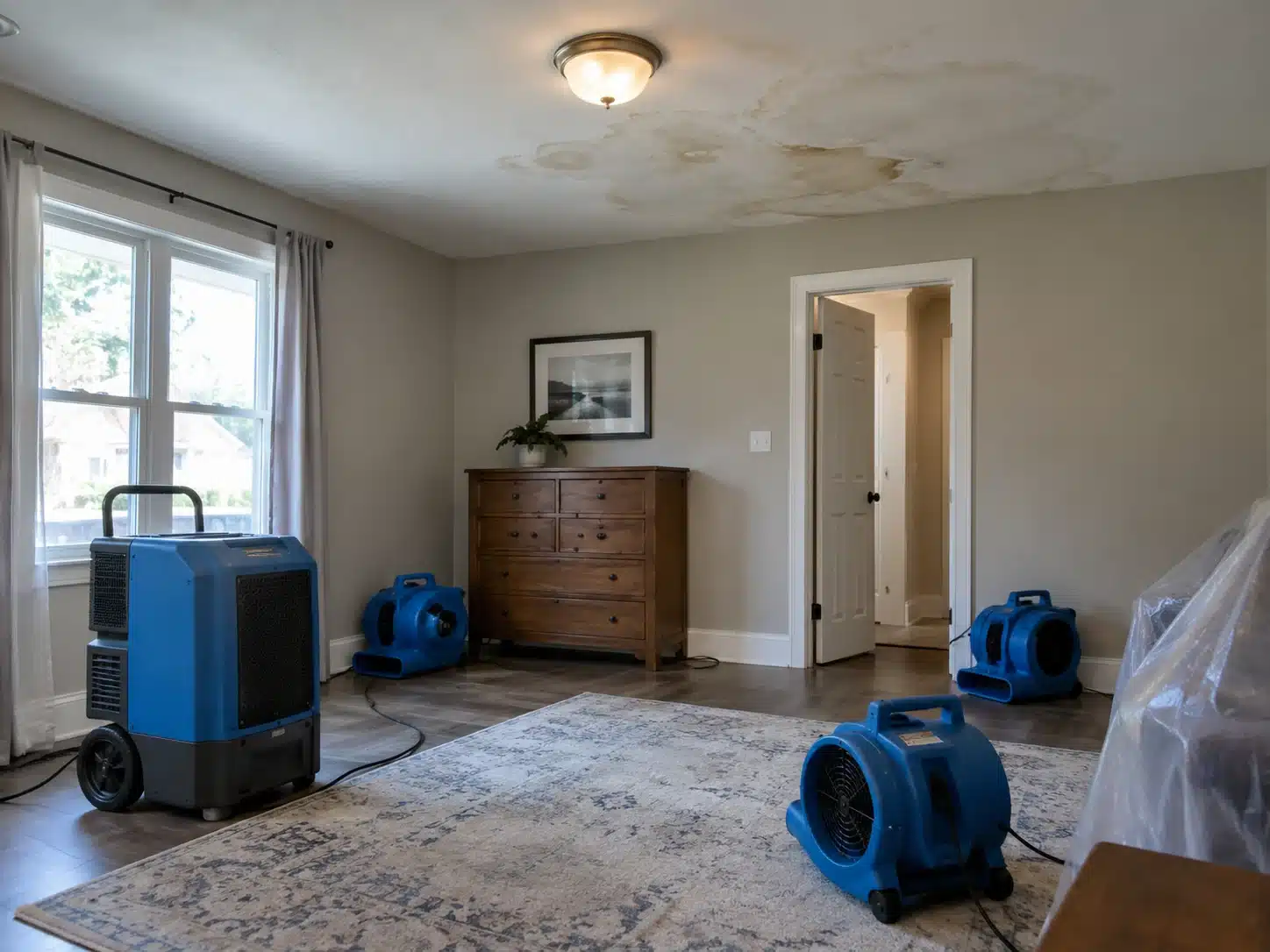
How Do You Know Whether Water-Damaged Ceiling Drywall Can Be Saved?
Water-damaged ceiling drywall may sometimes be dried and retained when the water exposure is limited, the drywall remains structurally sound, the water source is clean, and moisture can be removed completely. Replacement becomes more likely when the drywall is sagging, swollen, soft, crumbling, delaminated, mold-affected, contaminated, or holding moisture that cannot be dried safely in place.
A ceiling stain by itself does not reveal the full extent of the damage. Water may have traveled above the drywall through insulation, framing, plumbing cavities, roof assemblies, or the floor system above before becoming visible. The finished ceiling surface may look only slightly discolored while moisture remains trapped on the back side of the drywall or inside insulation.
The correct decision should be based on the source of the water, how long materials remained wet, the condition of the drywall, whether insulation or framing is affected, moisture readings, and whether the ceiling can be dried without creating additional safety or mold concerns.
Quick Answer
Water-damaged ceiling drywall does not always need to be replaced. Drying may be possible when the drywall is still firm, flat, structurally sound, and affected by a limited amount of clean water that is addressed quickly. Replacement is more likely when the ceiling is sagging, soft, swollen, deteriorated, mold-affected, contaminated, or concealing wet insulation that cannot be dried properly. The water source should be stopped first, followed by moisture inspection, drying, material evaluation, and reconstruction when needed.
Key Takeaways
- A ceiling stain does not automatically mean the drywall must be removed.
- Drywall may sometimes be dried when exposure is limited and the material remains structurally sound.
- Sagging, soft, swollen, crumbling, or delaminated drywall is more likely to require removal.
- Water above the ceiling may affect insulation, framing, wiring, fixtures, and adjoining rooms.
- Moisture meters can help identify damp materials but do not determine material condition by themselves.
- Contaminated water changes the restoration decision because porous materials may not be suitable for drying and reuse.
- A dry-looking ceiling surface can still conceal moisture on the back of the drywall or inside insulation.
- The leak must be corrected before drying and ceiling reconstruction are completed.
Table of Contents
- How water reaches ceiling drywall
- How professionals decide whether to dry or replace drywall
- Signs ceiling drywall may need replacement
- When ceiling drywall may be dried
- What may be damaged above the ceiling
- What to do after discovering ceiling water damage
- Mistakes to avoid
- How professional moisture inspection works
- How damaged ceiling drywall is removed and replaced
- Which materials may be saved or replaced
- How long ceiling drying and repair may take
- What affects the restoration cost
- Insurance documentation considerations
- Northern Illinois and Southern Wisconsin considerations
- Frequently asked questions
How Does Water Reach Ceiling Drywall?
Water appearing on a ceiling may come from several different building systems. The visible stain is often below the actual source because water can follow framing, pipes, flooring seams, roof components, and other structural pathways before reaching the finished ceiling.
Common Sources of Ceiling Water Damage Include:
- Leaking plumbing pipes
- Bathroom supply or drain leaks
- Overflowing tubs, sinks, or toilets
- Washing-machine or appliance leaks
- Roof leaks during storms
- Ice dams and snowmelt
- HVAC condensate leaks
- Water entering around roof penetrations
- Upper-floor water damage
- Fire-sprinkler or mechanical-system leaks
Because water can travel before it becomes visible, repairing only the stain may leave the original leak and wet materials unresolved.
Water Can Spread Above the Ceiling Before You See It
Insulation, joists, drywall paper, subflooring, pipes, ducts, and other building materials can redirect water. A small stain may represent a limited leak, but it may also be the first visible sign of a larger concealed moisture problem.
McMahon Services explains this issue in its guide to hidden water damage after storms, where moisture may remain inside walls, ceilings, insulation, and other concealed building assemblies.
How Do Professionals Decide Whether Ceiling Drywall Can Be Dried or Must Be Replaced?
The decision is based on more than appearance. Restoration professionals evaluate the material condition, moisture level, water source, duration of exposure, accessibility, and what is located above the ceiling.
Important Evaluation Factors Include:
- Whether the drywall remains firm and structurally stable
- Whether the ceiling is sagging or separating from fasteners
- The type and condition of insulation above the drywall
- The amount of water involved
- How long the materials remained wet
- Whether the water is clean or contaminated
- Whether mold or odor is present
- Whether framing or wiring is affected
- Whether the cavity can be dried effectively
- Whether the drywall paper or gypsum core has deteriorated
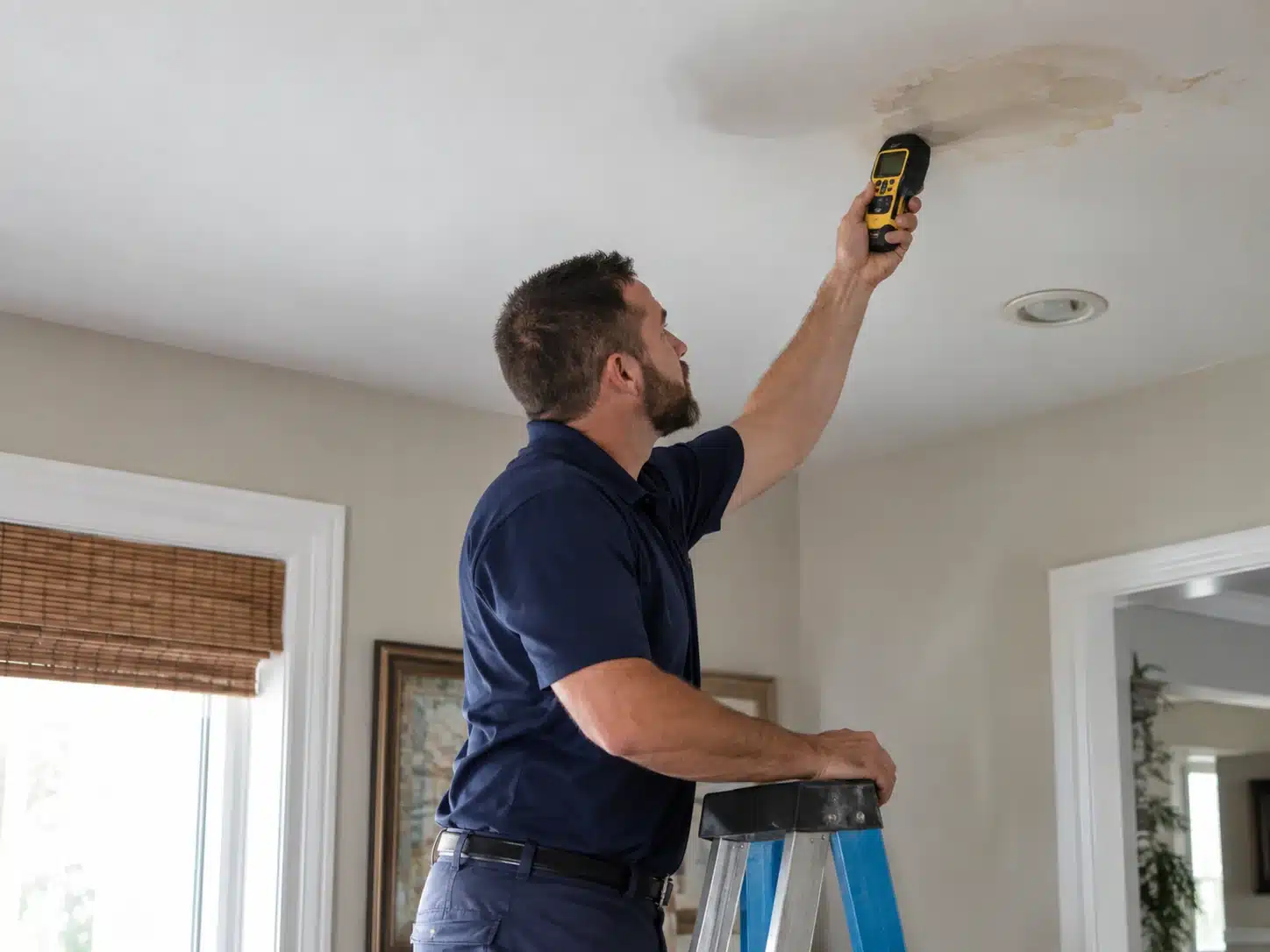
Appearance Alone Is Not Enough
A ceiling can show a brown stain but remain firm and relatively dry after a small leak. Another ceiling may show only slight discoloration while the back of the drywall and insulation remain wet.
Material condition and moisture readings should therefore be considered together.
What Signs Suggest Ceiling Drywall Should Be Replaced?
Replacement becomes more likely when water has physically damaged the drywall or when the ceiling can no longer be reliably dried and restored.
Warning Signs Include:
- Sagging or bowing drywall
- Soft or spongy areas
- Swollen gypsum material
- Cracking around a wet area
- Peeling or bubbling paint
- Loose drywall tape
- Separation around fasteners
- Paper facing that is peeling or deteriorated
- Visible mold growth
- Persistent musty odor
- Water-damaged insulation above the ceiling
- Contaminated water exposure
- Repeated leaks in the same area
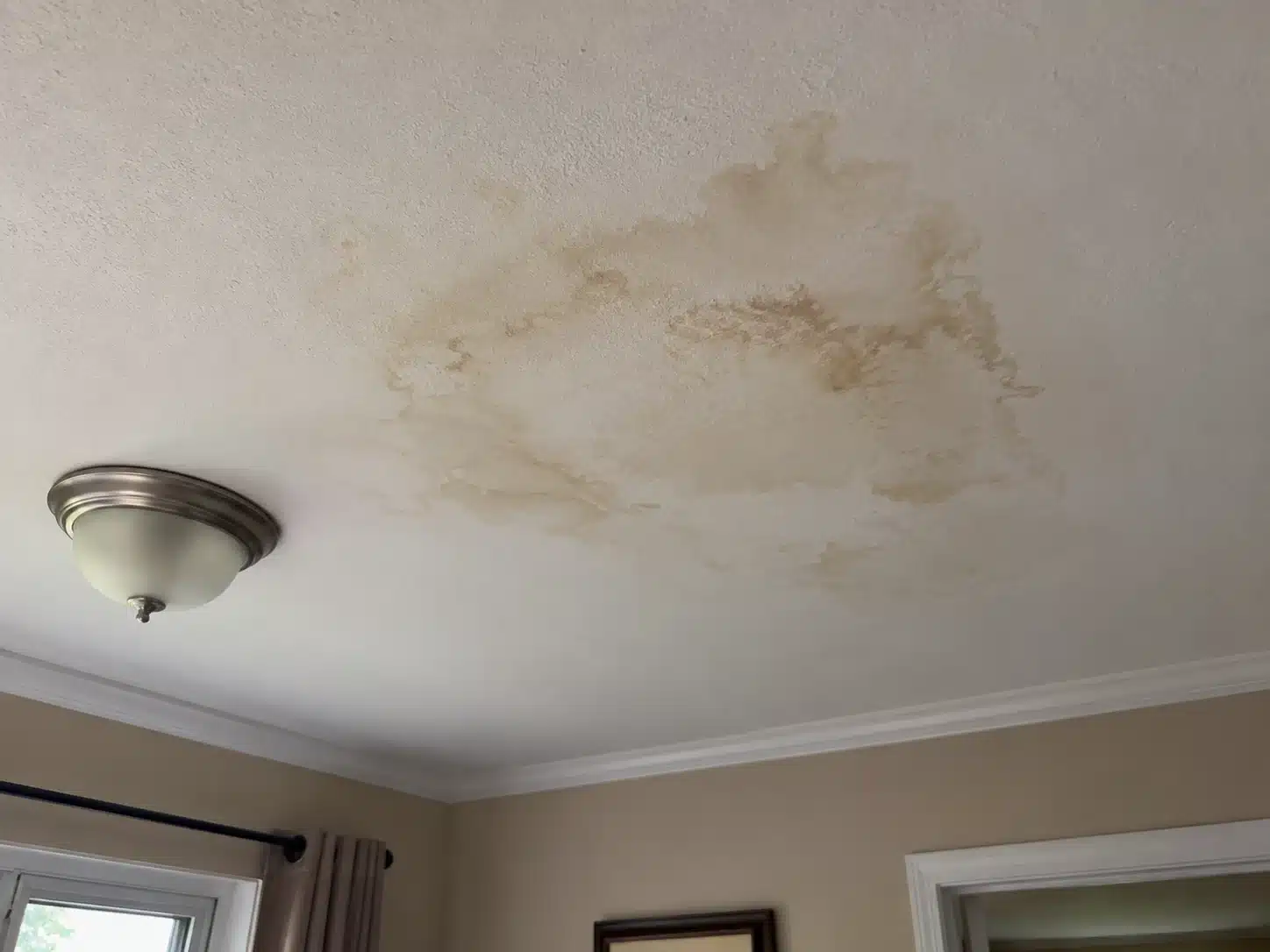
Sagging Drywall Requires Caution
A ceiling that is visibly sagging may contain accumulated water or weakened drywall. The weight of wet materials can create a falling-material hazard.
Do not stand directly beneath a bulging or sagging ceiling. The area should be evaluated before the ceiling is disturbed.
Contaminated Water Changes the Decision
Porous ceiling materials exposed to sewage, drain backups, or other contaminated water may require removal even when the drywall still appears structurally intact.
Contamination can enter the paper facing, gypsum core, insulation, and adjoining porous materials, making simple drying inappropriate for some losses.
When Can Water-Damaged Ceiling Drywall Be Dried?
Drying may be considered when exposure is limited and the drywall remains structurally sound.
Drying May Be More Appropriate When:
- The water source is clean
- The leak was discovered quickly
- The drywall remains firm and flat
- The ceiling has not sagged or separated
- The gypsum core is not deteriorated
- Insulation can be dried or removed as necessary
- The cavity can be accessed or dried effectively
- Moisture readings are trending downward
- No significant mold growth or contamination is present
Drying Must Include the Materials Above the Ceiling
Drying only the room-facing side is not enough when water has reached insulation, framing, or other materials above the drywall.
Air movement, dehumidification, cavity drying, insulation removal, or limited access openings may be considered depending on the construction and moisture conditions.
What Else Can Be Damaged Above a Wet Ceiling?
Ceiling drywall is only one component of the assembly. Water can affect several materials and systems located above it.
- Fiberglass or cellulose insulation
- Wood joists and framing
- Subflooring from the floor above
- Plumbing pipes and connections
- Electrical wiring and junction boxes
- Recessed lighting
- HVAC ducts
- Vapor barriers
- Roof sheathing or attic materials
- Adjacent walls
Wet Insulation Can Keep the Ceiling Damp
Insulation can hold water against the back of drywall and wood framing. This can slow drying even after the visible leak has stopped.
Some insulation may need to be removed to inspect the cavity and allow structural materials to dry properly.
Electrical Components Require Additional Caution
Water around light fixtures, ceiling fans, wiring, or electrical boxes creates potential electrical hazards. Do not operate wet fixtures or attempt repairs without appropriate evaluation.
What Should You Do After Discovering Water Damage on a Ceiling?
-
Identify and stop the water source when possible.
Turn off the appropriate plumbing supply, stop using the leaking fixture, or arrange roof, plumbing, or mechanical repair as needed.
-
Stay away from sagging ceiling areas.
Do not stand underneath bulging or heavily saturated drywall because weakened material may fall.
-
Use electrical caution.
Do not operate wet light fixtures, ceiling fans, switches, or electrical equipment.
-
Document visible damage.
Photograph stains, dripping water, sagging drywall, flooring, furniture, fixtures, and rooms above or adjacent to the damage.
-
Protect belongings below the affected area.
Move furniture, electronics, rugs, and other contents away when it is safe to do so.
-
Arrange professional moisture inspection.
Moisture inspection can determine whether water remains inside ceiling drywall, insulation, framing, walls, or flooring.
-
Begin extraction and drying when necessary.
McMahon Services provides water and sewage damage restoration for water extraction, structural drying, damaged-material removal, and restoration.
Safety Warning: Do not puncture, cut, or remove a sagging or water-filled ceiling without first considering electrical wiring, plumbing, accumulated water, insulation, contaminated materials, and falling-debris hazards.
What Mistakes Should You Avoid With a Water-Damaged Ceiling?
- Do not paint over the stain immediately. The leak and hidden moisture should be addressed first.
- Do not assume the drywall is dry because it feels dry from below. Moisture may remain on the back side or in insulation.
- Do not ignore a sagging ceiling. Wet drywall can weaken and eventually fall.
- Do not use electrical fixtures in the affected area. Water may have reached wiring or electrical boxes.
- Do not replace drywall before fixing the leak. New materials may become damaged again.
- Do not close the ceiling before framing and insulation are dry. Trapped moisture may lead to recurring stains, odor, or mold.
- Do not assume all water is clean. Plumbing drains, sewage backups, and other sources may introduce contamination.
- Do not discard damaged materials before documenting them. Photographs and material records may be useful for insurance review.
How Is a Water-Damaged Ceiling Professionally Inspected?
A professional assessment focuses on both the visible damage and the concealed moisture pathway.
1. Identify the Water Source
The source may involve plumbing, roofing, an appliance, HVAC equipment, or water from the floor above. Repairs should be coordinated before restoration is completed.
2. Inspect the Ceiling Surface
Technicians look for staining, sagging, cracking, softness, delamination, mold, loose finishes, and signs that the drywall has separated from fasteners.
3. Take Moisture Readings
Moisture meters help compare the affected ceiling with surrounding dry materials and identify areas that may require additional investigation.
4. Inspect Adjacent Materials
Walls, flooring, insulation, framing, and the room or attic above may be evaluated because water often travels beyond the visible ceiling stain.
5. Determine Whether Access Is Necessary
Limited ceiling openings may be required when wet insulation is present, the moisture boundary cannot be confirmed, or drying cannot be completed through the existing assembly.
6. Establish a Drying or Removal Plan
The restoration plan depends on whether affected materials can be dried safely, whether removal is required, and whether reconstruction will be necessary afterward.
How Is Water-Damaged Ceiling Drywall Removed and Replaced?
When ceiling drywall cannot be restored, removal should be planned to expose damaged material, provide access for drying, and prepare the area for reconstruction.
1. Protect the Work Area
Furniture and contents may be moved or protected, and the work zone may be isolated depending on dust, contamination, mold, and occupancy conditions.
2. Remove Damaged Drywall
Soft, sagging, deteriorated, contaminated, or mold-affected drywall is removed in a controlled manner.
3. Evaluate Insulation and Framing
Once the ceiling is open, wet insulation can be assessed and framing can be inspected for elevated moisture, deterioration, staining, or mold.
4. Dry Retained Structural Materials
Wood framing and other materials that remain structurally sound may be dried and cleaned before reconstruction.
5. Complete Necessary Repairs
Plumbing, roofing, electrical, HVAC, or other source repairs should be completed before the ceiling is closed.
6. Install New Drywall and Finishes
After drying and verification, new ceiling drywall can be installed, taped, finished, primed, painted, and blended with the surrounding area.
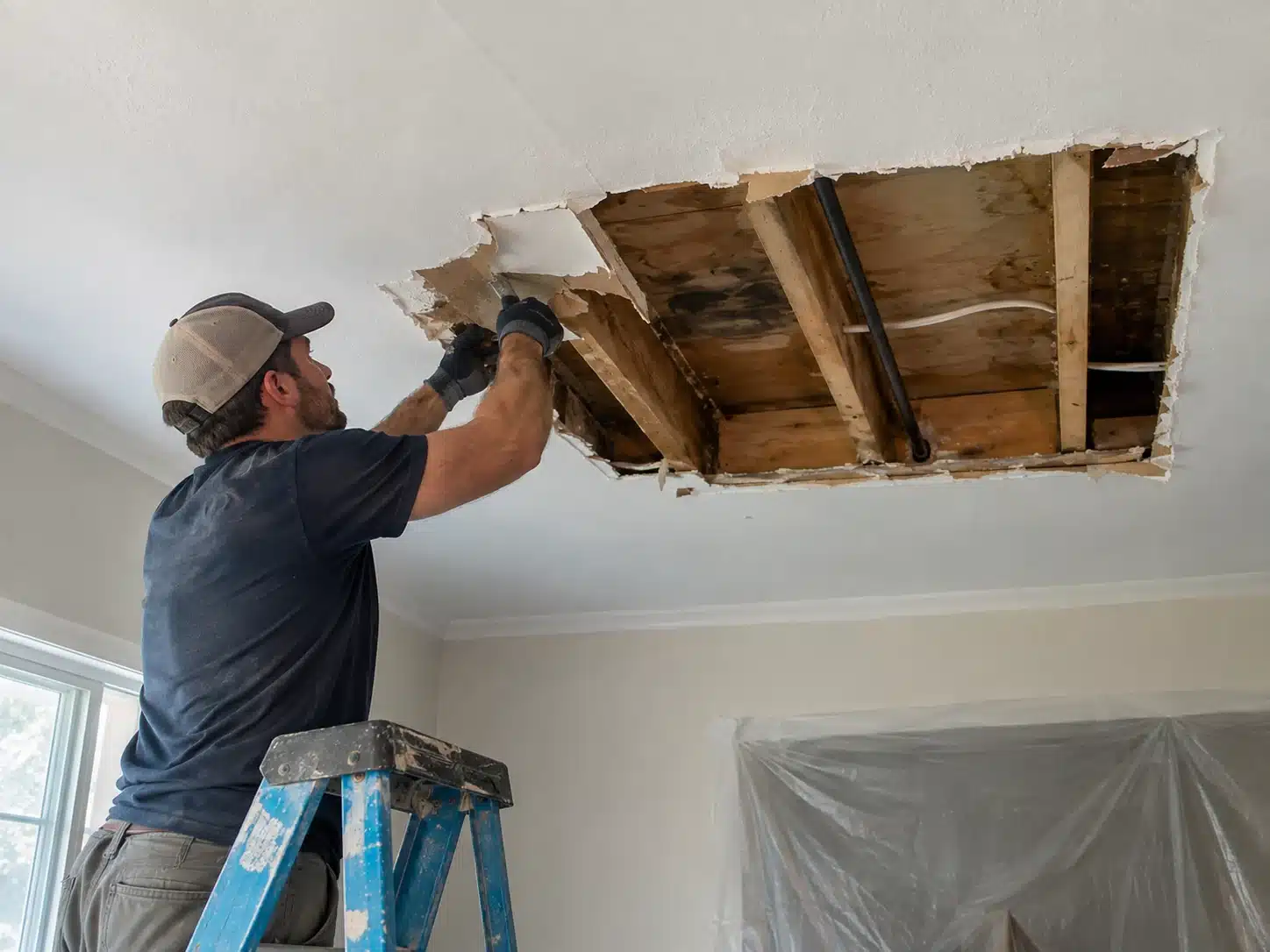
McMahon Services provides cleanup and rebuild services after water damage and broader construction services when ceiling restoration requires permanent repairs.
Which Water-Damaged Ceiling Materials Can Be Saved or May Need Replacement?
| Material | May Be Retained When | Replacement Is More Likely When |
|---|---|---|
| Ceiling drywall | Firm, flat, limited clean-water exposure, and able to dry completely | Sagging, soft, swollen, crumbling, mold-affected, contaminated, or delaminated |
| Fiberglass insulation | Limited clean-water exposure and able to dry without contamination or deterioration | Saturated, compressed, contaminated, mold-affected, or blocking structural drying |
| Wood framing | Structurally sound and capable of being cleaned and dried | Significantly deteriorated, structurally compromised, or damaged by prolonged exposure |
| Paint and texture | Surface remains bonded and substrate is dry | Bubbling, peeling, staining, cracking, or removed with damaged drywall |
| Electrical fixtures | No water exposure and confirmed safe | Water intrusion, corrosion, or electrical damage is present |
The correct decision depends on the water source, material condition, accessibility, contamination, drying potential, and structural safety.
How Long Does Ceiling Drying and Drywall Replacement Take?
There is no single timeline for every water-damaged ceiling. A small plumbing leak discovered quickly may require only source repair, monitoring, drying, and cosmetic work. A larger loss affecting insulation, framing, electrical components, multiple rooms, or contaminated materials may require removal and reconstruction.
| Timeline Factor | Why It Matters |
|---|---|
| Water source | Plumbing, roofing, HVAC, or upper-floor repairs may need to be completed first. |
| Amount of water | Greater saturation usually affects more ceiling and insulation material. |
| Length of exposure | Longer exposure increases the likelihood of swelling, deterioration, odor, and mold concerns. |
| Insulation condition | Wet insulation may need drying or removal before the cavity can be verified. |
| Drying progress | New drywall should not conceal materials that remain wet. |
| Reconstruction scope | Drywall installation, finishing, texture matching, priming, and painting add project stages. |
The completion date should be based on source correction, drying results, material condition, and reconstruction requirements rather than a predetermined number of days.
What Affects the Cost of Repairing a Water-Damaged Ceiling?
The repair cost depends on the complete scope of the water loss rather than the visible stain alone.
Common cost factors include:
- The source of the leak and repair required
- The amount of ceiling drywall affected
- Whether insulation must be removed
- Whether framing requires extended drying
- Electrical or light-fixture involvement
- Water extraction and structural drying
- Mold remediation when necessary
- Containment or dust-control requirements
- Ceiling height and accessibility
- Drywall replacement and finishing
- Texture matching
- Priming and painting
- Repair of adjoining walls or flooring
A small ceiling stain may still require broader work if water has saturated insulation or traveled through a large concealed area. Conversely, a larger visible stain may involve a more accessible repair.
A site-specific inspection is necessary for a reliable restoration and reconstruction scope.
What Should You Document for an Insurance Claim?
Insurance coverage varies according to the policy and the cause of the water loss. Sudden plumbing failures may be treated differently from long-term seepage, deferred maintenance, roof deterioration, or repeated leakage.
When it is safe to do so, document:
- The date and time the ceiling damage was discovered
- The suspected water source
- Visible stains, dripping, sagging, and damaged finishes
- The room above or roof area connected to the loss
- Damaged furniture, flooring, or contents below
- Plumbing, roofing, or mechanical repair records
- Moisture readings and drying records
- Photographs before ceiling access or removal
- Photographs of wet insulation and framing after access
- Materials removed and the reason for removal
- Restoration and reconstruction estimates
Avoid discarding significant damaged materials before documenting them unless immediate removal is necessary for safety or contamination control.
Why Is Ceiling Water Damage a Concern in Northern Illinois and Southern Wisconsin?
Homes and commercial buildings throughout Hainesville, Lake County, Northern Illinois, Southern Wisconsin, and surrounding communities experience several conditions that can contribute to ceiling water damage.
Regional causes may include:
- Frozen and burst plumbing pipes
- Roof leaks during heavy storms
- Ice dams during winter
- Snowmelt entering vulnerable roof assemblies
- HVAC condensate issues during humid weather
- Upper-floor plumbing leaks
- Older roofing and plumbing systems
- Seasonal temperature changes affecting building materials
A frozen pipe can begin leaking after temperatures rise and the pipe thaws. Roof leaks may also remain hidden until water travels through insulation and ceiling materials.
McMahon Services provides water damage restoration, cleanup and rebuilding, and construction services throughout Northern Illinois, Southern Wisconsin, and surrounding service areas.
Professional Tip: Do not decide whether to save or replace ceiling drywall based only on the stain. Confirm the leak has been repaired, determine whether insulation or framing remains wet, evaluate the drywall condition, and verify drying before the ceiling is repainted or closed.
Get Help With Water-Damaged Ceiling Drywall
A water-damaged ceiling may require anything from moisture monitoring and drying to controlled drywall removal and complete reconstruction. The correct solution depends on the source of the water, material condition, contamination, hidden moisture, and how quickly the loss is addressed.
McMahon Services & Construction Corp can coordinate water extraction, moisture inspection, structural drying, damaged-material removal, ceiling drywall replacement, reconstruction, and permanent repairs.
McMahon Services serves homes and businesses throughout Hainesville, Lake County, Northern Illinois, Southern Wisconsin, and surrounding communities.
Call McMahon Services at (847) 566-4568 for 24/7 help with ceiling water damage, hidden moisture, structural drying, drywall removal, and restoration.
Frequently Asked Questions About Water-Damaged Ceiling Drywall
Does water-damaged ceiling drywall always need to be replaced?
No. Ceiling drywall may sometimes be dried when water exposure is limited, the material remains firm and structurally sound, the water source is clean, and the ceiling can be dried completely. Replacement is more likely when the drywall is sagging, soft, swollen, contaminated, mold-affected, or deteriorated.
Can a ceiling stain be painted over after a leak?
The leak and moisture problem should be corrected before painting. Painting over a stain while materials remain wet can conceal an unresolved problem and may lead to recurring stains, peeling paint, odor, or additional damage.
How can you tell if a ceiling is still wet?
Possible signs include discoloration, softness, cool areas, sagging, bubbling paint, musty odor, and elevated moisture readings. Professional moisture inspection can help identify damp drywall, insulation, framing, and adjoining materials.
Is sagging ceiling drywall dangerous?
Sagging drywall may be weakened by water or may be supporting accumulated water and wet insulation. Avoid standing beneath a visibly bulging or sagging ceiling until the area has been evaluated.
Can wet ceiling insulation be dried?
It depends on the insulation type, water source, level of saturation, contamination, and accessibility. Some insulation may be dried, while saturated or contaminated material may need to be removed so the cavity and framing can be properly evaluated and dried.
Can mold grow above a water-damaged ceiling?
Mold growth may develop when drywall, insulation, wood framing, or dust remains damp. Repairing the leak and drying affected materials promptly can reduce the likelihood of additional moisture-related damage.
How long should ceiling drywall dry before repairs are completed?
There is no universal drying time. Repairs should proceed after moisture readings and material condition indicate that retained drywall, framing, insulation, and adjoining materials have reached an appropriate dry condition.
Who should I call for a water-damaged ceiling?
A water damage restoration company can evaluate moisture, drying needs, damaged materials, and reconstruction requirements. Depending on the source, a plumber, roofer, electrician, HVAC professional, or construction contractor may also be needed. McMahon Services can coordinate water damage restoration and rebuilding when multiple trades are involved.




0 Comments