
Hidden Water Damage After a Storm: Warning Signs to Check
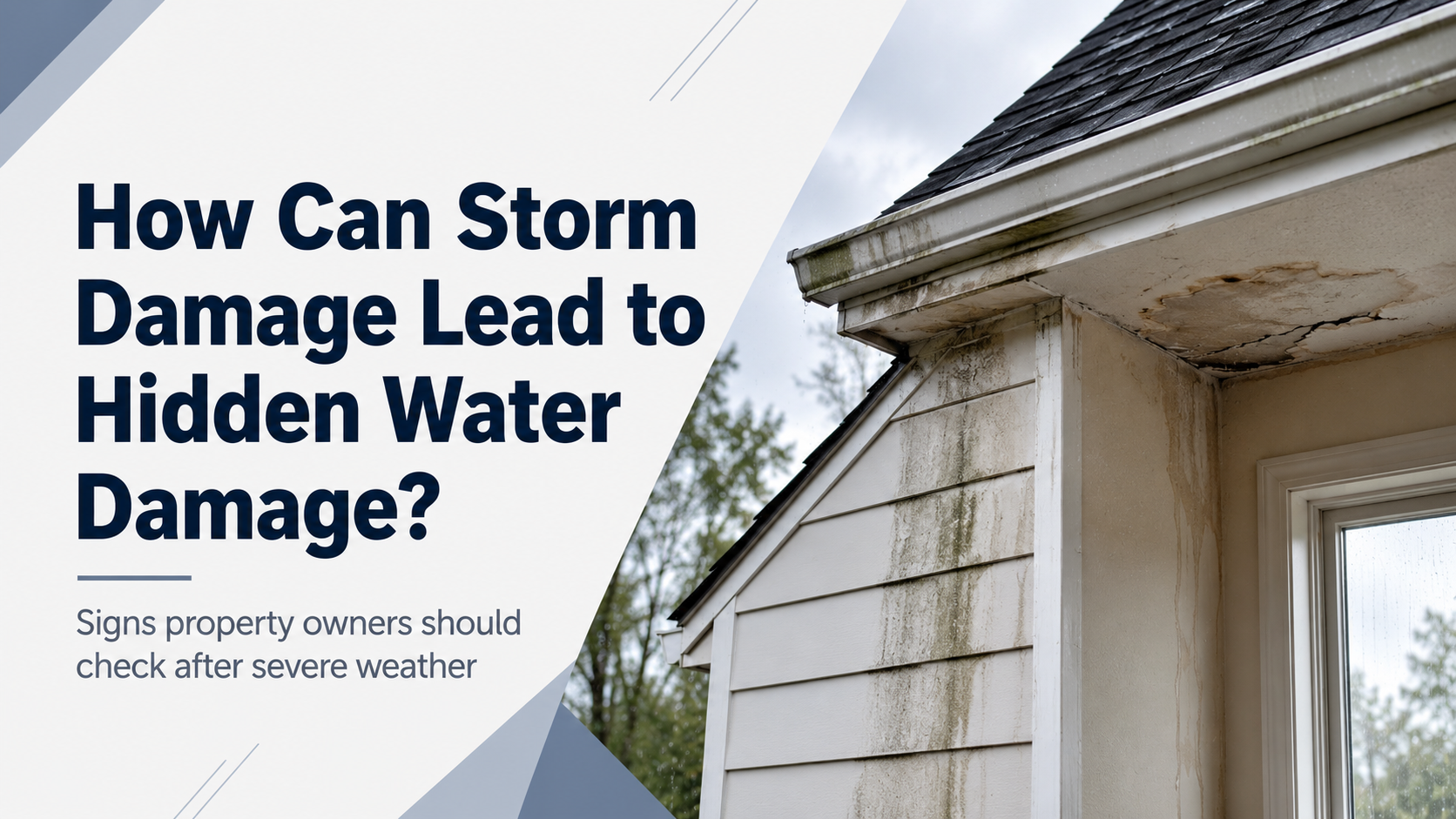
Hidden water damage after a storm can occur when rain, wind, hail, snowmelt, or exterior damage allows moisture to enter through the roof, siding, windows, foundation, gutters, or other openings. The damage may not be visible immediately. A property can appear dry inside while water moves behind walls, above ceilings, beneath flooring, or into insulation.
After heavy rain, wind-driven storms, ice, hail, or flooding, property owners often look first for obvious damage such as fallen branches, missing shingles, broken gutters, puddles, or wet flooring. Those are important warning signs, but storm-related moisture can also remain hidden in less accessible areas.
For homeowners, landlords, property managers, and business owners in Hainesville, Lake County, Northern Illinois, and Southern Wisconsin, knowing where to inspect after severe weather can help identify moisture before it contributes to odors, deteriorated materials, structural damage, or mold concerns.
Key Takeaway
Storm damage can create hidden water damage when moisture enters through damaged roofing, siding, flashing, windows, gutters, foundations, or exterior openings. After severe weather, check ceilings, walls, attic spaces, basements, flooring, trim, windows, and exterior-facing rooms for stains, odors, softness, or unexplained dampness.
How Can Storm Damage Cause Hidden Water Damage?
Storm damage can cause hidden water damage when exterior building materials become loosened, cracked, punctured, shifted, or overwhelmed. Moisture may enter through a small roof opening, damaged flashing, loose siding, failed exterior seals, window gaps, overflowing gutters, foundation cracks, or drainage problems.
Once water enters the building envelope, it may travel away from the original opening. Moisture can move along roof decking, rafters, framing, insulation, drywall, ceiling materials, wall cavities, and subflooring before a visible stain appears.
This movement explains why a ceiling stain may appear several feet away from the roof opening or why a musty odor can develop before the wall or ceiling looks wet.
McMahon Services & Construction Corp provides storm damage restoration, roofing, and siding services for properties affected by severe weather, exterior damage, and related moisture intrusion.
Quick Answer
Storm damage causes hidden water damage when rain or melting moisture enters behind roofing, siding, windows, walls, ceilings, or foundations. Because water can travel through framing and insulation, the visible damage may appear far from the original exterior opening.
How Roof and Siding Damage Let Water Inside
Roofing and siding are primary defenses against storm-related moisture. When either system is damaged, wind-driven rain can enter the building envelope and reach interior materials that are not designed to remain wet.
Roof Problems That Can Allow Water Intrusion
- Missing, lifted, cracked, or impact-damaged shingles
- Damaged flashing around chimneys, vents, valleys, and skylights
- Punctures caused by branches or wind-blown debris
- Loose roof components after high winds
- Clogged or overflowing gutters
- Ice-related damage near roof edges or drainage areas
- Failed seals around roof penetrations
Siding and Exterior Problems That Can Let Moisture In
- Cracked, loosened, or missing siding panels
- Impact damage from hail or debris
- Failed caulking around windows and doors
- Gaps where siding meets roofing, trim, or utility penetrations
- Water collecting behind damaged exterior finishes
- Drainage or grading that directs water toward the structure
Exterior damage may appear minor from ground level while allowing a significant amount of moisture into wall cavities, attic insulation, or ceiling assemblies.
McMahon Services also provides roofing services for property owners who need roof inspections, repair, replacement, or help after storm-related damage.
What Are the Warning Signs of Hidden Water Damage After a Storm?
Some signs appear during or immediately after a storm. Others develop over several days as wet materials swell, stains spread, paint separates, or odors become stronger.
Indoor Warning Signs
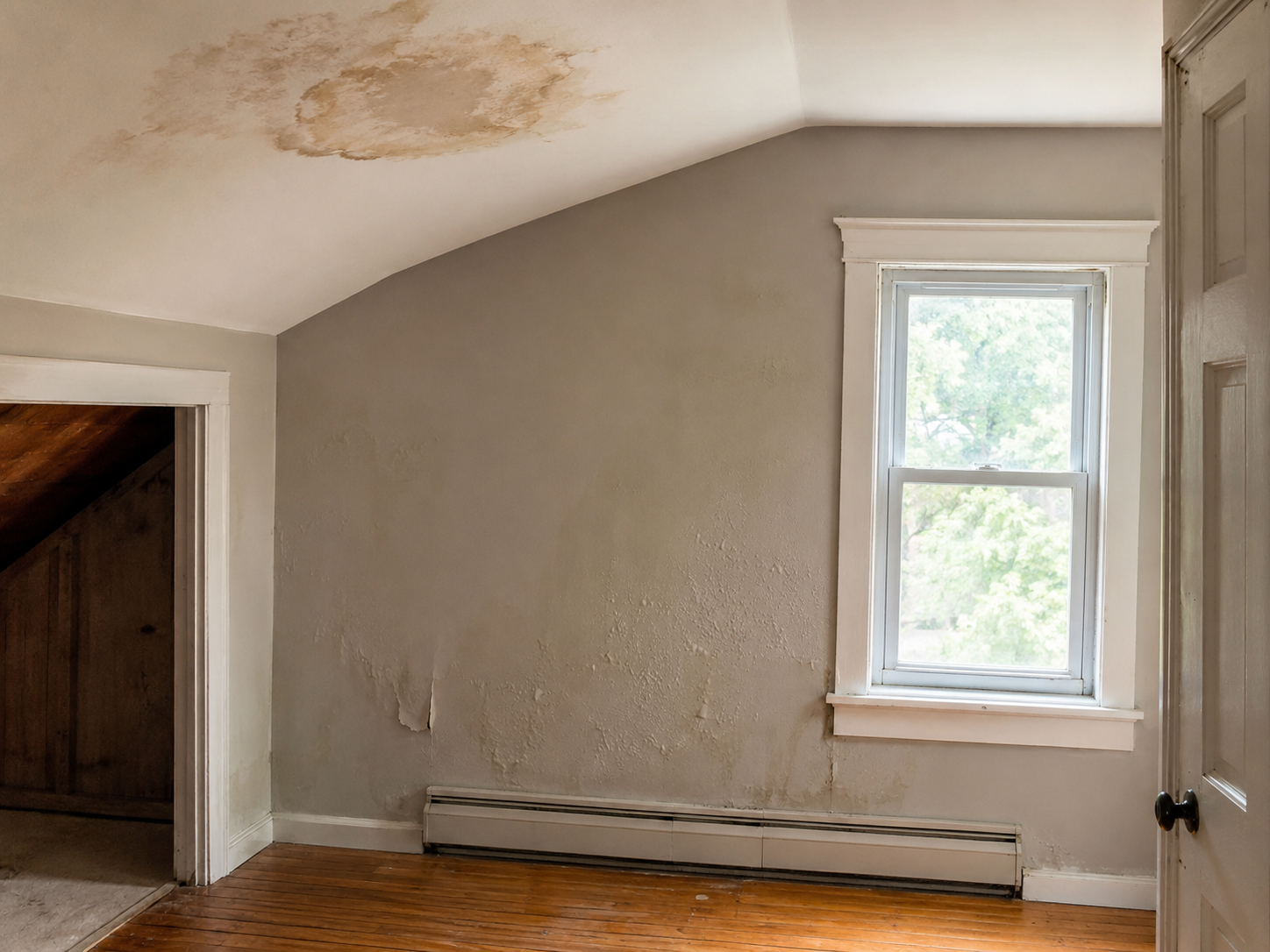
- Ceiling stains: Yellow, brown, gray, or ring-shaped marks may indicate water moving through ceiling materials.
- Soft or swollen drywall: Walls and ceilings that feel spongy, weak, or enlarged may have absorbed moisture.
- Bubbling paint or texture: Water behind a finished surface can cause paint, plaster, or ceiling texture to blister and peel.
- Musty odor: Damp smells in an attic, basement, closet, or exterior-facing room may indicate trapped moisture.
- Warped trim and flooring: Baseboards, laminate, hardwood, or subflooring may swell, separate, or buckle after water exposure.
- Damp insulation: Wet attic, wall, or basement insulation can hold moisture and slow the drying process.
- Recurring stains: A stain that returns after painting usually means the source was not corrected.
- Condensation in unusual areas: Moisture around windows, vents, or exterior walls may point to a broader water problem.
If storm water has entered ceilings, walls, flooring, insulation, or stored contents, McMahon Services provides water and sewage damage restoration services for interior water damage and related cleanup needs.
Signs That Should Not Be Covered With Paint
Musty odor, soft drywall, recurring stains, swollen trim, bubbling paint, and damp insulation should be investigated before cosmetic repairs begin. Painting over the surface may conceal the symptom without correcting the moisture source.
Areas to Inspect After Severe Weather
A careful post-storm inspection should include both exterior and interior areas. Do not climb onto a wet or damaged roof, enter an unsafe attic, or approach electrical hazards. Use ground-level observations and qualified professionals when conditions are unsafe.
Exterior Areas to Check
- Roof edges, shingles, vents, flashing, chimneys, and skylights
- Gutters, downspouts, and drainage discharge points
- Siding, trim, exterior doors, and window frames
- Foundation walls and visible cracks
- Basement window wells and exterior stairwells
- Areas where tree limbs or debris struck the property
- Low spots where water collected near the foundation
Interior Areas to Check
- Attic insulation, roof decking, rafters, and vent areas
- Ceilings below roof valleys, vents, chimneys, and skylights
- Exterior-facing walls and window openings
- Closets located beneath roof or plumbing areas
- Basement walls, flooring, window wells, and sump pump areas
- Carpet edges, baseboards, and flooring near exterior walls
- Stored boxes, furniture, and contents near foundations or windows
Take photos and videos of any visible storm damage, water stains, displaced materials, or wet contents before cleanup or repair changes the condition of the area.
Why Basements and Foundations Matter After Heavy Rain
Basements and foundation areas are vulnerable during heavy rain, snowmelt, storm runoff, and drainage failures. Water may enter through foundation cracks, wall-floor joints, basement windows, window wells, failed sump pumps, backed-up drains, or saturated soil around the structure.
Not every basement moisture problem begins as a major flood. The first warning sign may be dampness along a wall, moisture near a baseboard, staining on stored boxes, peeling paint, or a musty smell near a foundation corner.
Ready.gov flood safety guidance explains that flooding can create electrical, contamination, and structural hazards. Property owners should avoid entering standing water when electrical equipment, sewage, storm runoff, or unknown contaminants may be involved.
Basement Areas to Inspect After a Storm
- Foundation wall and floor joints
- Basement windows and window wells
- Sump pump, floor drain, and ejector pump areas
- Finished walls, baseboards, and carpet edges
- Stored boxes, shelving, furniture, and appliances
- Water heaters, furnaces, washers, dryers, and electrical equipment
- Areas where previous seepage or flooding occurred
Even a small amount of basement water can spread beneath flooring, into carpet padding, or behind finished walls. The visible puddle may represent only part of the moisture problem.
Can Hidden Storm Moisture Lead to Mold?
Yes. Hidden moisture after a storm can create conditions where mold may develop, especially when drywall, insulation, carpet, padding, wood, or other porous materials remain damp.
The EPA explains that moisture control is central to mold control. Property owners can review the EPA guide to mold and moisture for additional information.
A musty smell after severe weather should not be ignored. It may come from wet insulation, damp drywall, carpet padding, basement materials, or a wall cavity with limited airflow. Surface cleaning may not resolve the issue if the original water source remains active.
The IICRC S500 water damage restoration standard describes professional procedures and precautions for water damage restoration. This is relevant because storm-related moisture can enter materials and cavities that do not dry properly through ventilation alone.
Moisture and Mold Warning Signs
Musty odor, damp drywall, wet insulation, recurring stains, peeling paint, and moisture near baseboards may indicate that storm-related water damage has not been fully dried or corrected.
When Should Property Owners Call for Professional Help?
Property owners should call for help after storm damage when they notice active roof leaks, damaged siding, ceiling stains, wet exterior walls, damp basement areas, soft drywall, musty odors, wet insulation, or water-damaged contents.
Professional evaluation is also appropriate when the source of the moisture is unclear. Water entering through the roof may appear inside a wall, while foundation seepage may look like a flooring problem. Moisture entering behind siding may not become visible until drywall or trim begins to change.
Call a Restoration or Exterior Repair Professional When:
- Water is actively entering the property
- Roofing, siding, flashing, or windows were damaged
- Ceiling or wall stains continue spreading
- Drywall, flooring, or trim feels soft or swollen
- Insulation or attic materials are wet
- The basement has standing water or recurring seepage
- Multiple rooms or building levels are affected
- Musty odor remains after surface drying
- Mold-like growth is visible or suspected
McMahon Services & Construction Corp is based at 44 W Belvidere Rd, Hainesville, IL 60030, and serves Hainesville, Lake County, Northern Illinois, and Southern Wisconsin. The company is available 24 hours for emergency restoration needs and can be reached at 847-566-4568.
Quick Decision Guide
Call for professional help if storm damage allowed water inside, stains appeared on ceilings or walls, the basement developed a musty odor, drywall became soft, or damaged roofing and siding may be allowing ongoing moisture intrusion.
Frequently Asked Questions About Hidden Water Damage After a Storm
Can storm damage cause water damage inside a home?
Yes. Damaged roofing, siding, flashing, windows, gutters, foundations, and exterior seals can allow water to enter ceilings, walls, insulation, flooring, attics, and basements.
How do I know whether storm water reached behind my walls?
Possible signs include bubbling paint, musty odor, soft drywall, stains, warped trim, damp baseboards, swollen flooring, or moisture near windows and exterior walls.
Should I check my attic after a storm?
Yes, when it is safe. Look for damp insulation, dark roof-deck staining, wet rafters, moisture near vents, or a musty odor. Do not enter unstable attic areas or step where no safe walking surface is available.
Can damaged siding cause hidden water damage?
Yes. Loose, cracked, or impact-damaged siding can allow wind-driven rain behind the exterior surface, where it may affect sheathing, insulation, wall cavities, and interior drywall.
Can clogged gutters cause indoor water damage?
They can. Overflowing gutters may direct water against roof edges, siding, windows, and foundations. This can contribute to attic leaks, wall moisture, or basement seepage.
Should I paint over a ceiling stain after a storm?
No. The source of the moisture should be identified and the affected materials should be checked and dried before cosmetic repairs are completed.
How long can hidden storm damage take to appear?
Some signs appear immediately, while others develop over days or weeks. Odors, paint bubbling, swelling, recurring stains, and mold concerns may become noticeable after moisture has remained inside materials.
Who should I call for storm-related water damage in Hainesville or Lake County?
Property owners in Hainesville, Lake County, Northern Illinois, and Southern Wisconsin can contact McMahon Services & Construction Corp for storm damage restoration, roofing, siding, water damage cleanup, structural drying, and related repair support.
Get Help With Hidden Storm and Water Damage
Hidden water damage after a storm can occur when wind, rain, hail, snowmelt, or exterior damage allows moisture into roofing systems, siding, walls, ceilings, basements, insulation, flooring, or stored contents.
Because the damage may not appear immediately, inspect the property for stains, odors, soft materials, damp insulation, warped trim, and recurring moisture after severe weather. Document visible damage and avoid covering affected materials before the source is identified and the area is properly dried.
For 24-hour storm damage restoration and water damage support in Hainesville, Lake County, Northern Illinois, and Southern Wisconsin, call McMahon Services & Construction Corp at 847-566-4568 or visit McMahon Services & Construction Corp.




0 Comments