
Can Water Damage Affect Electrical Wiring and Outlets?
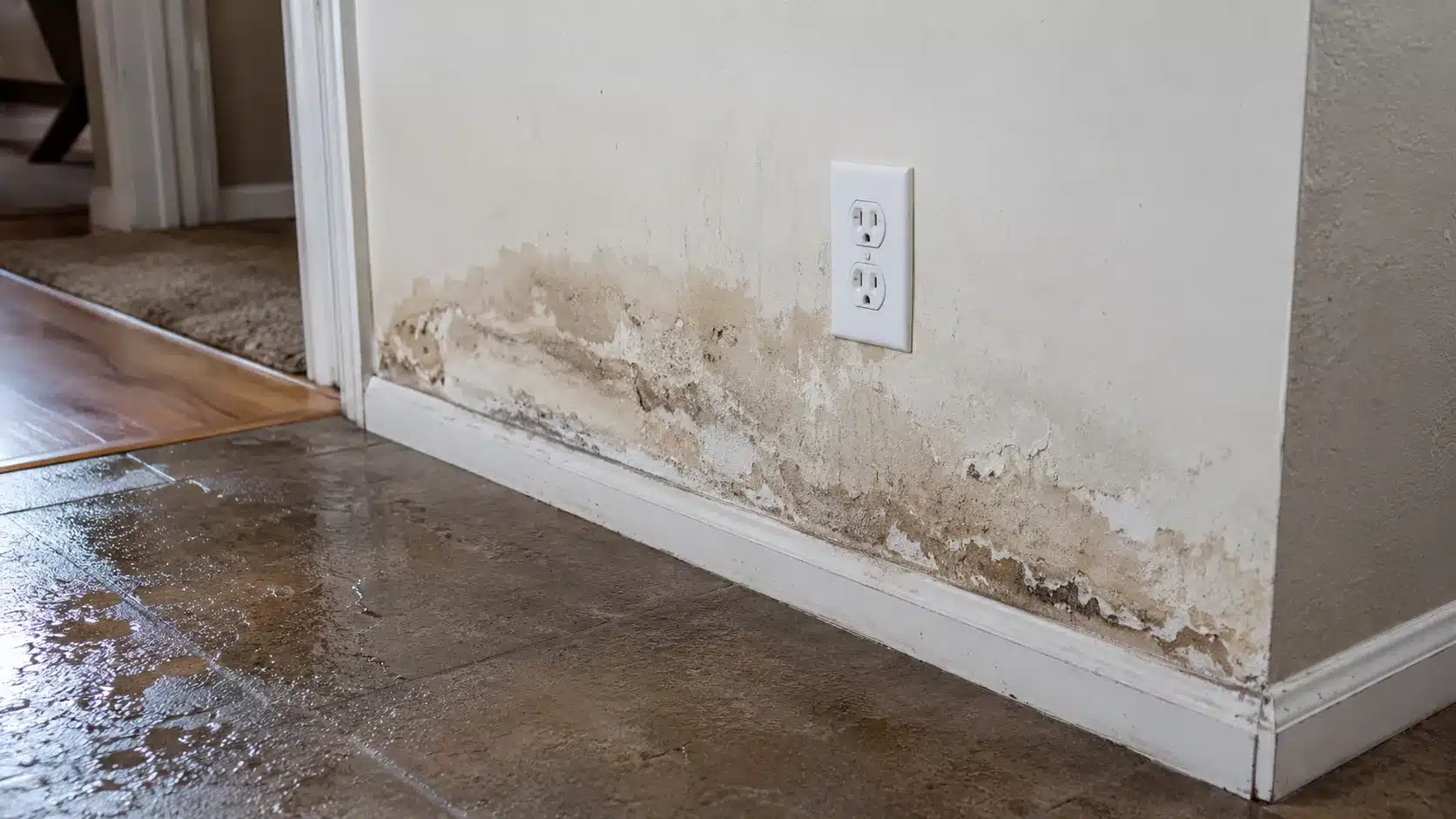
Yes. Water damage can affect electrical wiring, outlets, switches, junction boxes, circuit breakers, light fixtures, appliances, and other powered equipment. Even after the visible water is removed, moisture, sediment, and contaminants may remain inside electrical components. This can increase the risk of electric shock, short circuits, corrosion, overheating, and fire.
If water is touching an outlet, electrical cord, appliance, breaker panel, or powered equipment, do not enter the wet area or touch anything electrical. Power should only be disconnected from a dry and safely accessible location. When that is not possible, remain outside the affected space and contact qualified professionals.
Quick Answer
Water near electrical wiring or outlets should be treated as an immediate safety concern. Do not test a wet outlet, plug in an appliance, reset a tripped breaker, or enter standing water near electrical equipment. A qualified electrician should evaluate the electrical system while a professional water damage restoration team removes water, detects hidden moisture, dries affected materials, and coordinates necessary repairs.
Key Takeaways
- Standing water may be electrically energized even when there are no sparks, smoke, or buzzing sounds.
- Never touch outlets, switches, cords, appliances, or electrical panels with wet hands or while standing on a wet surface.
- Water-damaged outlets, switches, protective devices, junction boxes, breakers, and some wiring may need replacement.
- Dry-looking drywall does not prove that wiring, insulation, electrical boxes, or wall cavities are completely dry.
- Electrical safety, water extraction, structural drying, plumbing repair, and reconstruction may need to be coordinated.
- When conditions are safe, photograph visible damage before cleanup begins.
Table of Contents
- Why water damage near electricity is dangerous
- How water reaches electrical wiring and outlets
- Electrical components that may be affected
- What to do immediately
- Should you turn off the power?
- Can wet outlets and wiring be dried and reused?
- Signs of hidden water damage near wiring
- How professional restoration and electrical evaluation work together
- How long inspection and restoration may take
- Insurance documentation considerations
- Northern Illinois water damage risks
- Frequently asked questions
Why Is Water Damage Near Electricity Dangerous?
Water and electricity can create serious hazards inside a home or commercial property. Water from a burst pipe, overflowing plumbing fixture, failed sump pump, roof leak, storm, appliance failure, sewage backup, or firefighting response may contain minerals, dirt, chemicals, building debris, or biological contaminants.
These materials can increase conductivity and leave residue inside electrical components. Even after the surface appears dry, corrosion and contamination may continue affecting metal contacts, wiring terminals, circuit protection devices, and electrical connections.
An outlet may look normal after the surrounding wall dries. Inside the electrical box, however, the contacts may be corroded, the terminals may be contaminated, insulation may remain damp, or sediment may interfere with safe operation. Re-energizing a damaged component can result in arcing, overheating, electrical shock, a tripped breaker, or fire.
The Electrical Safety Foundation International guidance on water-damaged electrical equipment explains that electrical equipment exposed to water may create long-term safety and fire risks when it is not properly evaluated, reconditioned, or replaced.
Standing Water Can Hide an Electrical Hazard
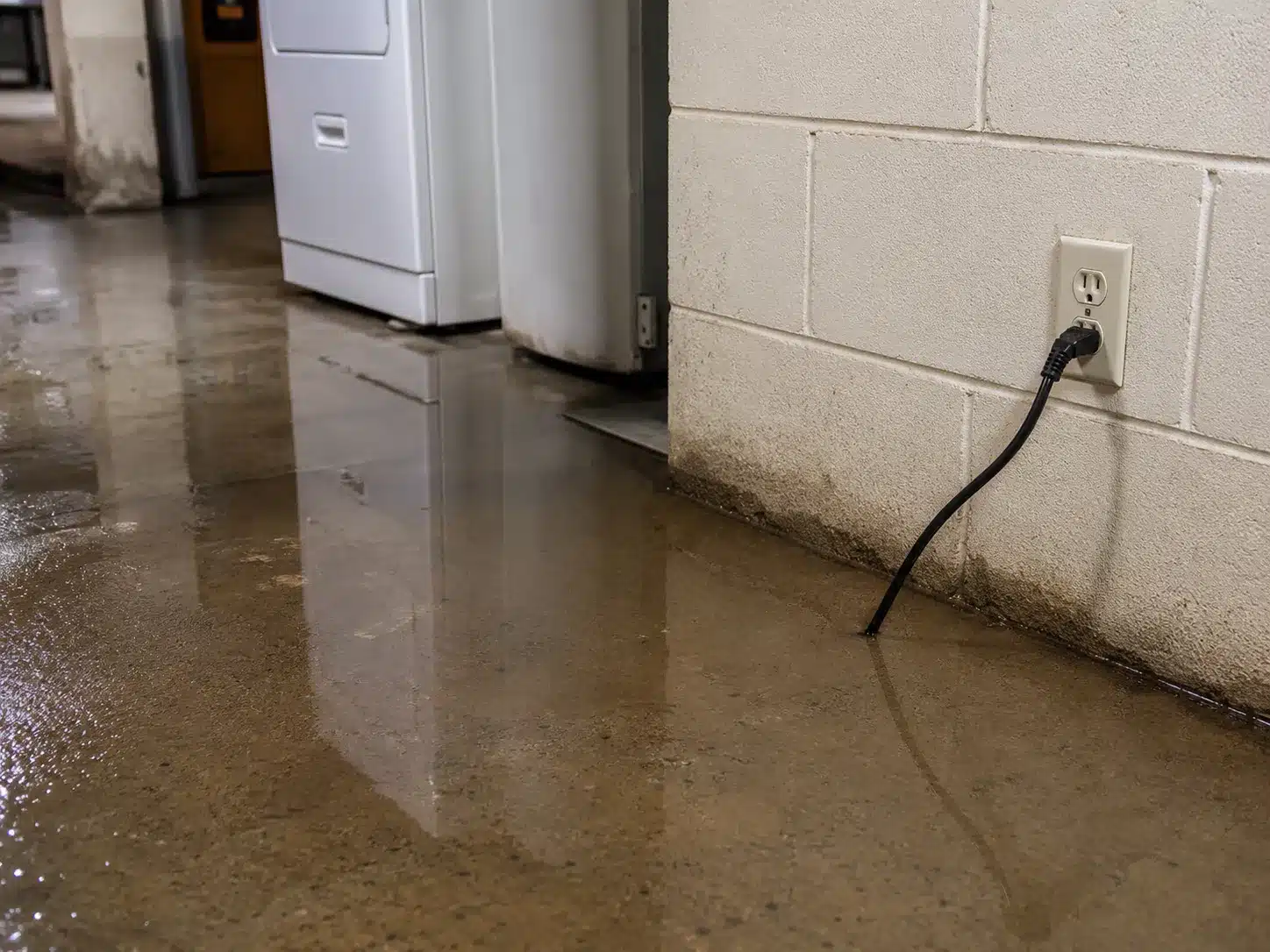
Electricity may travel through standing water, wet flooring, damp drywall, metal pipes, appliance housings, extension cords, and other conductive materials. There may be no visible warning that the affected area is energized.
The absence of sparks, smoke, unusual odors, or buzzing sounds does not prove that a flooded room is safe. Avoid entering a wet basement, utility room, kitchen, bathroom, laundry room, garage, or mechanical space when electrical equipment may be involved.
Electrical Damage Can Appear After the Initial Leak
Some electrical problems develop immediately, while others appear days or weeks later. Corrosion may weaken electrical connections, moisture may remain trapped inside equipment, and contaminated residue can interfere with protective devices.
A circuit that appears to work normally after a leak may still contain hidden damage. Plugging an appliance into a wet or previously flooded outlet is not a safe way to determine whether the outlet can be used.
How Does Water Reach Electrical Wiring and Outlets?
A property does not need to experience a major flood for electrical components to be affected. A localized plumbing or roof leak can enter the same wall or ceiling cavity as an outlet, switch, light fixture, junction box, or electrical cable.
Water may travel along wood framing, plumbing pipes, insulation, drywall, ceilings, conduit, cabinets, or flooring before it becomes visible. The location of a water stain or puddle does not always reveal the full extent of the moisture.
Common Sources of Water Near Electrical Systems
- Burst or frozen pipes inside walls and ceilings
- Leaking plumbing supply lines under sinks or behind appliances
- Overflowing toilets, bathtubs, sinks, or washing machines
- Water heater tank or connection failures
- Failed sump pumps and basement flooding
- Roof, flashing, siding, or window leaks after storms
- Fire-suppression water after a structure fire
- Sewage backups and contaminated water intrusion
- HVAC condensate drain failures
- Dishwasher, refrigerator, or washing machine leaks
- Commercial sprinkler system failures
- Groundwater entering a basement or lower level
Water can move beyond the visible damage. McMahon Services explains in its guide to hidden water damage after storms that moisture may spread through ceilings, walls, insulation, flooring, and structural materials before obvious warning signs appear.
Water Can Travel Behind Walls and Ceilings
When a pipe leaks inside a wall, water may flow along framing and reach an outlet located several feet from the source. Wet insulation can also hold moisture against electrical boxes, wiring, drywall, and wood framing.
In a multistory home or commercial property, water from an upstairs bathroom, laundry room, or plumbing fixture may move through the floor assembly and affect ceiling lights, smoke detectors, outlets, and wiring in the room below.
Which Electrical Components May Be Affected?
The appropriate response depends on the type of electrical component, source of water, contamination level, duration of exposure, and whether the equipment was energized when the water intrusion occurred.
A qualified electrician should determine whether an electrical component can be professionally reconditioned or whether it must be replaced.
| Electrical Component | Possible Water-Damage Concern | Recommended Next Step |
|---|---|---|
| Outlets and receptacles | Corrosion, contaminated contacts, trapped moisture, or arcing | Professional evaluation and commonly replacement after water exposure |
| Switches and dimmers | Internal contamination, corrosion, or unreliable operation | Do not operate; have the device evaluated by an electrician |
| GFCI and AFCI devices | Protective mechanisms may not function correctly | Professional evaluation and replacement when water-damaged |
| Junction and outlet boxes | Water, sediment, corrosion, or damaged connections inside the box | Inspect only after safe de-energization |
| Circuit breakers and panels | Compromised trip function, corrosion, contamination, or internal damage | Immediate assessment by a qualified electrician |
| Electrical wire and cable | Moisture beneath the jacket, contaminated cable ends, or damaged insulation | Evaluation based on cable type, location, and exposure |
| Appliances and HVAC equipment | Wet motors, controls, wiring, heating elements, or circuit boards | Do not plug in or operate until professionally cleared |
| Light fixtures and ceiling fans | Water entering sockets, motors, wiring connections, or ceiling boxes | Keep the switch off and arrange an inspection |
| Low-voltage systems | Damage to alarms, doorbells, security systems, networks, and controls | System-specific inspection, drying, and testing |
This table is intended as a planning guide, not a do-it-yourself electrical testing checklist. Water damage electrical wiring decisions should be based on an on-site evaluation by qualified professionals.
What Should You Do Immediately When Water Is Near Outlets or Wiring?
-
Stay out of standing water.
Do not enter a flooded room when outlets, extension cords, appliances, a breaker panel, or other electrical equipment may be involved.
-
Keep people and pets away.
Close the door or block access without stepping into the affected area.
-
Do not touch electrical equipment.
Never operate a wet switch, unplug a wet cord, reset a breaker, or handle an appliance while standing on a wet surface.
-
Disconnect power only from a dry and safe location.
If the electrical panel is wet, damaged, sparking, buzzing, or inaccessible without crossing water, do not approach it.
-
Call emergency services when there is an active danger.
Smoke, flames, visible arcing, a burning odor, downed electrical lines, or an electrical injury requires immediate emergency assistance.
-
Stop the water source only when it is safe.
A plumbing shutoff may limit additional damage, but do not cross an electrically hazardous area to reach it. McMahon Services offers 24-hour emergency plumbing services for burst pipes, leaking supply lines, sump pump failures, and other urgent plumbing problems.
-
Contact an electrician and a water restoration company.
Electrical hazards should be addressed before water extraction, demolition, or structural drying equipment is used in the affected area.
-
Document visible damage from a safe location.
Take photographs or video of the water source, water level, affected rooms, visible outlets, damaged materials, and wet contents without entering an unsafe space.
Safety Warning: Do not use a household wet vacuum, fan, extension cord, portable heater, or dehumidifier in a wet area until the electrical conditions have been evaluated and the equipment can be powered safely.
Should You Turn Off the Power After Water Damage?
Turning off the power may reduce immediate risk, but only when the electrical panel can be reached and operated from a completely dry, stable, and safe location.
Do not walk through water to reach the breaker panel. Do not touch the panel if it is wet, damaged, unusually warm, buzzing, sparking, or surrounded by moisture.
If water reached outlets or major electrical equipment, the ESFI flood electrical safety guidance recommends keeping power off until the electrical system has been inspected by a qualified electrician.
When there is uncertainty, contact the utility company or an electrician rather than attempting to disconnect or restore electrical service yourself.
Do Not Assume a Tripped Breaker Made the Area Safe
A breaker may trip because of an electrical fault, but that does not confirm that every circuit in the affected area is de-energized. Another circuit may still be active, a shared electrical connection may be involved, or the electrical panel itself may have been exposed.
Do not repeatedly reset a breaker that tripped during or after a plumbing leak, flood, or storm-related water intrusion.
Do Not Restore Power Too Soon
Electrical service should not be restored simply because standing water has been removed. Building materials, electrical boxes, circuit components, appliances, and wiring pathways may still contain moisture.
A qualified electrician should determine when affected circuits can safely return to service.
Can Wet Outlets, Switches, and Wiring Be Dried and Reused?
Some water-damaged electrical equipment must be replaced. Certain larger components may qualify for professional reconditioning under specific conditions, but the decision cannot be based only on whether the item appears dry.
Water can carry sediment and contaminants into small openings that cannot be adequately cleaned. Protective devices may also fail to operate correctly after water exposure.
Receptacles, switches, GFCIs, AFCIs, outlet boxes, junction boxes, circuit breakers, surge protection devices, and certain wire or cable products may require replacement after water damage.
Electrical Wiring Requires a Case-Specific Evaluation
Electrical cable type, the condition of the outer jacket, exposure of the cable ends, contaminants in the water, and the installation location all affect whether the wiring can remain in service.
Floodwater, storm runoff, or sewage may enter cable assemblies and leave conductive or corrosive residue that ordinary drying cannot remove. Cable designed for dry locations may also be permanently affected by saturation.
Why “It Still Works” Is Not a Safety Test
A light turning on or an outlet powering a device does not prove that the component is safe. Internal corrosion or contamination may create intermittent faults, overheating, arcing, or failure later.
Do not test a questionable outlet by plugging in a lamp, phone charger, appliance, or electrical tester. The system should be professionally inspected before normal use resumes.
What Are the Signs of Hidden Water Damage Near Electrical Wiring?
Water behind drywall can affect electrical boxes and cable pathways without creating an obvious puddle. Hidden water damage near wiring should be investigated when any of the following warning signs appear:
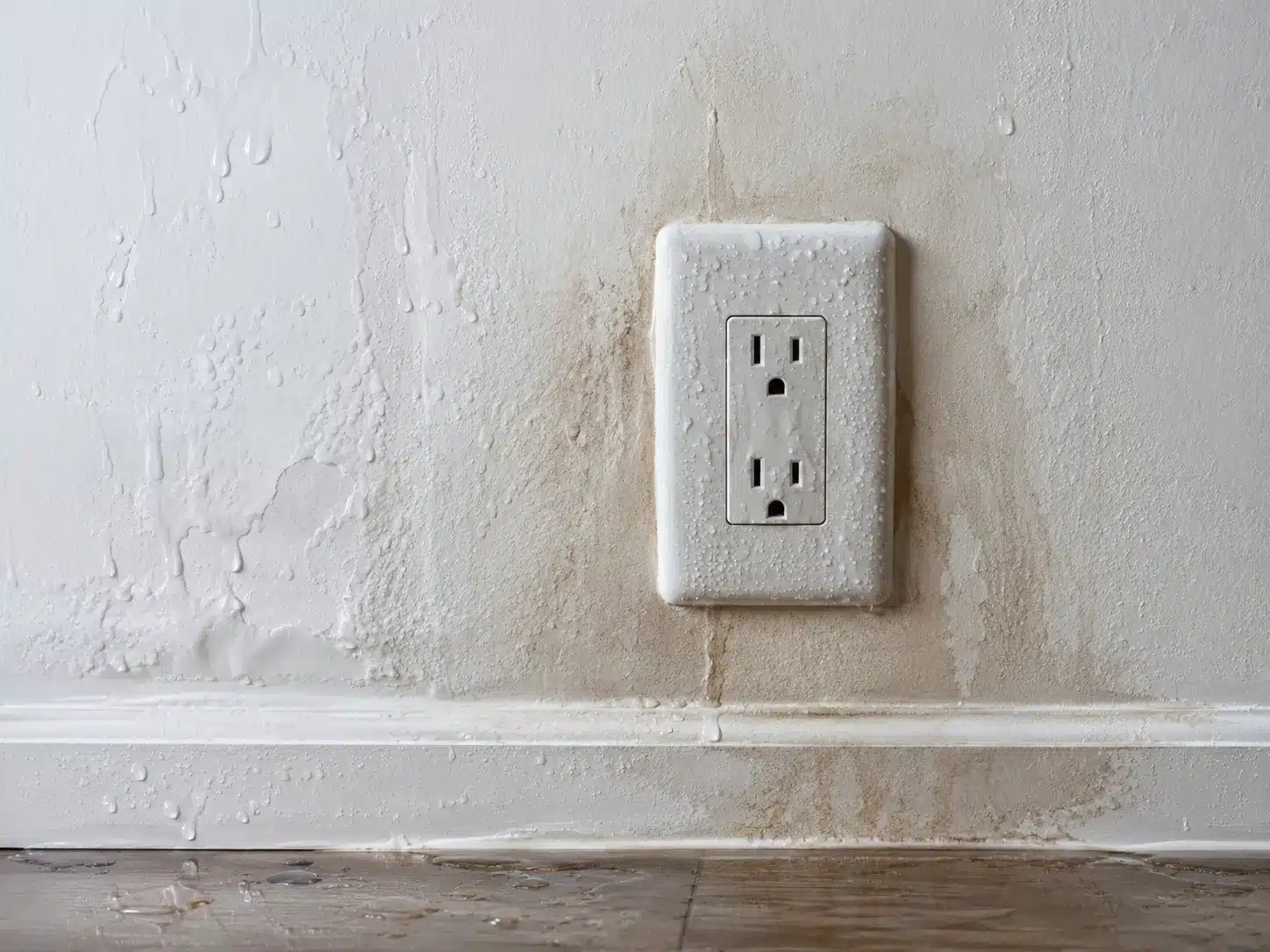
- Brown, yellow, gray, or rust-colored stains near outlets or switches
- Bubbling paint, peeling wallpaper, or swollen drywall
- Warped baseboards, trim, cabinets, or flooring
- A musty or damp odor inside a room, closet, wall, or cabinet
- Outlets or switch plates that feel unusually warm
- Buzzing, crackling, flickering lights, or repeated breaker trips
- Discoloration, rust, burn marks, or moisture around a cover plate
- Water dripping from a light fixture, ceiling fan, or smoke detector
- An outlet, appliance, light, or circuit that stopped working after a leak
- Unexplained moisture near an electrical box or wall cavity
Do not remove an outlet cover, open an electrical box, or cut into a wall to investigate these symptoms. Shut down the affected area when it can be done safely and arrange a professional inspection.
Hidden Moisture Can Also Damage Building Materials
Water near an outlet may also affect drywall, insulation, framing, flooring, cabinets, trim, and paint. Even when an electrical component is replaced, trapped moisture can contribute to odors, deterioration, and microbial growth.
Professional moisture mapping can help determine whether the water traveled beyond the visible stain or damaged area.
How Are Water Damage and Electrical Wiring Problems Evaluated?
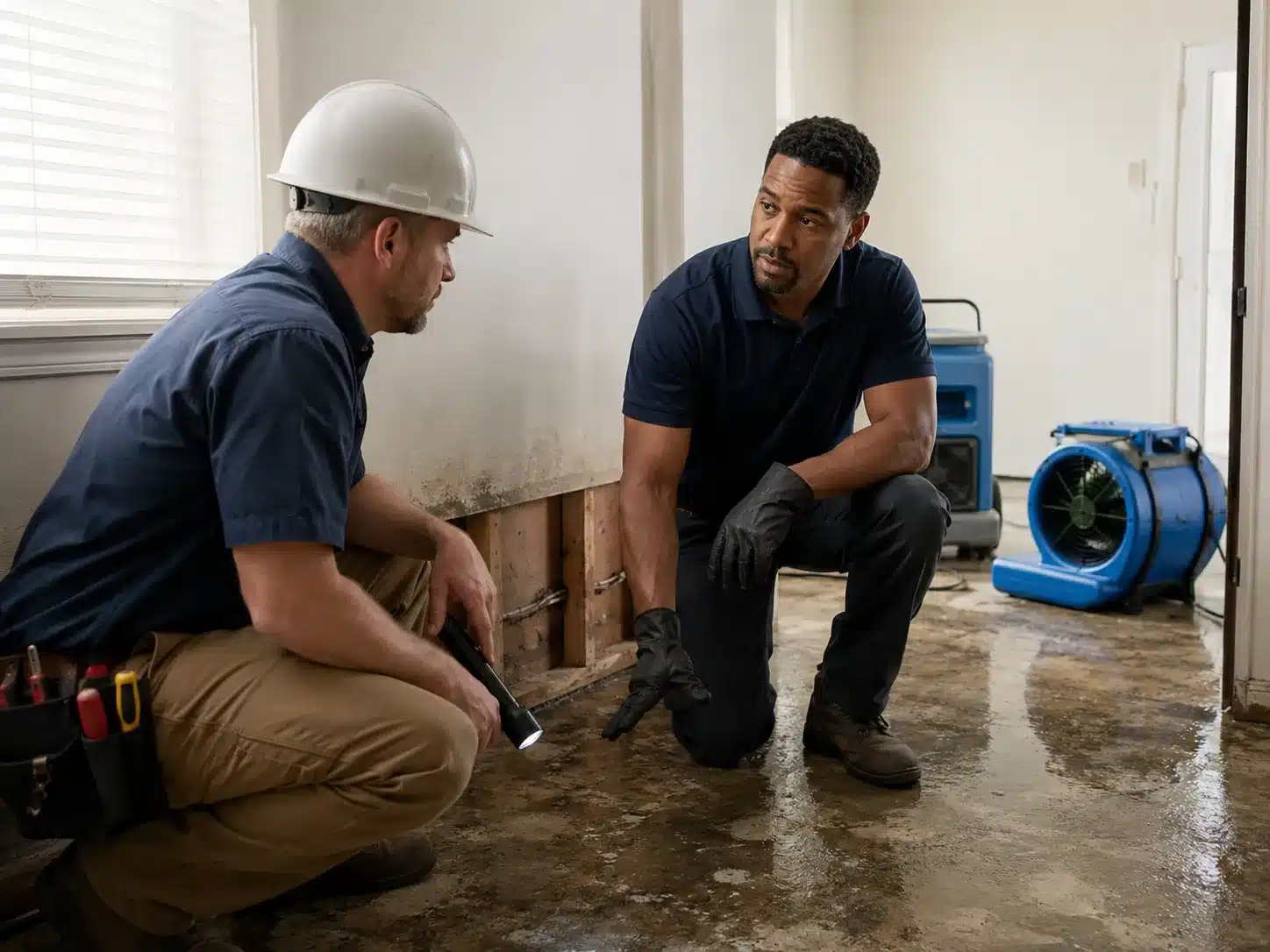
A water loss involving electricity often requires coordinated work between restoration technicians, electricians, plumbers, insurance professionals, and reconstruction contractors.
The correct sequence depends on the water source, contamination level, affected materials, extent of electrical exposure, and overall safety conditions.
1. Electrical Hazard Assessment
A qualified electrician or utility professional determines whether the affected circuits, electrical panel, or building service can be safely de-energized.
Damaged electrical components are identified for replacement, testing, or manufacturer-approved reconditioning.
2. Water-Source Control
The leaking pipe, plumbing fixture, appliance, roof opening, sump pump failure, or other water source must be stopped.
When a plumbing failure caused the damage, emergency plumbing repair may be required before drying can proceed effectively.
3. Professional Water Extraction
Once the affected area is electrically safe, standing water can be removed. Prompt extraction reduces the amount of moisture absorbed by carpeting, padding, flooring, drywall, cabinets, framing, and insulation.
Learn more about professional water extraction after flooding and why specialized restoration equipment is often necessary after a significant water loss.
4. Moisture Mapping and Damage Assessment
Restoration technicians inspect adjacent walls, floors, ceilings, cabinets, and rooms to identify where water traveled. Moisture meters and other professional tools may help locate damp materials that are not visibly wet.
The source and contamination level also affect the restoration plan. McMahon Services explains the differences among clean water, gray water, and black water in its guide to the categories and classes of water damage.
5. Controlled Structural Drying
Professional air movement, dehumidification, temperature control, and moisture monitoring are used to dry materials that can be restored.
Drying equipment should only be energized through a safe electrical setup approved for the site conditions. Household extension cords or circuits should not be improvised in a water-damaged area.
6. Controlled Access and Material Removal
Baseboards, drywall, insulation, flooring, cabinets, or other building materials may need to be removed when they trap moisture, contain contamination, or prevent access to affected electrical components.
The objective is to remove only what is necessary while providing safe access for drying, electrical repairs, and reconstruction.
7. Electrical Repair and Testing
The electrician replaces affected devices, evaluates wiring, verifies electrical connections, performs required testing, and determines when circuits can safely return to service.
This stage may include replacing outlets, switches, breakers, fixtures, wiring, panels, appliance components, or other electrical equipment.
8. Reconstruction and Finish Repairs
After drying and electrical repairs are complete, damaged drywall, insulation, flooring, trim, paint, cabinets, and other finishes can be repaired or replaced.
McMahon Services provides cleanup and rebuilding services after major property damage when restoration requires both emergency mitigation and reconstruction.
How Long Does the Inspection and Restoration Process Take?
There is no single timeline for water damage involving electrical wiring. A small plumbing leak affecting one outlet may be resolved faster than a basement flood involving an electrical panel, furnace, water heater, appliances, finished walls, and multiple circuits.
| Factor | Why It Affects the Timeline |
|---|---|
| Extent of electrical exposure | More circuits, outlets, appliances, or panel involvement requires a broader evaluation. |
| Source and category of water | Sewage, storm runoff, and contaminated water may require additional removal and safety controls. |
| Hidden moisture | Water behind walls, under flooring, or inside ceiling cavities may require controlled access and longer drying. |
| Material saturation | Wet insulation, subflooring, cabinets, drywall, and framing can extend restoration work. |
| Availability of electrical components | Specialized breakers, panels, fixtures, controls, or appliance parts may require sourcing. |
| Reconstruction scope | Opening and restoring walls, ceilings, floors, or cabinets adds repair stages. |
| Inspection requirements | Certain repairs may require inspections before walls are closed and power is restored. |
The priority should not be restoring power as quickly as possible. The priority is confirming that the electrical system and affected building materials are safe, dry, and ready for permanent repair.
What Should You Document for an Insurance Claim?
Insurance coverage depends on the policy, source of water, cause of loss, maintenance history, and type of damage. Sudden and accidental water damage may be treated differently from long-term leakage, groundwater intrusion, flooding, or neglected maintenance.
When it is safe, document:
- The apparent source of water and the time the damage was discovered
- Water levels, stains, wet rooms, and affected building materials
- Outlets, switches, appliances, and electrical equipment in the affected area
- Damaged personal property before it is moved or discarded
- Emergency plumbing, electrical, extraction, drying, and repair invoices
- Moisture readings, drying records, estimates, and professional reports
- Photographs taken before, during, and after emergency mitigation
- Communication with the insurance carrier and claim representative
Do not delay an urgent safety response while waiting for an insurance decision. Take reasonable steps to prevent additional damage, but avoid unsafe do-it-yourself electrical work, demolition, or equipment use.
Do Not Discard Damaged Items Too Quickly
Unless an item creates an immediate health or safety concern, photograph it before disposal. Your insurance carrier may request photographs, serial numbers, receipts, or an inventory of damaged property.
Restoration professionals can also document which materials were removed, why removal was necessary, and what drying or cleaning procedures were completed.
Why This Matters for Northern Illinois and Southern Wisconsin Properties
Homes and businesses in Hainesville, Lake County, Northern Illinois, Southern Wisconsin, and surrounding areas can experience water damage from frozen pipes, heavy rain, snowmelt, sump pump failures, roof damage, appliance leaks, plumbing failures, and sewage backups.
Basements and lower-level utility areas can present additional concerns because electrical panels, furnaces, water heaters, laundry equipment, pumps, freezers, and outlets may be located close to the affected area.
During freezing weather, a pipe can split inside a wall and release water near outlets and wiring. During spring snowmelt or heavy rainfall, a failed sump pump can allow water to rise around basement appliances and electrical equipment.
After a storm or plumbing failure, do not limit the inspection to the visible puddle. Water can spread beneath flooring, behind baseboards, into drywall, through insulation, and around electrical boxes.
Prompt evaluation helps identify three separate needs:
- Immediate electrical safety
- Water removal and structural drying
- Permanent electrical and building repairs
Professional Tip: Before repainting a water stain or replacing an outlet cover, confirm that the source has been repaired and the surrounding wall cavity is dry. Cosmetic repairs can hide ongoing moisture without resolving the electrical or structural damage.
Get 24/7 Help for Water Damage in Northern Illinois
When water reaches outlets, wiring, appliances, walls, flooring, or a utility area, the safest response is coordinated professional assistance. Electrical hazards should be addressed before normal power use resumes or water extraction equipment is operated.
McMahon Services & Construction Corp provides 24/7 water and sewage damage restoration services for homes and businesses in Hainesville, Lake County, Northern Illinois, Southern Wisconsin, and surrounding communities.
The restoration team can assist with emergency water extraction, moisture detection, structural drying, contaminated material removal, cleanup, and reconstruction planning while qualified electrical professionals evaluate and repair affected electrical systems.
Call McMahon Services at (847) 566-4568 for emergency water damage assistance and a professional property inspection.
Frequently Asked Questions About Water Damage and Electrical Wiring
Can a wet electrical outlet cause a fire?
Yes. Moisture, corrosion, sediment, or damaged contacts inside an outlet can contribute to arcing, overheating, short circuits, and fire. Do not use or test an outlet that may have been exposed to water. Have it evaluated by a qualified electrician.
Is it safe to enter a flooded basement if the power is off?
Not automatically. The power may not be fully disconnected, another electrical source may be present, or the water may contain sewage, chemicals, sharp debris, or structural hazards. Do not enter until the electrical and environmental conditions have been confirmed safe.
Should I reset a breaker that tripped after a water leak?
No. A tripped breaker may indicate an electrical fault caused by water exposure. Repeatedly resetting it can energize damaged wiring or equipment. Leave the breaker off and arrange an electrical inspection.
Do outlets need to be replaced after flooding?
Water-damaged receptacles commonly require replacement because moisture and contaminants can compromise internal contacts and protective functions. The final decision should be made by a qualified electrician after evaluating the exposure.
Can electrical wiring dry out on its own?
The outer surface may dry while moisture or contamination remains inside cable assemblies, boxes, connections, or wall cavities. Some wiring may be reusable under specific conditions, while other wiring must be replaced. Professional evaluation is required.
What should I do if water is dripping from a light fixture?
Do not touch the fixture or operate the light switch. Keep people away from the area. Turn off power only from a dry and safely accessible location. Contact a qualified electrician and a water damage restoration company to locate the source and assess the ceiling cavity.
Can a small plumbing leak damage electrical wiring?
Yes. A small leak can travel along framing, drywall, insulation, or plumbing pipes and reach an outlet box or wiring pathway. Water damage may remain concealed until staining, odor, corrosion, circuit problems, or material deterioration appears.
Who should I call first when water reaches an outlet?
If there is fire, smoke, visible arcing, a downed electrical line, or an electrical injury, call emergency services. Otherwise, stay out of the wet area and contact a qualified electrician to address electrical safety, along with a water damage restoration company to remove water and dry the property. A plumber may also be needed to stop the source.




0 Comments