
Can Water-Damaged Hardwood Floors Be Saved?
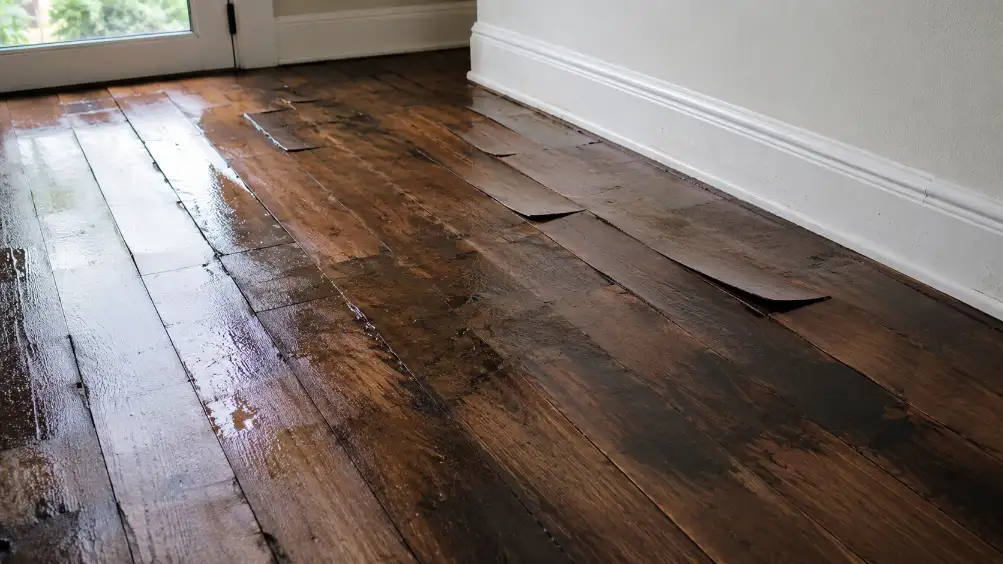
Water damaged hardwood floors can sometimes be saved when the water is removed quickly, the source is relatively clean, and the floorboards and subfloor remain structurally sound. Restoration becomes less likely when the flooring has been wet for an extended period, exposed to sewage or contaminated floodwater, severely buckled, delaminated, affected by mold, or separated from the subfloor.
The appearance of a wood floor immediately after a leak does not provide the full answer. Hardwood may swell, cup, crown, gap, stain, or lift as it absorbs moisture. Water may also remain beneath the boards, inside the subfloor, along wall edges, under cabinets, and around floor transitions even after the visible surface appears dry.
Before deciding whether to refinish or replace the floor, the water source must be stopped, standing water must be extracted, and moisture levels must be evaluated throughout the flooring system. Controlled drying may allow some solid hardwood floors to recover, but sanding, refinishing, or replacement should wait until the flooring and underlying materials are dry and stable.
Quick Answer
A wet hardwood floor does not automatically need replacement. Floors affected by clean water and addressed promptly may be professionally dried, monitored, and refinished if necessary. Replacement is more likely when boards are severely warped, contaminated, mold-affected, structurally weakened, delaminated, or unable to return to a stable moisture condition. A professional moisture inspection is the best way to determine the correct next step.
Key Takeaways
- Hardwood flooring can hold moisture even when the visible surface feels dry.
- Water may remain beneath floorboards, underlayment, vapor-control materials, and subflooring.
- Cupping does not always mean the floor must be replaced, but severe buckling or delamination may indicate permanent damage.
- The source and contamination level of the water affect whether flooring can be retained.
- Premature sanding, refinishing, or replacement can conceal moisture and create additional flooring problems.
- Professional extraction, moisture mapping, controlled drying, and monitoring improve the chance of saving appropriate materials.
- Permanent flooring repairs should not begin until the subfloor and surrounding materials are dry and stable.
Table of Contents
- How water affects hardwood flooring
- Signs of hardwood floor water damage
- How water becomes trapped beneath the floor
- How different wood flooring types respond
- What to do immediately after a leak
- Mistakes to avoid
- When hardwood floors may be saved or replaced
- How professional hardwood floor drying works
- How long hardwood flooring takes to dry
- When sanding and refinishing may be possible
- Can mold grow beneath hardwood?
- Insurance documentation considerations
- Northern Illinois and Southern Wisconsin risks
- Frequently asked questions
How Does Water Affect Hardwood Flooring?
Wood is a hygroscopic material, meaning it gains and loses moisture as surrounding environmental conditions change. When hardwood absorbs excessive moisture, the boards expand. As the wood later dries, it may shrink and change shape again.
The National Wood Flooring Association explains in its wood floor moisture-management guidance that excessive moisture can cause boards to swell and cup. Major moisture changes may also contribute to gapping, splitting, finish damage, and other changes in floor performance.
During normal seasonal humidity changes, wood movement may be gradual and relatively minor. A burst pipe, appliance leak, overflowing plumbing fixture, failed sump pump, or storm-related water intrusion can expose the flooring to much more moisture in a short period.
Water Can Affect the Entire Flooring Assembly
A hardwood flooring system may include:
- The visible solid hardwood or engineered wood boards
- Stain, finish, sealant, or a factory-applied coating
- Nails, staples, adhesive, or a floating connection system
- Underlayment, building paper, padding, or vapor-control materials
- Plywood, oriented strand board, or another wood subfloor
- A concrete slab beneath certain installations
- Floor joists, insulation, and ceiling materials below
Drying only the visible boards may leave moisture inside the layers beneath them. Trapped water can continue affecting adhesive, fasteners, wood fibers, subflooring, baseboards, cabinets, insulation, and nearby walls.
A Finished Wood Floor Is Not Waterproof
A wood floor finish can help protect against everyday spills, but it does not make the complete flooring system waterproof. Water can enter through seams, edges, nail holes, floor registers, damaged finish, plumbing penetrations, transitions, and wall-floor joints.
Once water moves beneath the boards, the finish may slow evaporation through the top surface. This is why hardwood may remain wet internally after the visible standing water has been removed.
What Are the Signs of Water Damage in Hardwood Floors?
Some changes may appear within hours, while others become more noticeable as the flooring begins to dry. Common warning signs include:
- Raised edges along individual floorboards
- Boards that curve upward or downward
- Loose, lifted, or buckled flooring
- New gaps appearing between boards
- Dark staining or discoloration
- Cloudy, peeling, or blistered floor finish
- Soft, spongy, or unstable floor areas
- Squeaking or movement that was not present before
- Swollen baseboards, door trim, or cabinet toe-kicks
- A persistent musty or damp odor
- Visible mold near seams or floor edges
- Moisture appearing between boards when pressure is applied
What Is Hardwood Floor Cupping?
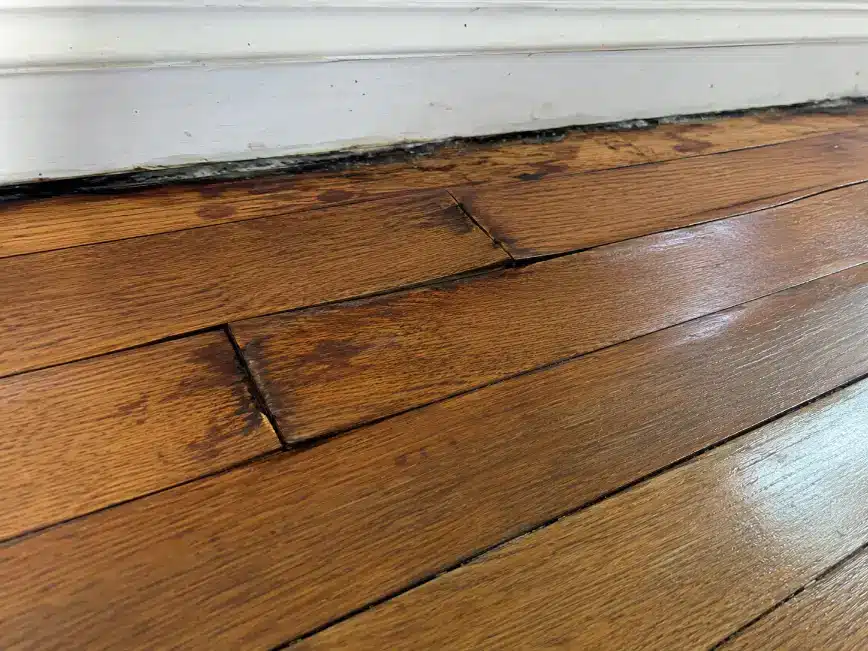
Cupping occurs when the edges of a floorboard rise higher than its center. This commonly indicates that the underside of the board contains more moisture than the top surface.
Cupping may develop when water reaches the subfloor or underside of the boards while the visible surface begins drying first. Mild cupping may improve as the complete flooring assembly gradually returns to a stable moisture condition.
Severe cupping, contamination, finish failure, or distortion that remains after appropriate drying may require board repair, sanding, refinishing, or replacement.
What Is Crowning?
Crowning is the opposite shape. The center of the board is higher than its edges. It may develop as moisture conditions change or when the upper and lower portions of the board dry at different rates.
A floor should not be sanded simply because it looks uneven during the early stages of drying. Moisture conditions should first be evaluated and allowed to stabilize. Sanding boards that are still changing shape can create an uneven final surface.
What Does Buckling Mean?
Buckling occurs when boards lift significantly away from the subfloor. The flooring may form raised sections or detach from fasteners or adhesive.
Minor movement does not automatically mean the entire floor is unsalvageable. However, substantial buckling may indicate severe expansion, adhesive failure, fastener damage, prolonged saturation, or insufficient space for the flooring to expand.
How Does Water Become Trapped Beneath Hardwood Floors?
Water does not always remain near the visible source. It can move along seams, beneath cabinets, through wall cavities, across the subfloor, and into nearby rooms before becoming noticeable.
Common Sources of Hardwood Floor Water Damage
- Dishwasher or refrigerator supply-line leaks
- Washing machine overflows or hose failures
- Burst or frozen plumbing pipes
- Leaking sinks, toilets, bathtubs, and showers
- Water heater tank or connection failures
- Failed sump pumps and basement flooding
- Roof, siding, flashing, or window leaks
- HVAC condensate drain problems
- Fire sprinkler or firefighting water
- Sewage backups and contaminated water intrusion
McMahon Services explains in its guide to hidden water damage after storms that moisture can spread through flooring, walls, ceilings, insulation, and concealed structural spaces before obvious warning signs appear.
A Small Leak Can Affect a Large Floor Area
A slow refrigerator supply-line leak may run beneath cabinets and hardwood for several days before staining, odor, or buckling appears. Water from an upstairs bathroom may move beneath hardwood, saturate the subfloor, and affect the ceiling below.
The visible damage boundary is not always the complete moisture boundary. Adjacent rooms, closets, cabinets, wall edges, floor transitions, and lower-level ceilings may also require inspection.
Water Can Be Trapped Beneath Cabinets and Walls
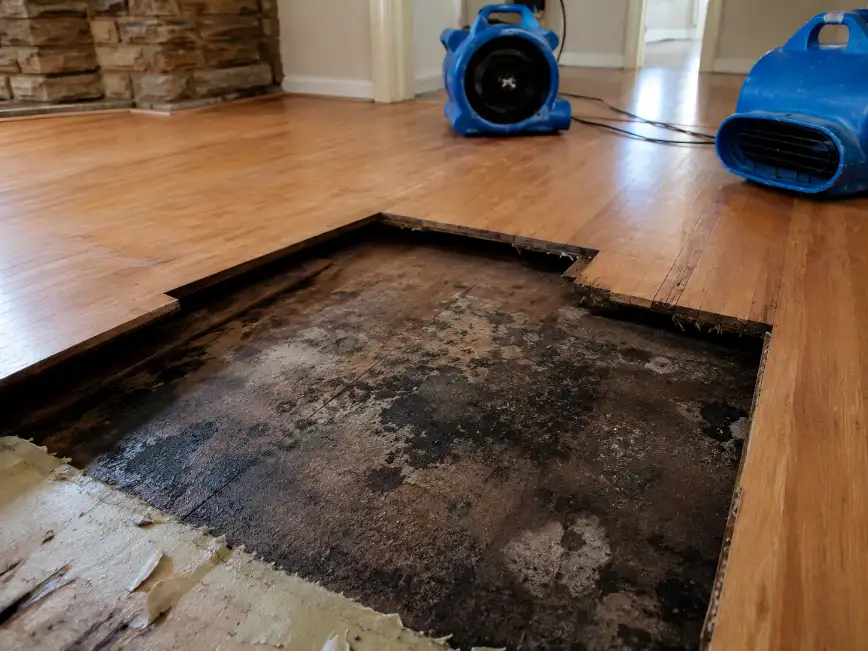
Kitchen and bathroom leaks often move underneath cabinets, baseboards, and fixed appliances. Water may remain concealed in cabinet toe-kicks, wall-floor joints, and floor sections that cannot dry through the visible surface.
Swollen cabinet bases, darkened trim, damp drywall, or raised flooring near a wall may indicate that moisture traveled beyond the initial spill.
How Do Different Wood Flooring Types Respond to Water?
| Flooring Type | Possible Water-Damage Response | Restoration Consideration |
|---|---|---|
| Solid hardwood | May swell, cup, crown, gap, stain, or buckle | Some floors can be dried and later repaired or refinished if the wood remains structurally sound |
| Engineered hardwood | Layers may swell, separate, or delaminate | Delaminated boards commonly require replacement because surface sanding cannot repair separated layers |
| Site-finished hardwood | Finish may slow surface penetration, but water can enter seams and edges | The floor may qualify for controlled drying and refinishing after moisture stabilizes |
| Factory-finished hardwood | Board edges and locking joints may swell or become uneven | Individual board replacement may be practical when planks remain permanently distorted |
| Glue-down wood flooring | Water may weaken adhesive or remain trapped between the wood and concrete | Adhesive failure, slab moisture, and board condition affect whether the floor can be retained |
| Floating engineered flooring | Moisture may remain inside seams, locking joints, and underlayment | Controlled disassembly may be needed to inspect and dry materials underneath |
The wood species, board thickness, width, finish, installation method, and condition before the water loss also affect how the floor responds.
What Should You Do Immediately After Water Reaches Hardwood Flooring?
-
Stop the water source when it is safe.
Shut off the appropriate plumbing valve or appliance supply. Do not enter standing water when outlets, cords, appliances, or electrical panels may be involved.
-
Determine whether the water may be contaminated.
Water from sewage, drain backups, groundwater, storm flooding, or overflowing toilets requires additional precautions. Avoid direct contact and keep children and pets away.
-
Document the damage.
Photograph the water source, hardwood floor, walls, baseboards, cabinets, appliances, and affected belongings before major cleanup or removal begins.
-
Remove standing water promptly.
Use professional assistance for a significant water loss or when water may be underneath the floor. McMahon Services explains the importance of professional water extraction after flooding.
-
Move dry contents carefully.
Remove area rugs, furniture, boxes, and belongings when they can be moved safely without spreading contaminated water or scratching the floor.
-
Check adjacent areas.
Inspect nearby rooms, closets, cabinets, wall edges, floor transitions, and the ceiling below when the water originated upstairs.
-
Arrange a professional moisture evaluation.
The floorboards, subfloor, baseboards, drywall, cabinets, and nearby structural materials may all require moisture readings.
-
Begin controlled drying.
Drying methods should be selected according to the flooring assembly, source of water, contamination level, electrical conditions, and moisture readings.
Safety Warning: Do not use household fans, wet vacuums, extension cords, or electrical equipment in standing water or near wet electrical components. Sewage and contaminated floodwater also require professional safety and cleanup procedures.
What Mistakes Should You Avoid?
- Do not assume the floor is dry because the surface feels dry. Water may remain beneath the boards or inside the subfloor.
- Do not use a steam mop. Steam introduces additional heat and moisture into seams and floor finishes.
- Do not flood the floor with cleaning solution. Excess liquid can increase penetration through joints and damaged finishes.
- Do not cover wet flooring with rugs, plastic, or replacement materials. Covering the surface may slow evaporation and conceal continuing damage.
- Do not sand the floor immediately. The wood may continue changing shape while moisture levels stabilize.
- Do not force lifted boards flat. Fastening swollen boards before they dry may damage the boards or subfloor.
- Do not ignore a musty odor. Odor may indicate trapped moisture or mold beneath the flooring.
- Do not install replacement flooring over a damp subfloor. Moisture should be resolved before permanent repairs begin.
The National Wood Flooring Association advises homeowners to avoid wet and steam mops because excessive moisture can damage both the finish and the wood. Its maintenance guidance also recommends addressing spills promptly. Review the NWFA wood floor maintenance guidance.
When Can Water-Damaged Hardwood Floors Be Saved?
The decision should be based on moisture readings, material condition, contamination, installation method, and drying progress rather than appearance alone.
Restoration May Be More Likely When:
- The water came from a clean or relatively low-contamination source
- The leak was discovered and addressed quickly
- The boards remain structurally sound
- The subfloor can be accessed and dried
- Cupping or distortion is limited
- There is no significant mold growth or persistent odor
- The floor finish and wood can tolerate the necessary restoration process
- Moisture readings show consistent drying progress
Replacement May Be More Likely When:
- Sewage or heavily contaminated water affected the flooring system
- Engineered boards have delaminated
- Boards are severely buckled, split, crushed, or detached
- The subfloor is swollen, soft, deteriorated, or structurally damaged
- Flooring adhesive has permanently failed
- Mold is growing beneath the boards or inside porous flooring layers
- Odor or contamination remains after appropriate restoration procedures
- The floor cannot be dried without removing affected sections
The water category is an important part of the decision. McMahon Services explains the differences among clean, gray, and black water in its guide to the categories and classes of water damage.
Partial Hardwood Floor Replacement May Be Possible
When the damage is limited to a smaller area, individual boards or sections may sometimes be replaced instead of removing the complete floor.
The feasibility of partial replacement depends on the flooring product, installation pattern, damage location, availability of matching boards, finish color, and condition of the subfloor.
How Do Professionals Dry Water-Damaged Hardwood Floors?
Professional drying begins with identifying the water source and determining how far the moisture traveled. The process may involve several coordinated steps.
1. Safety and Source Assessment
The restoration team identifies electrical hazards, contaminated water, damaged materials, and the source of the water. Plumbing, roofing, appliance, sump pump, or drainage repairs may be needed to stop continuing moisture.
2. Water Extraction
Standing water is removed from the flooring and surrounding materials. Extracting as much liquid water as practical can make the remaining drying process more efficient.
3. Moisture Mapping
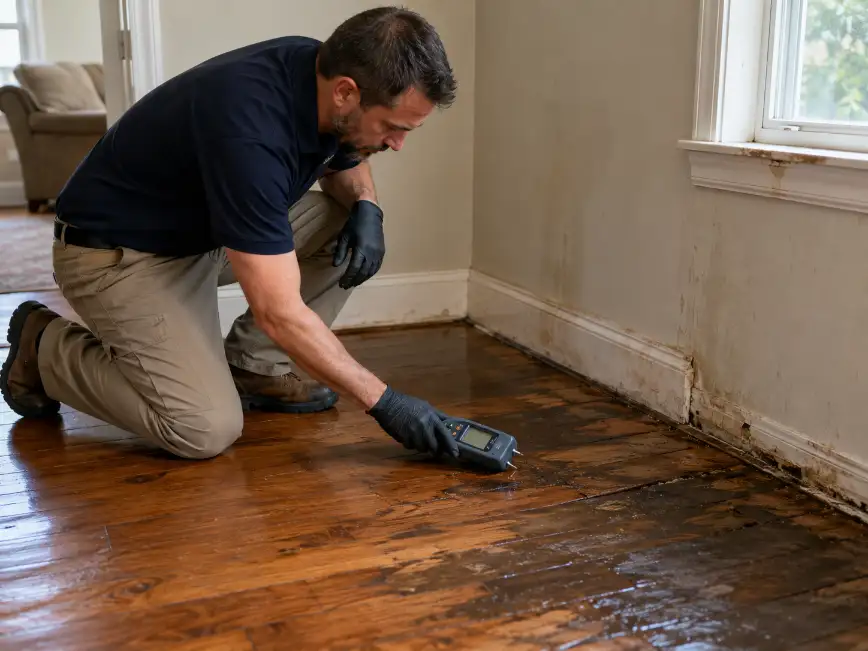
Technicians evaluate the hardwood, subfloor, baseboards, walls, cabinets, nearby rooms, and the ceiling below. Readings from affected areas may be compared with readings from similar dry materials elsewhere in the property.
4. Flooring-System Evaluation
The restoration plan considers whether the flooring is solid or engineered wood, how it is attached, what materials lie underneath it, the type of finish, and whether water entered beneath cabinets or walls.
5. Controlled Structural Drying
Air movement, professional dehumidification, temperature management, and specialized floor-drying systems may be used when appropriate. The objective is to remove moisture at a controlled rate from the hardwood and the materials beneath it.
Drying too aggressively or unevenly may create additional stress within wood flooring. Equipment placement and environmental conditions should therefore be monitored throughout the process.
6. Creating Drying Access
Baseboards, floor registers, transition strips, damaged boards, or sections of flooring may need to be removed when they prevent inspection or effective drying.
Controlled access can help technicians reach wet underlayment, adhesive, subflooring, wall-floor joints, and concealed materials.
7. Moisture Monitoring
The floor should be checked repeatedly during drying. Equipment may be adjusted as moisture levels, temperature, relative humidity, and material conditions change.
Drying equipment should not be removed only because the visible floor looks better. Moisture readings should show that the complete flooring assembly has reached an appropriate condition.
8. Repair Planning
After the hardwood and subfloor are dry and stable, contractors can determine whether the floor requires cleaning, individual board replacement, refinishing, subfloor repair, or complete replacement.
This sequence follows the distinction between mitigation, restoration, and reconstruction explained in McMahon Services’ guide to water mitigation, restoration, and reconstruction.
How Long Do Water-Damaged Hardwood Floors Take to Dry?
There is no universal drying time. The visible surface may dry quickly while the center of the boards, underside of the flooring, subfloor, wall-floor joints, and materials under cabinets remain wet.
| Drying Factor | Why It Matters |
|---|---|
| Length of water exposure | Longer exposure allows moisture to travel deeper into boards and subflooring. |
| Flooring type and thickness | Solid, engineered, thick, thin, wide, and narrow boards respond differently. |
| Installation method | Nailed, stapled, glued, and floating floors provide different levels of access and evaporation. |
| Subfloor material | Plywood, oriented strand board, and concrete retain and release moisture differently. |
| Finish condition | A floor finish may slow moisture movement through the upper surface. |
| Indoor conditions | Temperature, relative humidity, airflow, and dehumidification affect drying. |
| Hidden wet materials | Wet walls, cabinets, insulation, and adjacent rooms can continue contributing moisture. |
Drying decisions should be based on repeated moisture measurements rather than a fixed number of days. Equipment should not be removed merely because the floor looks or feels better.
The EPA recommends drying water-damaged materials within 24 to 48 hours whenever possible to reduce the likelihood of mold growth. This does not mean that every hardwood flooring assembly will be completely dry within that period. It means extraction and professional drying should begin promptly and continue until the affected materials reach an appropriate condition. Review the EPA mold and moisture guidance.
When Can Hardwood Flooring Be Sanded and Refinished?
Sanding and refinishing may improve a solid hardwood floor after moisture levels stabilize, provided the boards remain structurally sound, thick enough, and suitable for refinishing.
Refinishing may help address:
- Surface staining
- Cloudy, worn, or damaged finish
- Minor remaining unevenness
- Discoloration that does not extend deeply into the boards
- Surface damage caused by the water loss or cleanup process
Refinishing should not be used to conceal continuing moisture, active mold, severe distortion, delamination, contamination, or subfloor damage. The source must be repaired and the complete flooring system should be dry and stable first.
The National Wood Flooring Association recommends using a qualified flooring professional for sanding and refinishing because the number of times a floor can be sanded depends on the wear-layer thickness, floor condition, flatness, equipment, and contractor skill. Read the NWFA hardwood floor refinishing guidance.
Can Mold Grow Beneath Water-Damaged Hardwood?
Yes. Mold can grow on wet subflooring, dust, wood, paper-faced materials, insulation, and nearby wall materials when moisture remains trapped beneath hardwood.
Possible warning signs include:
- A persistent musty odor
- Dark staining near floor edges
- Swollen baseboards or trim
- Visible growth between boards or near walls
- Soft or weakened subflooring
- Moisture that remains after surface drying
- Recurring odor when indoor humidity increases
The EPA recommends addressing leaks quickly and drying wet materials within 24 to 48 hours whenever possible. When mold is visible, concealed, extensive, or associated with contaminated water, professional remediation may be necessary.
McMahon Services provides professional mold removal and remediation services when a water loss results in visible or hidden mold-related damage.
What Should You Document for an Insurance Claim?
Coverage depends on the insurance policy and cause of the water damage. A sudden appliance or plumbing failure may be treated differently from long-term leakage, maintenance problems, groundwater intrusion, or external flooding.
When conditions are safe, document:
- The apparent source of the water
- The date and time the damage was discovered
- Standing water and the visible water boundary
- Cupped, buckled, stained, separated, or loose boards
- Wet baseboards, cabinets, walls, and ceilings
- Damaged furniture, rugs, appliances, and personal property
- Moisture readings and structural drying records
- Plumbing, extraction, restoration, flooring, and repair estimates
- Materials removed during emergency mitigation
- Photographs taken before, during, and after drying
Do not discard flooring or damaged belongings before documenting them unless immediate removal is required for health or safety reasons.
Ask the insurance carrier what documentation is required and whether an adjuster needs to inspect the floor before permanent replacement or refinishing begins.
Why Hardwood Water Damage Matters in Northern Illinois and Southern Wisconsin
Homes and businesses in Hainesville, Lake County, Northern Illinois, Southern Wisconsin, and nearby areas face seasonal water risks that can affect hardwood flooring.
Common causes include:
- Frozen or burst plumbing during winter
- Snowmelt and ice-related roof leaks
- Heavy rain and stormwater intrusion
- Sump pump failures
- Basement seepage
- Water heater and appliance failures
- Roof, siding, window, and flashing damage
- Fire suppression and sprinkler-system water
A burst pipe inside a wall may release water beneath hardwood before the leak becomes visible. Water from an upstairs bathroom, kitchen, or laundry area may also saturate the subfloor and damage the ceiling below.
Seasonal indoor humidity changes can further affect how wood floors move while drying. Maintaining controlled indoor conditions and monitoring moisture can help distinguish ordinary seasonal movement from damage caused by a water event.
Professional Tip: Do not decide whether to replace a cupped hardwood floor based only on its appearance during the first few days after a leak. Remove the water, inspect the subfloor, monitor moisture, and allow the flooring system to stabilize before making permanent repair decisions.
Get Help With Water-Damaged Hardwood Flooring
Water damaged hardwood floors require more than surface drying. Moisture may remain beneath the boards, inside the subfloor, behind baseboards, under cabinets, and within nearby walls.
McMahon Services & Construction Corp provides 24/7 water damage cleanup, repair, and restoration services for homes and businesses affected by plumbing leaks, appliance failures, stormwater, sewage backups, flooding, and concealed moisture.
The restoration process may include water extraction, moisture inspection, controlled structural drying, damaged-material removal, mold remediation, repair planning, and reconstruction.
When flooring or subflooring cannot be restored, McMahon Services can also coordinate cleanup and rebuilding after major property damage.
Call McMahon Services at (847) 566-4568 for 24/7 water damage assistance in Hainesville, Lake County, Northern Illinois, Southern Wisconsin, and surrounding service areas.
Frequently Asked Questions About Water-Damaged Hardwood Floors
Can cupped hardwood floors return to normal after drying?
Mild cupping may improve as the boards and subfloor gradually return to a stable moisture condition. Severe distortion, contamination, finish damage, or structural problems may still require repair, refinishing, or replacement. Moisture readings should guide the decision.
How long does wet hardwood flooring take to dry?
The drying time depends on the amount of water, duration of exposure, flooring type, board thickness, installation method, subfloor, finish, and indoor conditions. The surface may dry before the underside and subfloor, so repeated moisture monitoring is more reliable than a fixed timeline.
Should I use fans on wet hardwood floors?
Air movement may be part of professional drying, but equipment placement and airflow should be based on the water source, electrical safety, contamination level, and flooring assembly. Household fans should not be used around sewage, contaminated water, visible mold, or unsafe electrical conditions.
Can hardwood floors be refinished after water damage?
Some solid hardwood floors can be refinished after they are completely dry and stable. Refinishing is not appropriate when boards are delaminated, structurally weakened, contaminated, mold-affected, or too thin to sand safely.
Does engineered hardwood need replacement after getting wet?
Not always. Limited clean-water exposure may be dried successfully when addressed quickly. Replacement is more likely when engineered layers swell, separate, delaminate, lose adhesion, or remain distorted after drying.
How do I know whether water reached the subfloor?
Warning signs include cupping, buckling, soft areas, damp floor edges, swollen baseboards, moisture below the room, or readings that remain elevated. Professional moisture meters and controlled access may be needed to evaluate the subfloor accurately.
Can mold grow underneath hardwood flooring?
Yes. Mold can grow on wet subflooring, dust, paper, wood, insulation, and nearby wall materials when moisture remains trapped. Musty odors, staining, soft materials, or visible growth should be professionally evaluated.
Should hardwood flooring be replaced immediately after a leak?
Not necessarily. Unless the flooring is contaminated, severely damaged, or creating a safety concern, it may be appropriate to extract the water, dry the complete flooring assembly, monitor moisture, and evaluate its condition before deciding on permanent replacement.




0 Comments