
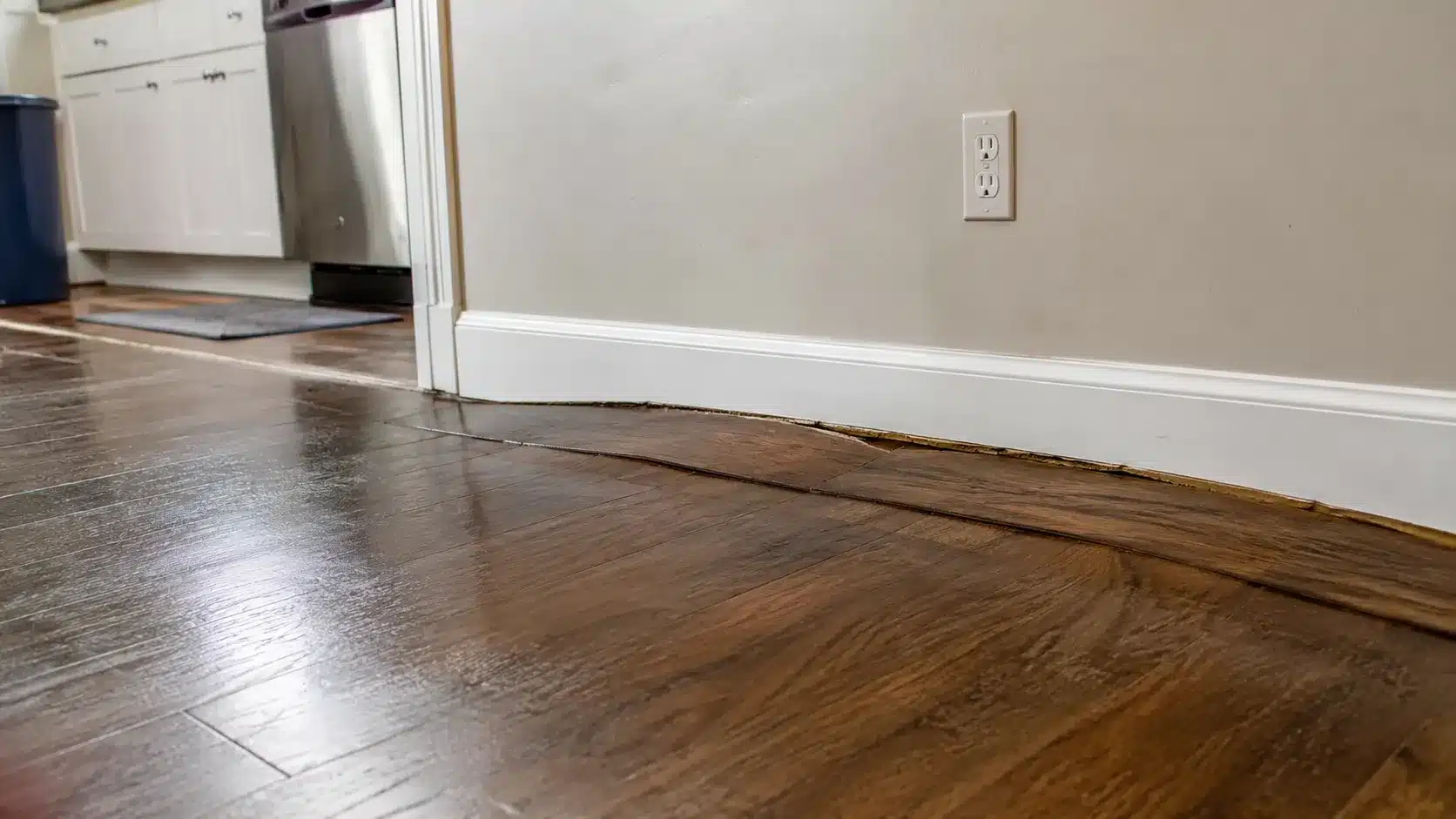
Can Mold Grow Under Flooring After a Water Leak?
Yes. Mold can grow under flooring after a water leak when moisture remains trapped beneath carpet, hardwood, laminate, vinyl, tile, or another finished floor surface. The visible flooring may feel dry while the carpet padding, adhesive, underlayment, wood subfloor, or concrete below remains damp.
Because concealed flooring layers receive limited airflow, moisture can remain long enough to contribute to mold growth, musty odors, staining, swelling, loose flooring, and material deterioration. Cleaning only the visible surface may not address the water trapped beneath it.
The U.S. Environmental Protection Agency recommends drying water-damaged materials within 24 to 48 hours whenever possible. A complete response should include stopping the leak, removing visible water, checking beneath the flooring, and drying every affected layer.
Quick Answer
Mold under flooring can develop after a plumbing leak, appliance failure, basement flood, or other water intrusion. Warning signs include a musty odor, warped or loose flooring, soft spots, dark staining near seams, damp baseboards, and recurring moisture. Do not install new flooring or cover the affected area until the water source has been repaired and the flooring system has been inspected and dried.
Key Takeaways
- A dry floor surface does not prove that the padding, underlayment, adhesive, or subfloor beneath it is dry.
- Water can spread underneath flooring farther than the visible puddle.
- Carpet padding, laminate cores, engineered wood layers, and some underlayments can hold moisture.
- Musty odors, buckling, swelling, loose flooring, and stained baseboards can indicate concealed water or mold damage.
- The source of the leak must be repaired before drying, cleaning, or replacement work is considered complete.
- Professional moisture testing can help determine which materials can be saved and which may require removal.
Table of Contents
- Why mold can grow beneath flooring
- How water spreads under finished floors
- How different flooring materials respond to water
- Signs of mold or hidden moisture
- What to do after discovering the leak
- What not to do
- Can water-damaged flooring be saved?
- How professionals inspect and remediate the damage
- How long the process may take
- Insurance documentation considerations
- Northern Illinois and Southern Wisconsin risks
- Frequently asked questions
Why Can Mold Grow Beneath Flooring?
Mold needs moisture and a material that can support growth. A flooring system often contains several concealed layers that can remain wet after a leak, including carpet backing, padding, paper-faced underlayment, wood subflooring, adhesives, dust, and construction debris.
Even flooring materials that do not provide a significant food source for mold can trap moisture against nearby wood, paper, dirt, or organic residue. When these layers remain damp, mold spores that are naturally present in the environment may begin growing.
The EPA guide to mold and moisture in homes explains that controlling moisture is the key to controlling indoor mold. It recommends drying wet areas and materials within 24 to 48 hours whenever possible.
That drying period does not stop simply because the visible floor feels dry. The padding, adhesive, underlayment, subfloor, and nearby wall materials must also be evaluated.
Finished Flooring Can Slow Evaporation
Many flooring materials are designed to resist everyday spills from above. This can become a problem when water enters through a seam, flooring edge, plumbing opening, wall cavity, appliance connection, or damaged section and becomes trapped underneath.
Vinyl, laminate, tile, and sealed wood can reduce evaporation from the layers below. A dehumidifier may lower the room’s humidity, but it may not completely dry saturated padding, underlayment, or wood covered by a relatively impermeable floor finish.
Controlled access may be necessary so the concealed layers can be inspected, extracted, cleaned, and dried.
Mold May Be Present Without Being Visible
Visible mold along a floor edge confirms that moisture has been present, but the absence of visible growth does not rule out a problem. Mold may be located beneath carpet padding, on the underside of flooring boards, around fasteners, at wall-floor joints, or on the upper surface of the subfloor.
A persistent musty odor is another important warning sign. The odor may become stronger when a room has been closed or when indoor humidity rises.
Odor alone cannot determine the size or exact location of the affected area. However, a musty smell should not be ignored after a plumbing leak, appliance failure, sump pump problem, basement flood, or storm-related water event.
How Does Water Spread Under Finished Floors?
Water follows gravity, floor contours, seams, joints, and gaps. It can move beneath flooring through expansion spaces, transitions, damaged grout, plumbing openings, wall cavities, and gaps between building materials.
Water may also wick through porous materials beyond the visible edge of a puddle. As a result, the concealed wet area can be larger than the surface damage suggests.
Common Sources of Water Beneath Flooring
- Dishwasher, refrigerator, or washing machine supply-line leaks
- Overflowing sinks, bathtubs, showers, and toilets
- Leaking water heaters or plumbing connections
- Burst or frozen pipes inside walls
- Failed sump pumps and basement flooding
- Roof or window leaks that travel down wall cavities
- HVAC condensate drain problems
- Sewage backups and contaminated water intrusion
- Fire-suppression water after a structure fire
- Groundwater or stormwater entering a basement or lower level
A small appliance or plumbing leak can create a larger concealed wet area than homeowners expect. For example, water from a refrigerator supply line may spread underneath cabinets and flooring before appearing at a visible edge.
Water from an upstairs bathroom may also move through the floor assembly, saturate the subfloor, and affect the ceiling or walls below.
McMahon Services discusses this type of concealed moisture movement in its guide to hidden water damage after storms.
Cabinets and Baseboards Can Conceal the Water Path
Kitchen and bathroom leaks commonly affect cabinet toe-kicks, wall-floor joints, baseboards, and flooring installed underneath or beside fixed cabinetry.
Swollen cabinet bases, loose trim, dark staining along baseboards, or moisture appearing near flooring transitions may indicate that water traveled farther than the original spill.
Removing surface water without checking adjacent and concealed areas can leave saturated materials in place. This may lead to recurring odors, warped flooring, adhesive failure, and mold under flooring after the room appears dry.
How Do Different Flooring Materials Respond to Water?
The possibility of saving water-damaged flooring depends on the material, installation method, water source, contamination level, duration of exposure, and condition of the underlying layers.
| Flooring Type | Common Hidden-Moisture Concern | Possible Restoration Consideration |
|---|---|---|
| Carpet and padding | Padding can remain saturated after the carpet surface feels dry. | The carpet may need to be lifted. Contaminated or mold-affected padding commonly requires removal. |
| Solid hardwood | Boards may absorb moisture, cup, crown, gap, or trap water against the subfloor. | Some hardwood may be dried and refinished when addressed promptly and contamination is limited. |
| Engineered wood | Layered construction may hold moisture or delaminate between veneers. | Swelling, delamination, and subfloor moisture help determine whether it can be restored. |
| Laminate | The fiberboard core may swell, distort, and retain moisture around seams. | Saturated or swollen laminate often cannot return to its original condition. |
| Luxury vinyl plank or sheet vinyl | The wear surface may resist water while moisture remains beneath it. | Sections may need to be lifted so the adhesive, underlayment, and subfloor can dry. |
| Ceramic or porcelain tile | Water may enter through grout, cracks, edges, or nearby wall materials. | Loose tile, wet backer board, damaged grout, or a saturated wood subfloor may require access. |
| Concrete | Concrete can retain moisture and release it slowly beneath coatings or flooring. | Moisture testing and extended drying may be necessary before installing new finishes. |
Carpet and Padding Require Special Attention
Carpet can conceal water in its backing and padding. The top fibers may feel dry while the padding and subfloor remain wet.
If the water came from sewage, storm runoff, or another contaminated source, cleaning may not be appropriate for all affected carpet layers. Porous padding can be difficult to clean thoroughly and may require removal.
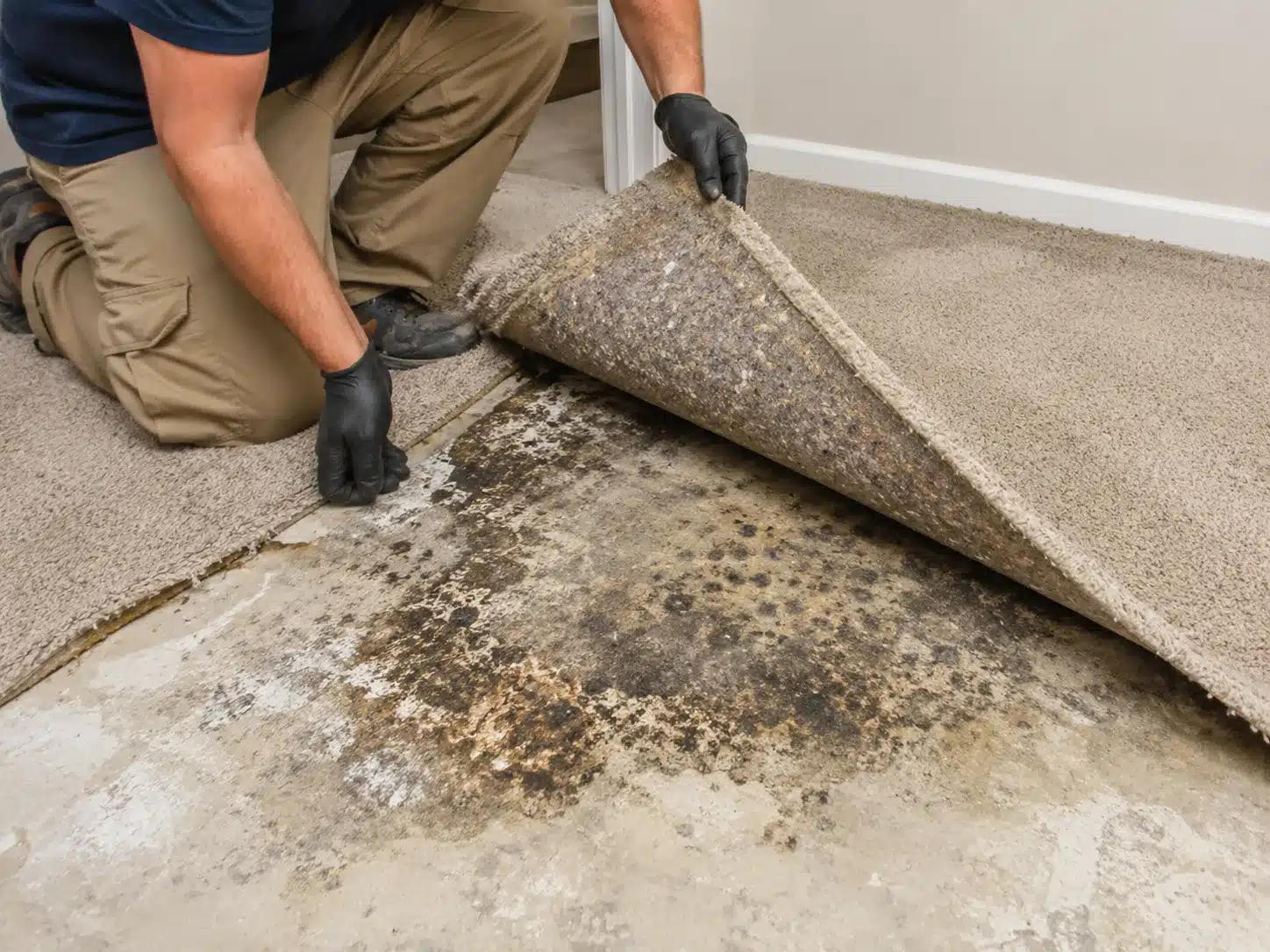
McMahon Services provides additional guidance in Carpet Cleaning After Water Damage: 7 Clear Warning Signs.
Hard-Surface Flooring Can Still Conceal Moisture
Vinyl, tile, laminate, and hardwood can hide water beneath the finished surface. The EPA’s guidance for water-damaged materials recommends checking whether underflooring is wet beneath hard-surface flooring and drying it when necessary.
This is why wiping or disinfecting the visible floor may not fully resolve the water loss.
What Are the Signs of Mold or Hidden Moisture Under Flooring?
Possible signs of mold under flooring or continuing moisture include:
- A musty, earthy, or damp odor that returns after cleaning
- Carpet that feels cool, damp, soft, or spongy
- Hardwood boards that cup, crown, buckle, or separate
- Laminate planks with swollen edges or raised seams
- Vinyl flooring that bubbles, loosens, or develops dark staining
- Loose tiles, cracked grout, or moisture appearing along grout lines
- Dark or discolored material along floor edges or transitions
- Swollen baseboards, trim, cabinet toe-kicks, or door casings
- Peeling paint or staining along the lower portion of a wall
- Recurring humidity or condensation in the affected room
- An odor that becomes stronger when the room is closed
- Visible growth appearing near a wall-floor joint
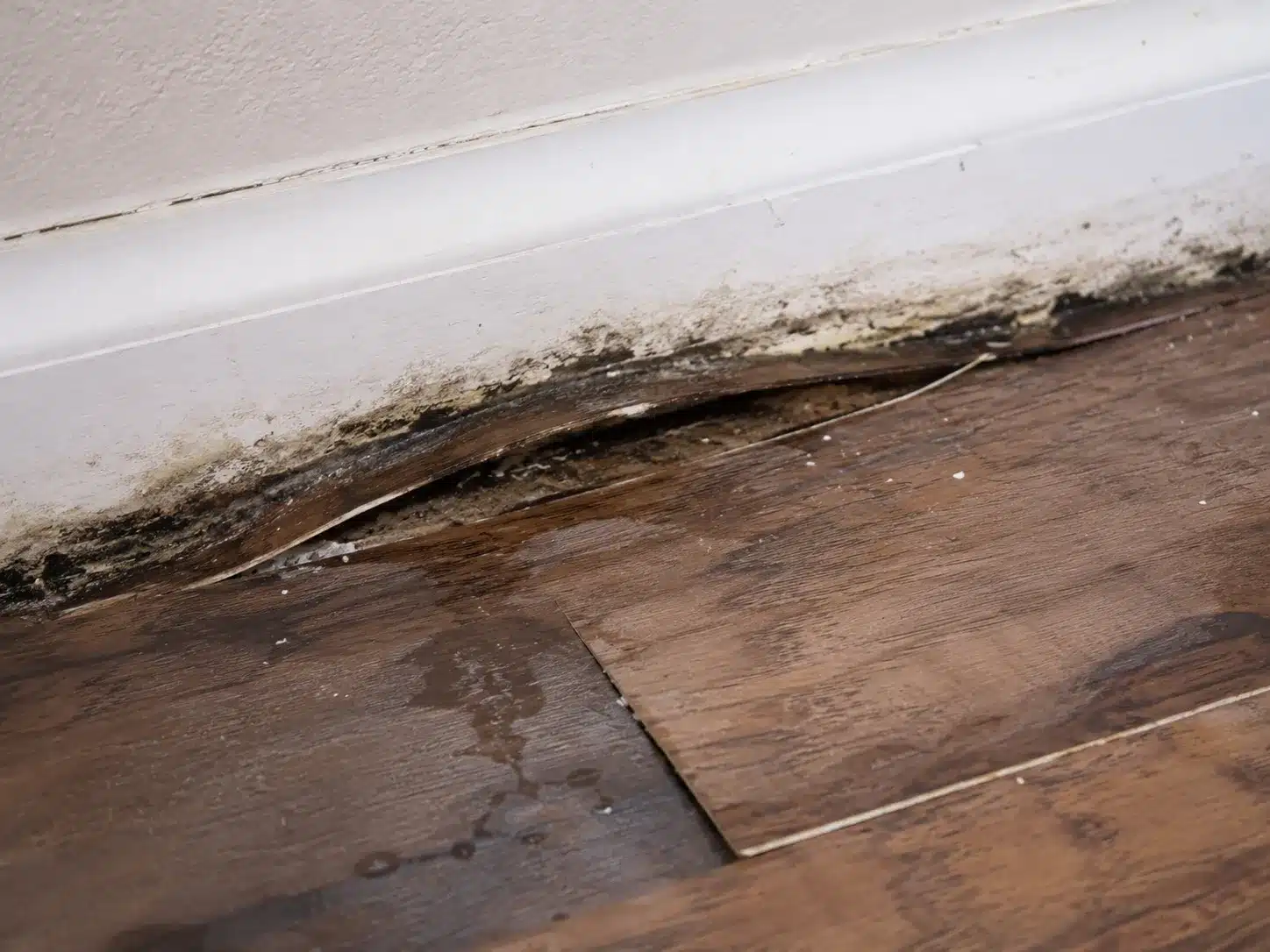
These warning signs do not identify the mold species or prove the full extent of contamination. They indicate that the water source and concealed flooring layers should be evaluated.
Do Not Rely Only on Surface Appearance
A floor may feel dry while moisture remains in carpet padding, wood subflooring, underlayment, adhesive, or concrete beneath it.
A moisture reading taken only on the finished floor may not represent conditions below the surface. Professionals may compare readings across affected and unaffected materials, inspect flooring transitions, and evaluate wall-floor connections.
In some cases, a controlled opening is necessary to inspect the padding, adhesive, underlayment, or subfloor. The goal is to identify the true moisture boundary before deciding which materials can be dried, cleaned, or retained.
Musty Odors Should Be Investigated
A musty smell that returns after the room has been cleaned or ventilated may indicate hidden moisture or microbial growth. The odor may originate beneath flooring, behind baseboards, inside cabinets, or within nearby wall cavities.
Air fresheners, surface cleaners, and new flooring may temporarily cover the odor without resolving the underlying moisture problem.
What Should You Do After a Water Leak Reaches the Floor?
-
Stop the water source when it is safe.
Shut off the appropriate plumbing valve or appliance supply. Do not enter standing water when outlets, electrical cords, appliances, or electrical panels may be involved.
-
Keep people away from contaminated water.
Children and pets should not enter areas affected by sewage, stormwater, or water from an unknown source.
-
Move dry belongings away from the affected area.
Relocate furniture, rugs, boxes, and personal belongings only when it can be done safely.
-
Document the condition.
Photograph the water source, visible water, affected flooring, baseboards, cabinets, and damaged contents before major cleanup begins.
-
Remove standing water promptly.
A significant water loss may require professional water extraction after flooding to reduce the amount of moisture absorbed by building materials.
-
Check beyond the visible puddle.
Evaluate nearby rooms, closets, cabinets, floor transitions, wall edges, and the ceiling below when the leak occurred upstairs.
-
Arrange a professional moisture inspection.
Flooring, padding, underlayment, walls, cabinets, and subflooring may all require evaluation.
-
Address suspected mold safely.
Concealed, extensive, or contaminated mold damage should be handled using appropriate containment, protective equipment, and removal procedures.
Safety Warning: Do not use household fans when sewage, contaminated water, or visible mold is present unless a professional has determined that air movement will not spread contamination. Water near electrical equipment also requires appropriate electrical precautions before cleanup equipment is operated.
What Should You Avoid Doing?
- Do not cover the area with a rug. This can reduce evaporation and conceal new staining or odor.
- Do not install replacement flooring too soon. Trapping residual moisture beneath new materials can recreate the problem.
- Do not paint over moldy baseboards or wall surfaces. Moisture and mold damage must be addressed before cosmetic repairs.
- Do not assume bleach reaches concealed layers. Applying a chemical to the visible floor does not dry or remediate padding, adhesive, underlayment, or subflooring.
- Do not sand or aggressively disturb mold-affected wood. Disturbance may release contaminated dust into the surrounding area.
- Do not discard damaged materials before documenting them. Photographs and professional records may be relevant to an insurance claim.
- Do not ignore a persistent musty odor. An odor that remains after surface drying may indicate hidden moisture.
The CDC’s mold cleanup guidance explains that mold cleanup may create health and injury risks and recommends appropriate personal protective equipment.
People with allergies, asthma, immune suppression, chronic obstructive pulmonary disease, or other underlying lung conditions should avoid participating in mold cleanup.
Can Water-Damaged Flooring Be Saved?
Sometimes. The decision depends on how quickly the water was discovered, the source and category of water, the amount of saturation, the flooring condition, and whether the concealed layers can be accessed and completely dried.
Flooring May Be More Likely to Be Saved When:
- The water came from a clean source and was addressed promptly
- The affected area is limited
- There is no visible mold, persistent odor, or contamination
- The flooring has not swollen, delaminated, buckled, or lost adhesion
- The padding, underlayment, and subfloor can be accessed and dried
- Moisture readings return to an appropriate dry condition
Flooring Removal May Be More Likely When:
- Sewage, floodwater, or another contaminated source affected porous materials
- Mold is visible beneath the flooring or on the subfloor
- Carpet padding remained wet for an extended period
- Laminate or engineered flooring is swollen or delaminated
- Flooring adhesive has failed or cannot be cleaned and dried
- The subfloor is soft, deteriorated, mold-affected, or structurally damaged
- A musty odor returns after surface cleaning
- The finished floor prevents effective drying of materials underneath
Porous materials can be difficult to clean completely after mold has grown into their internal spaces. The EPA’s basic mold cleanup guidance explains that moldy absorbent materials such as carpet may need to be discarded because growth can enter pores and crevices.
Subfloor Condition Is an Important Factor
The condition of the subfloor affects whether new flooring can be installed safely. A wood subfloor that remains damp may swell, soften, delaminate, or support mold growth.
Concrete can also hold moisture beneath flooring and coatings. Moisture testing may be necessary before adhesives, underlayment, or new floor finishes are installed.
How Do Professionals Inspect and Remediate Mold Under Flooring?
A professional response should address both the moisture source and the affected materials. Removing visible mold without repairing the leak or drying the subfloor is not a complete solution.
1. Safety and Water-Source Assessment
The restoration team identifies the water source, checks for electrical and contamination hazards, and determines whether plumbing, roofing, drainage, appliance, or other repairs are required.
2. Moisture Mapping
Technicians evaluate the visible water-loss area and nearby materials. Flooring, baseboards, walls, cabinets, closets, and rooms beneath the original leak may be checked to determine how far the moisture traveled.
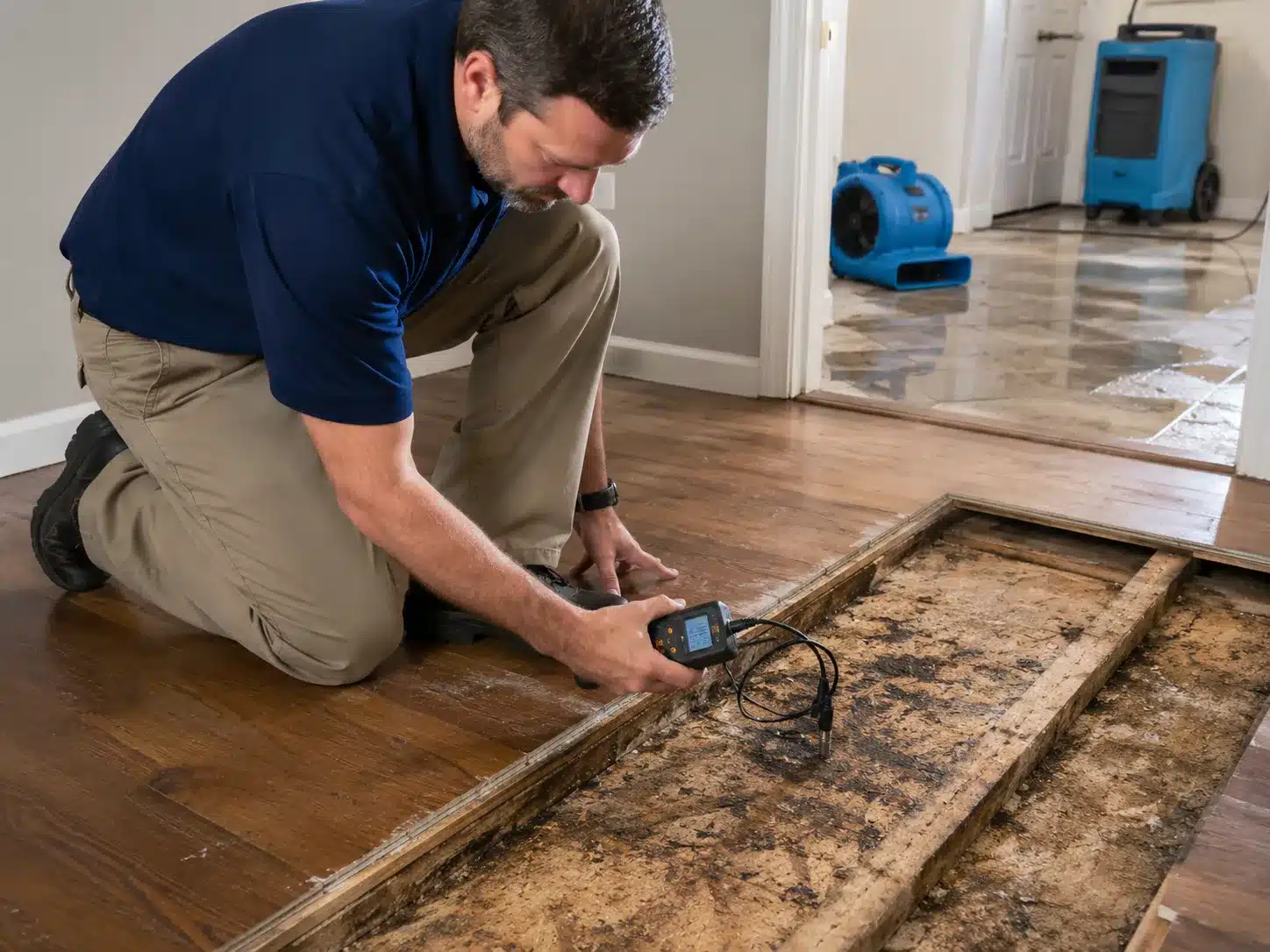
3. Controlled Flooring Access
Carpet may be lifted, transition strips removed, floating planks disassembled, or another controlled access method used when necessary.
The approach depends on the flooring material, installation method, condition, contamination level, and overall restoration plan.
4. Water Extraction and Structural Drying
Standing water and excess moisture are removed. Professional air movement, dehumidification, temperature control, and moisture monitoring may then be used to dry materials that can be retained.
Flooring may require partial or complete removal when it blocks access to wet padding, adhesive, underlayment, or subflooring.
5. Containment and Mold Remediation
When mold is present, the work area may require containment, controlled removal, air filtration, cleaning, and disposal procedures designed to reduce the spread of dust and mold spores.
McMahon Services provides professional mold removal and remediation services for residential and commercial properties with visible or concealed mold concerns.
6. Removal of Materials That Cannot Be Restored
Contaminated padding, mold-affected underlayment, swollen laminate, deteriorated subflooring, damaged trim, or other materials may require removal when they cannot be safely cleaned and dried.
7. Drying Verification
Before the flooring system is closed, moisture conditions should be evaluated in the subfloor, nearby walls, cabinets, and other affected materials.
Rebuilding over damp materials may lead to recurring odor, flooring movement, adhesive failure, material deterioration, and renewed mold growth.
8. Reconstruction
After remediation and drying are complete, removed flooring, trim, drywall, cabinets, and damaged subfloor sections can be repaired or replaced.
McMahon Services also provides cleanup and rebuilding after major property damage when emergency mitigation must be followed by permanent repairs.
How Long Does Flooring Mold Remediation Take?
There is no universal timeline. A small clean-water leak found quickly may require limited extraction and drying. A concealed leak affecting multiple rooms may require flooring removal, mold remediation, structural drying, and reconstruction.
| Factor | Why It Affects the Timeline |
|---|---|
| Time before discovery | Longer exposure can increase saturation, swelling, odor, and mold-related damage. |
| Water source | Sewage and contaminated water require additional safety, removal, and cleaning procedures. |
| Flooring type | Carpet, hardwood, laminate, vinyl, tile, and concrete require different access and drying methods. |
| Subfloor condition | Soft, swollen, mold-affected, or weakened subflooring may require removal and replacement. |
| Extent of mold growth | A larger or concealed affected area may require more containment and controlled removal. |
| Reconstruction scope | Replacing flooring, trim, cabinets, drywall, or subflooring adds repair stages. |
The safest timeline is based on verified moisture conditions rather than a predetermined number of days.
Replacement flooring should not be installed until the leak has been repaired, affected materials have been remediated, and the flooring assembly is ready to be closed.
What Should You Document for an Insurance Claim?
Insurance coverage varies by policy and cause of loss. Sudden plumbing or appliance failures may be treated differently from long-term seepage, groundwater intrusion, flooding, or maintenance-related leaks.
When conditions are safe, document:
- The apparent source of water and when the damage was discovered
- Visible water, staining, and the approximate affected area
- Warped, loose, swollen, or discolored flooring
- Wet baseboards, cabinets, drywall, and personal property
- Musty odors or visible growth discovered during removal
- Plumbing, extraction, drying, remediation, and reconstruction invoices
- Moisture readings, drying logs, photographs, and professional reports
- Materials removed and the reason they could not be retained
Do not delay urgent water removal while waiting for an insurance decision. Reasonable steps to prevent additional damage are important, but unsafe demolition or mold disturbance should be avoided.
Document Materials Before Disposal
Photograph damaged flooring, padding, underlayment, baseboards, cabinets, and contents before they are discarded whenever it is safe to do so.
Restoration records can also help explain which materials were removed, why removal was necessary, and what drying or remediation procedures were completed.
Why This Matters in Northern Illinois and Southern Wisconsin
Homes and businesses in Hainesville, Lake County, Northern Illinois, Southern Wisconsin, and nearby communities face seasonal conditions that can contribute to concealed flooring moisture.
Frozen pipes, heavy rain, snowmelt, sump pump failures, basement seepage, roof leaks, plumbing failures, and appliance leaks can all send water underneath finished flooring.
Basements Can Conceal Moisture Beneath Flooring
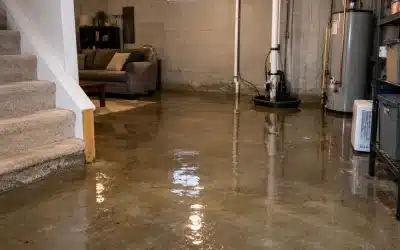
Carpet, vinyl, laminate, and floating floors installed over concrete can conceal moisture from foundation seepage, drainage backups, or failed sump pumps.
The flooring surface may appear dry while the underlayment or concrete slab remains damp. If the moisture is trapped, odors and mold-related damage may develop beneath the finished floor.
Winter Plumbing Leaks May Begin Inside Walls
A frozen pipe may split inside a wall and release water near baseboards, flooring edges, and concealed subfloor areas. Water can spread into nearby rooms before the source becomes visible.
In kitchens, laundry rooms, bathrooms, and utility spaces, water can also move beneath cabinets and fixed appliances.
Prompt moisture inspection can reduce uncertainty about what is wet, which materials can be dried, and what may require removal.
Professional Tip: Before installing replacement flooring, confirm that the subfloor, wall edges, and adjacent materials have reached an appropriate dry condition. New flooring can conceal residual moisture and make a recurring problem more expensive to correct.
Get Help With Mold and Water Damage Beneath Flooring
If a leak has affected carpet, hardwood, laminate, vinyl, tile, underlayment, or subflooring, cleaning the visible surface may not be enough.
McMahon Services & Construction Corp can inspect the affected area, address water damage, identify concealed moisture, remove materials that cannot be restored, and coordinate mold remediation and reconstruction.
McMahon Services provides water and sewage damage restoration services and professional mold remediation for homes and businesses throughout Hainesville, Lake County, Northern Illinois, Southern Wisconsin, and surrounding communities.
Call McMahon Services at (847) 566-4568 for 24/7 assistance with water damage, hidden moisture, and suspected mold beneath flooring.
Frequently Asked Questions About Mold Under Flooring
How quickly can mold grow under flooring after a leak?
Mold can begin growing when spores land on damp materials. The EPA recommends drying water-damaged areas and items within 24 to 48 hours whenever possible to help prevent mold growth. Actual conditions depend on the moisture level, temperature, materials, and how long the area remains wet.
Can mold grow under vinyl plank flooring?
Yes. Vinyl plank may resist water, but moisture can remain beneath the planks in the underlayment, adhesive, dust, or wood subfloor. Sections may need to be lifted so concealed layers can be inspected and dried.
How can I tell whether mold is under my carpet?
Possible signs include a persistent musty odor, damp or spongy carpet, recurring stains, dark growth near the edges, wet padding, and swollen baseboards. The carpet may need to be lifted to inspect the backing, padding, and subfloor.
Does wet flooring always need to be replaced?
No. Some flooring can be dried and retained when clean water is addressed quickly and the material remains stable. Replacement is more likely when materials are contaminated, moldy, swollen, delaminated, structurally damaged, or unable to be dried completely.
Can I kill mold under flooring with bleach?
Applying bleach to the visible floor does not remove trapped moisture or reliably reach mold inside padding, underlayment, adhesive, or subflooring. The leak must be repaired and affected layers must be inspected, cleaned, dried, or removed as appropriate.
Will a dehumidifier dry water trapped under flooring?
A dehumidifier can help reduce indoor humidity, but it may not fully dry moisture trapped beneath an impermeable or tightly installed floor. Extraction, controlled access, air movement, and moisture monitoring may also be needed.
Can mold under flooring damage the subfloor?
Yes. Wood subflooring can absorb moisture, support mold growth, swell, soften, or deteriorate. Concrete can also retain moisture beneath flooring and coatings. The subfloor should be evaluated before replacement flooring is installed.
Who should I call for suspected mold beneath flooring?
Contact a professional restoration and mold remediation company when the affected area is concealed, extensive, contaminated, or connected to ongoing water damage. A plumber, roofer, appliance technician, or another specialist may also be needed to correct the source.




0 Comments