
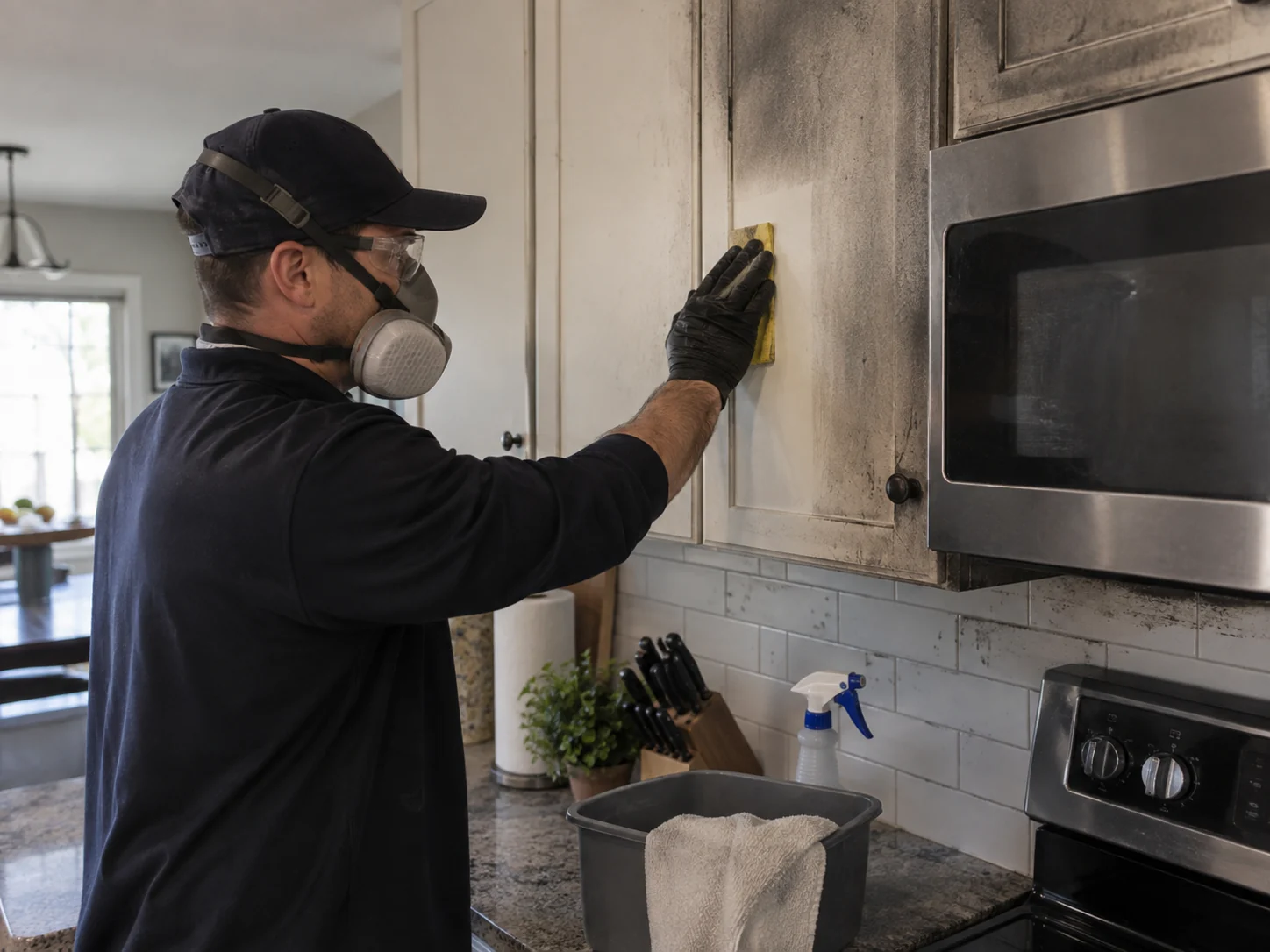
How Do Restorers Decide What Can Be Saved After Kitchen Fire Damage?
After a kitchen fire, some materials may be cleaned and restored while others need replacement because of burning, heat damage, grease-laden soot, smoke residue, water exposure, structural deterioration, or contamination. The decision depends on the material, how close it was to the fire, how deeply smoke or soot penetrated, whether heat changed its shape or strength, and whether it can be cleaned without leaving persistent residue or odor.
A kitchen fire can damage much more than the area that visibly burned. Smoke may travel into adjoining rooms, soot can settle on walls and ceilings, heat can affect cabinets and appliances, and firefighting water may reach flooring, drywall, insulation, and subflooring.
The restoration process should therefore separate materials that can be professionally cleaned from those that are burned, structurally compromised, permanently stained, heavily odor-affected, electrically unsafe, or otherwise impractical to restore.
Quick Answer
After a kitchen fire, hard and structurally sound surfaces may sometimes be professionally cleaned when heat and soot damage are limited. Replacement becomes more likely for burned cabinets, melted or swollen finishes, heat-damaged appliances, deteriorated drywall, contaminated insulation, damaged flooring, and porous materials that retain smoke odor or greasy soot. The correct decision should be based on fire proximity, heat exposure, soot type, material condition, water damage, cleanability, and safety.
Key Takeaways
- Not everything exposed to smoke or soot needs to be discarded.
- Burned, melted, warped, charred, or structurally weakened materials are more likely to require replacement.
- Kitchen fires can create greasy or protein-based residues that are difficult to clean using ordinary household methods.
- Cabinet boxes, doors, finishes, hardware, and countertops should be evaluated separately.
- Appliances exposed to heat, water, smoke, or soot may require professional electrical or mechanical evaluation before reuse.
- Smoke can affect rooms well beyond the kitchen even when direct fire damage is limited.
- Firefighting water may create additional damage to flooring, drywall, insulation, cabinets, and subflooring.
- Cleanup, odor control, damaged-material removal, and reconstruction should be coordinated before the kitchen is returned to normal use.
Table of Contents
- Why kitchen fire damage can be difficult to clean
- How restorers decide what can be saved
- Whether kitchen cabinets can be cleaned
- Whether fire-damaged appliances can be reused
- What happens to walls and ceilings
- Whether flooring can be restored
- What happens to countertops and fixtures
- Which kitchen contents may need disposal
- What to do immediately after a kitchen fire
- Mistakes to avoid
- How professional fire damage assessment works
- How smoke and soot cleanup is performed
- When replacement and reconstruction are needed
- What may be cleaned or replaced
- How long kitchen fire restoration may take
- What affects restoration cost
- Insurance documentation considerations
- Northern Illinois and Southern Wisconsin considerations
- Frequently asked questions
Why Can Kitchen Fire Damage Be Difficult to Clean?
Kitchens contain cooking oils, food residues, plastics, finished cabinets, electrical appliances, painted surfaces, composite materials, flooring, and other products that react differently to heat and smoke.
A small stovetop or oven fire can create residues that spread beyond the visible burn area. Smoke may rise to the ceiling, move through doorways, enter cabinets, settle on walls, and circulate into other rooms.
Kitchen Fires Can Produce Greasy or Sticky Residues
Cooking fires may create soot mixed with grease, vaporized food residue, oils, and combustion byproducts. These deposits can adhere strongly to cabinets, ceilings, walls, appliances, trim, and nearby contents.
Wiping these surfaces with ordinary household cleaners can sometimes smear the residue or push it deeper into finishes.
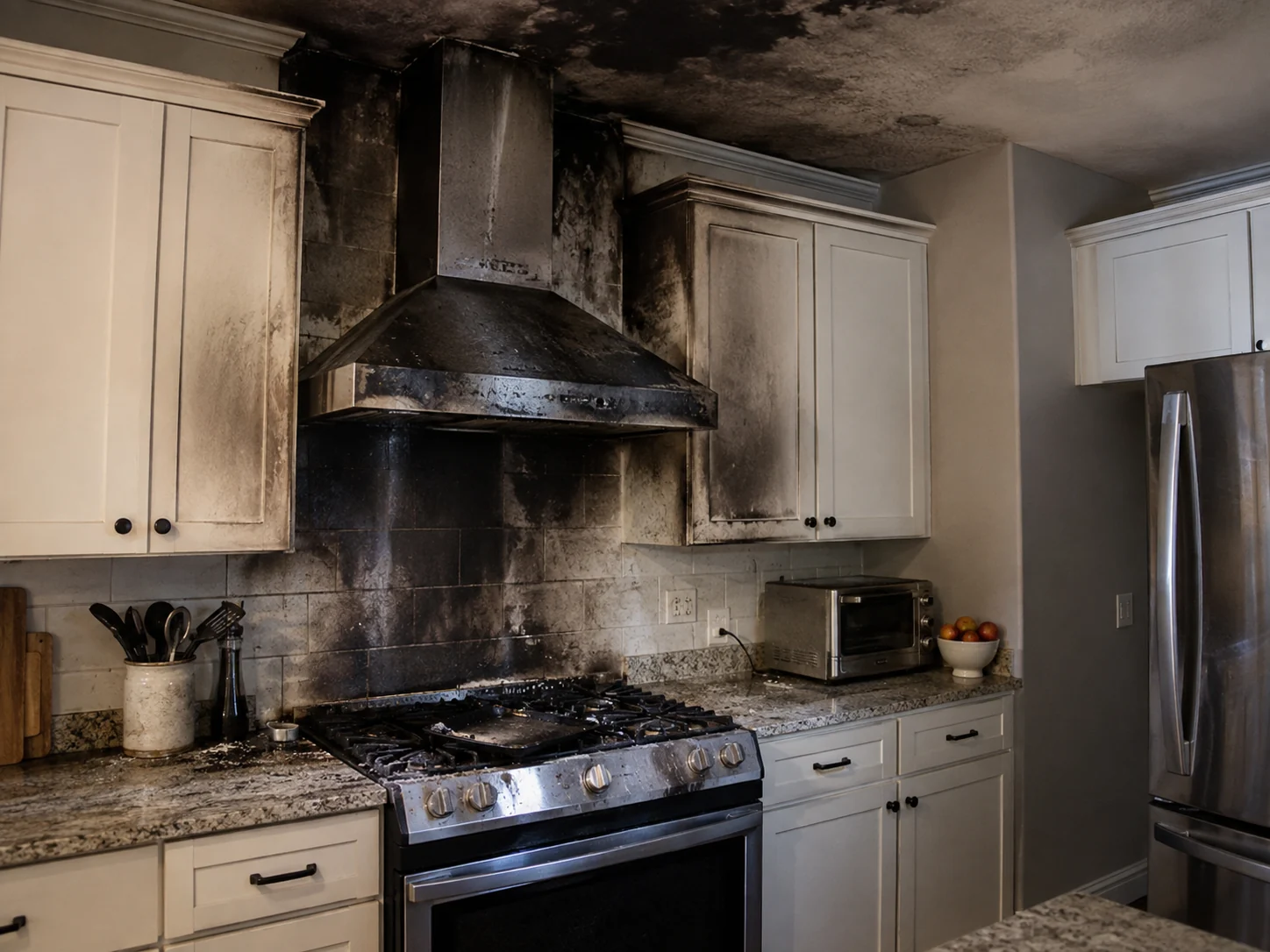
Heat Can Damage Materials Without Burning Them
Cabinet doors can warp, finishes can blister, plastic components can melt, countertop seams can separate, and appliance components can be affected by heat even when no flames directly touch them.
This means visible soot is only one part of the evaluation.
How Do Professionals Decide Whether Fire-Damaged Materials Can Be Cleaned?
Restoration decisions are based on material condition and the type of damage rather than soot exposure alone.
Important Factors Include:
- Distance from the fire source
- Direct flame exposure
- Heat intensity
- Amount and type of soot
- Grease or protein residue
- Smoke odor absorption
- Material porosity
- Firefighting water exposure
- Structural condition
- Electrical or mechanical damage
- Cost and practicality of restoration versus replacement
Cleaning Must Restore More Than Appearance
A surface that looks better after wiping may still retain smoke residue or odor. Professional restoration considers whether the material can be cleaned thoroughly enough for continued use.
McMahon Services provides additional information on professional soot damage cleanup for fire-affected properties.
Can Kitchen Cabinets Be Cleaned After a Fire?
Kitchen cabinets are often among the most heavily affected materials because they are located close to cooking appliances and provide many horizontal and vertical surfaces where smoke and grease soot can settle.
Cabinets May Be More Likely to Be Cleaned When:
- The boxes remain structurally sound
- There is no charring or deep heat damage
- Doors and drawer fronts remain straight
- Finish coatings remain bonded
- Smoke residue is primarily on accessible surfaces
- Persistent odor can be successfully addressed
Replacement May Be More Likely When:
- Wood is burned or charred
- Doors or cabinet boxes are warped
- Laminate or veneer has separated
- Particleboard or MDF has swollen from water
- Finish coatings are blistered or melted
- Smoke odor remains deeply embedded
- Structural connections or mounting points are damaged
Cabinet Interiors Also Need Inspection
Smoke can enter through door gaps, hardware openings, and ventilation spaces. Dishes, cookware, food packages, shelving, and interior cabinet surfaces may therefore require separate evaluation even when cabinet doors were closed.
Can Appliances Be Reused After a Kitchen Fire?
Appliances should not be judged only by exterior appearance. Heat, smoke, soot, firefighting water, and electrical damage may affect components inside the appliance.
Appliances That May Require Evaluation Include:
- Ranges and ovens
- Microwaves
- Refrigerators
- Dishwashers
- Range hoods
- Small countertop appliances
- Built-in coffee systems
- Garbage disposals
Heat Damage May Not Be Visible
Plastic insulation, wiring, electronic boards, seals, motors, controls, and internal components can be affected by elevated temperatures.
An appliance that powers on is not automatically safe or reliable after significant fire exposure.
Firefighting Water Adds Another Concern
Water used to extinguish the fire may enter appliance housings, wiring compartments, motors, outlets, and electrical connections.
Fire-damaged or water-exposed appliances should not be re-energized until the appropriate qualified professional determines whether they are safe to use.
Do Kitchen Walls and Ceilings Need to Be Replaced After a Fire?
Walls and ceilings commonly collect soot because smoke rises and moves throughout the room. Whether drywall needs replacement depends on the severity of heat, soot, odor, water, and physical damage.
Drywall May Be More Likely to Be Retained When:
- The material remains structurally sound
- There is no significant charring
- Smoke residue can be cleaned from the surface
- Firefighting water did not cause substantial swelling or deterioration
- Persistent smoke odor can be controlled
Replacement May Be More Appropriate When:
- Drywall is burned or charred
- The gypsum is soft, swollen, or crumbling
- Paper facing is heavily damaged
- Water has saturated wall or ceiling cavities
- Insulation behind the drywall is damaged
- Electrical or structural access is required
- Persistent contamination or odor cannot be resolved adequately
Ceilings Often Receive Heavy Smoke Deposits
Hot smoke rises rapidly and can deposit soot on ceilings even when the fire remains relatively low in the kitchen.
Textured ceilings and other irregular surfaces may be more difficult to clean because residue can settle into the surface profile.
Can Kitchen Flooring Be Saved After a Fire?
Flooring may be affected by direct heat, falling debris, soot, firefighting water, appliance leakage, and cleanup activity.
Tile Flooring
Ceramic and porcelain tile may tolerate heat and water better than many other finishes, but grout, adhesives, underlayment, and subflooring should still be evaluated.
Cracked tile, loose sections, heat-damaged substrate, or water beneath the floor may require removal.
Hardwood Flooring
Hardwood may be affected by soot staining, heat, firefighting water, cupping, buckling, or smoke odor. Some boards may be cleanable and dryable, while others may require refinishing or replacement.
Laminate Flooring
Laminate can be vulnerable to heat and moisture. Swollen cores, lifted seams, melted surfaces, or firefighting water beneath the panels can make replacement more likely.
Luxury Vinyl and Sheet Flooring
Heat can deform vinyl, while water may become trapped beneath the material. The condition of the adhesive, underlayment, and subfloor should be considered before retaining the floor.
Can Countertops, Sinks, and Fixtures Be Saved?
Hard, nonporous kitchen surfaces may sometimes be easier to clean than porous cabinets or drywall, but heat can still cause damage.
Countertops Should Be Checked For:
- Cracking
- Discoloration
- Heat damage
- Separated seams
- Loose backsplashes
- Melted edge materials
- Damage to supporting cabinet structures
Metal and Glass Surfaces May Be Cleanable
Stainless steel, some glass, ceramic, and other hard surfaces may sometimes be cleaned successfully when they have not been physically damaged by heat.
The surrounding seals, adhesives, handles, coatings, and mounting systems should still be evaluated separately.
What Kitchen Contents May Need to Be Discarded After a Fire?
Kitchen contents require individual evaluation because fire, heat, smoke, soot, and firefighting water can affect both the item and anything stored inside it.
Items That May Require Disposal Include:
- Food directly exposed to smoke, heat, soot, or firefighting water
- Opened food packages in the affected area
- Heat-damaged plastic containers
- Melted utensils
- Heavily contaminated porous items
- Single-use paper products exposed to soot
- Items that cannot be cleaned adequately
Hard Kitchenware May Sometimes Be Restored
Some metal cookware, glassware, ceramic dishes, and other hard nonporous items may be candidates for professional cleaning when they remain physically intact.
Sentimental or high-value items should be evaluated before disposal when conditions permit.
What Should You Do Immediately After a Kitchen Fire?
-
Follow fire department instructions.
Do not re-enter the property until emergency personnel indicate that access is appropriate.
-
Do not turn damaged appliances or circuits back on.
Heat, smoke, soot, and firefighting water may have affected electrical components.
-
Document visible damage.
Photograph cabinets, appliances, walls, ceilings, flooring, countertops, soot patterns, water damage, and affected contents when it is safe.
-
Avoid unnecessary soot contact.
Walking through or touching soot-contaminated areas can transfer residue to clean surfaces.
-
Do not begin aggressive cleaning immediately.
Different soot residues and finishes require different cleaning methods, and improper wiping may smear or embed contamination.
-
Address firefighting water.
Standing water, wet cabinets, drywall, flooring, and other materials should be evaluated promptly.
-
Arrange professional fire damage assessment.
McMahon Services provides fire and smoke damage restoration for cleanup, soot removal, odor control, damaged-material evaluation, and restoration planning.
Safety Warning: Do not use fire-damaged appliances, electrical outlets, range hoods, or circuits until they have been appropriately evaluated. Avoid entering areas with unstable ceilings, damaged cabinetry, broken glass, heavy soot, standing water, or other hazards after the fire.
What Mistakes Should You Avoid After a Kitchen Fire?
- Do not wipe every surface with the same household cleaner. Different soot residues and finishes require different methods.
- Do not paint over soot without cleaning and preparation. Residue and odor may remain beneath the coating.
- Do not assume a cabinet can be saved because it is not visibly burned. Heat, smoke, odor, water, and finish damage may still affect it.
- Do not plug in fire-damaged appliances. Internal electrical damage may not be visible.
- Do not ignore firefighting water. Cabinets, drywall, flooring, and subfloors may remain wet after the fire is out.
- Do not throw away significant contents before documenting them. Photographs may be useful for insurance review.
- Do not begin reconstruction before smoke, soot, water, and damaged materials are addressed. New finishes should not cover unresolved damage.
- Do not assume odor will disappear on its own. Persistent smoke odor often requires source removal and appropriate cleaning.
How Is Kitchen Fire Damage Professionally Assessed?
A professional assessment looks at direct fire damage as well as smoke, soot, heat, water, odor, and structural effects.
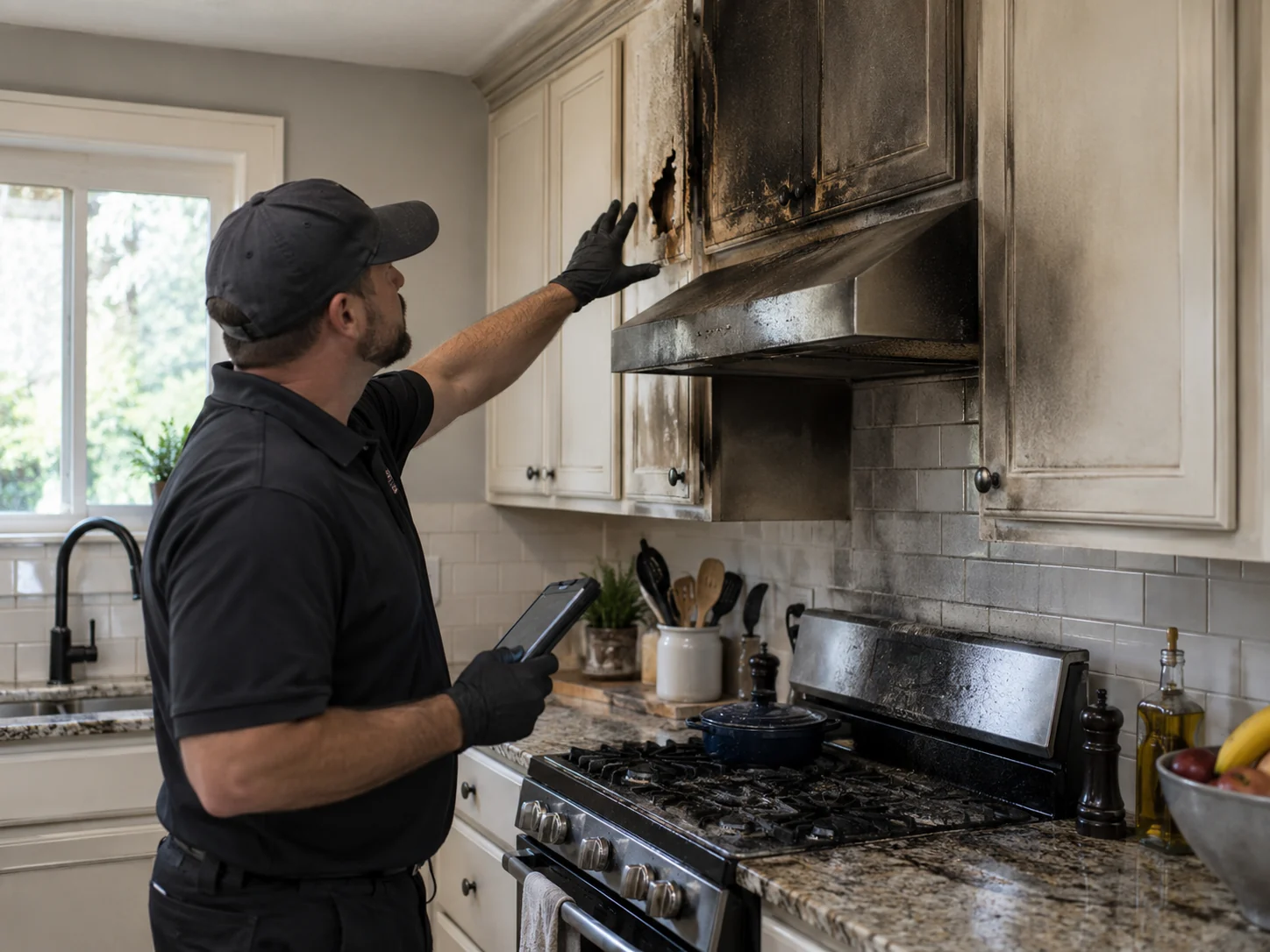
1. Identify the Fire Origin and Heaviest Damage
The area around the stove, oven, appliance, electrical source, or other origin is evaluated for direct burning and high-heat exposure.
2. Map Smoke and Soot Distribution
Walls, ceilings, cabinets, adjoining rooms, HVAC pathways, contents, and horizontal surfaces are inspected to determine how far residue traveled.
3. Evaluate Heat Damage
Warped cabinet doors, melted plastics, damaged finishes, cracked surfaces, and affected appliance components can indicate elevated heat exposure.
4. Identify Water Damage
Firefighting water may require separate moisture inspection, extraction, material removal, and structural drying.
5. Evaluate Odor
Persistent smoke odor can indicate remaining soot, damaged porous materials, contaminated insulation, or areas that have not been cleaned adequately.
6. Separate Restorable From Non-Restorable Materials
The restoration plan identifies what can reasonably be cleaned, dried, repaired, refinished, or restored and what should be replaced.
How Are Smoke and Soot Cleaned After a Kitchen Fire?
Professional cleanup is based on the type of residue, affected surface, degree of heat damage, and whether the material can tolerate the cleaning method.
1. Control the Work Area
The restoration team establishes appropriate work practices to avoid spreading soot into unaffected rooms.
2. Remove Loose Debris
Burned materials, broken items, and debris may be documented and removed as the project allows.
3. Remove Dry Particulates When Appropriate
Loose soot may be removed using suitable methods before wet cleaning begins on compatible surfaces.
4. Clean Greasy Residues
Kitchen fire residues can require more intensive cleaning than ordinary dust because oils and combustion residues may adhere to surfaces.
5. Address Hidden Areas
Cabinet interiors, tops of cabinets, appliance spaces, trim, wall cavities opened during repairs, and adjoining surfaces may require attention.
6. Address Smoke Odor
Odor treatment begins with removal of burned source materials and thorough cleaning. Additional odor-control procedures may be used based on the project conditions.
McMahon Services discusses this issue further in its guide to smoke odor after a fire.
When Does a Kitchen Need Replacement and Reconstruction After a Fire?
Reconstruction is needed when fire, heat, smoke, or water has damaged materials beyond practical restoration.
Replacement Work May Include:
- Cabinet boxes and doors
- Countertops
- Drywall
- Ceiling materials
- Insulation
- Flooring and underlayment
- Electrical wiring and fixtures
- Plumbing components
- Range hoods
- Appliances
- Trim and baseboards
- Paint and finish coatings
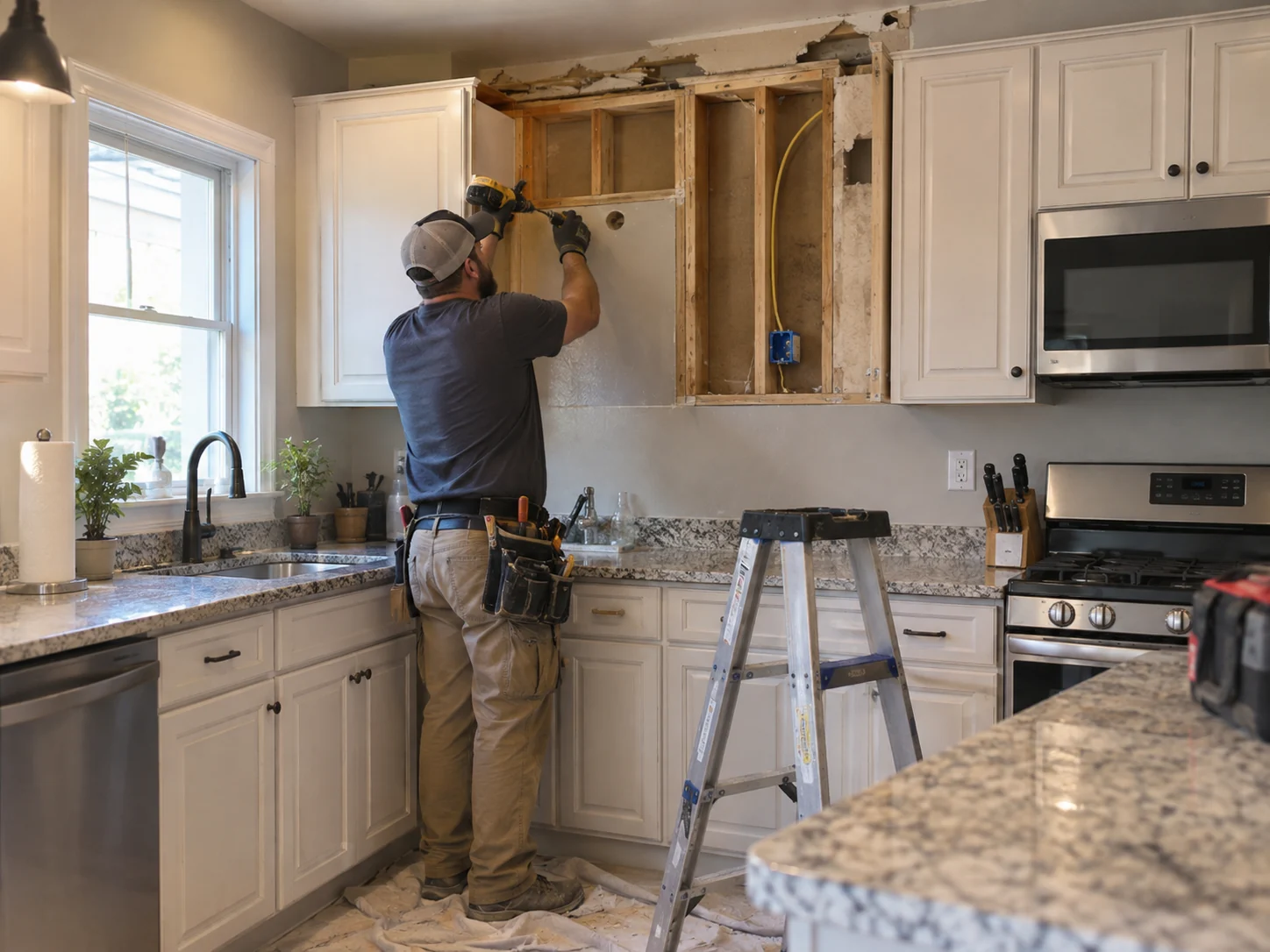
Reconstruction Should Follow Cleanup and Damage Removal
New cabinets, drywall, flooring, and paint should not be installed over remaining soot, trapped moisture, damaged framing, or unresolved smoke odor.
McMahon Services provides cleanup and rebuild services when fire damage requires both restoration and permanent reconstruction.
Which Kitchen Materials Can Be Cleaned or May Need Replacement?
| Material | May Be Cleaned or Retained When | Replacement Is More Likely When |
|---|---|---|
| Cabinets | Structurally sound, no major heat deformation, and residue can be removed | Burned, warped, delaminated, swollen, deeply odor-affected, or structurally damaged |
| Drywall | Sound surface with cleanable soot and limited water exposure | Burned, charred, soft, swollen, heavily water-damaged, or requiring access behind the wall |
| Tile | Tile remains intact and substrate is undamaged | Cracked, heat-damaged, loose, or substrate requires removal |
| Hardwood flooring | Boards remain stable and can be cleaned, dried, or refinished | Burned, severely buckled, deeply stained, structurally damaged, or unable to be dried |
| Laminate flooring | Very limited exposure with no heat or moisture deformation | Melted, swollen, separated, or water is trapped beneath the panels |
| Countertops | Surface remains intact and residue can be cleaned | Cracked, scorched, melted, delaminated, or permanently discolored |
| Appliances | Limited exterior exposure and qualified evaluation confirms continued safe use | Heat, electrical, water, wiring, control, seal, or internal component damage is present |
These decisions should be based on actual site conditions rather than appearance alone.
How Long Does Kitchen Fire Cleanup and Restoration Take?
There is no universal timeline. A small contained cooking fire may require cleaning, painting, and limited repairs, while a larger kitchen fire may involve demolition, water mitigation, cabinet replacement, appliance replacement, electrical work, flooring, and complete reconstruction.
| Timeline Factor | Why It Matters |
|---|---|
| Fire size | Larger fires generally affect more cabinets, appliances, walls, ceilings, and surrounding rooms. |
| Heat damage | Heat can damage components that initially appear unaffected. |
| Smoke spread | Residue may require cleaning beyond the kitchen. |
| Firefighting water | Wet walls, cabinets, flooring, and structural materials may require drying before rebuilding. |
| Cabinet replacement | Custom cabinetry, countertops, and finish matching may extend the project. |
| Electrical and appliance repairs | Damaged circuits, fixtures, ventilation systems, and appliances require additional evaluation and work. |
The completion date should be based on cleanup, drying, damaged-material removal, repair requirements, material availability, and reconstruction rather than a predetermined number of days.
What Affects the Cost of Kitchen Fire Restoration?
The total restoration cost depends on both the fire damage and the secondary smoke, soot, heat, water, and reconstruction work.
Common cost factors include:
- The size and location of the fire
- Amount and type of soot contamination
- Number of rooms affected by smoke
- Cabinet cleaning or replacement
- Countertop damage
- Appliance evaluation or replacement
- Drywall and ceiling repairs
- Flooring and subfloor damage
- Electrical and lighting repairs
- Range hood and ventilation damage
- Firefighting water extraction and drying
- Contents cleaning or replacement
- Smoke odor treatment
- Painting and finish work
- Full kitchen reconstruction when necessary
A relatively small fire can still create a substantial restoration scope if smoke travels throughout the home or greasy soot affects large areas.
A site-specific assessment is necessary before developing a reliable cleanup and reconstruction estimate.
What Should You Document for an Insurance Claim?
Insurance coverage depends on the policy and circumstances of the loss. Property owners should communicate directly with their insurance carrier or representative regarding claim requirements.
When conditions are safe, document:
- The date and time of the fire
- The apparent origin of the fire
- Cabinets and countertops near the source
- Fire-damaged appliances
- Smoke and soot deposits on walls and ceilings
- Flooring and water damage
- Damaged food and kitchen contents
- Firefighting water damage
- Rooms outside the kitchen affected by smoke
- Materials removed during cleanup
- Cleaning and restoration records
- Electrical or appliance evaluations
- Reconstruction estimates
Document Before Discarding Damaged Materials
Photograph appliances, cabinets, flooring, contents, and other damaged materials before disposal whenever it is safe and practical to do so.
This can help preserve a record of the condition before cleanup or demolition changes the scene.
Why Is Kitchen Fire Restoration Important in Northern Illinois and Southern Wisconsin?
Homes throughout Hainesville, Lake County, Northern Illinois, Southern Wisconsin, and surrounding communities can experience kitchen fires in both older and newer properties. The restoration scope may involve smoke and soot cleanup, water mitigation, electrical work, cabinet replacement, flooring repairs, and full reconstruction.
Regional conditions can also complicate recovery after a fire:
- Cold winter temperatures can affect an unheated fire-damaged property
- Firefighting water may create additional freezing concerns during severe cold
- Rain and snow can enter through damaged windows, doors, or roofing
- Older homes may contain concealed cavities where smoke and water travel
- Finished kitchens may require coordination among multiple construction trades
McMahon Services provides fire and smoke damage restoration, soot cleanup, odor control, water mitigation, damaged-material removal, and cleanup and reconstruction services throughout Northern Illinois, Southern Wisconsin, and surrounding service areas.
Professional Tip: Do not make clean-or-replace decisions based only on whether a surface looks burned. Heat, greasy soot, smoke odor, firefighting water, electrical exposure, and hidden damage can affect cabinets, appliances, walls, ceilings, flooring, and other kitchen materials even when direct flames did not reach them.
Get Help Cleaning and Rebuilding After a Kitchen Fire
A kitchen fire can leave a mix of burned materials, greasy soot, smoke odor, heat damage, water damage, and unsafe appliances. Some surfaces may be professionally cleaned and restored, while others may require controlled removal and replacement.
McMahon Services & Construction Corp can coordinate fire damage assessment, soot cleanup, smoke odor treatment, water mitigation, damaged-material removal, cabinet and flooring repairs, and full reconstruction when the kitchen cannot be restored through cleaning alone.
The team serves homes and businesses throughout Hainesville, Lake County, Northern Illinois, Southern Wisconsin, and surrounding communities.
Call McMahon Services at (847) 566-4568 for 24/7 help with kitchen fire damage, smoke and soot cleanup, odor removal, damaged-material replacement, and property restoration.
Frequently Asked Questions About Cleaning and Replacing Materials After a Kitchen Fire
Can kitchen cabinets be cleaned after a fire?
Yes, some cabinets can be cleaned when they remain structurally sound, heat damage is limited, finishes are intact, and smoke or soot can be removed successfully. Burned, warped, swollen, delaminated, or deeply odor-affected cabinets are more likely to require replacement.
Do smoke-damaged walls always need new drywall?
No. Structurally sound drywall may sometimes be cleaned, sealed, and refinished when smoke damage is limited. Replacement becomes more likely when drywall is burned, heavily water-damaged, deteriorated, or must be opened to access damaged insulation, wiring, or framing.
Can appliances be used again after a kitchen fire?
Appliances should not be reused based only on appearance. Heat, smoke, soot, water, and electrical exposure may affect internal components. Fire-damaged appliances should be appropriately evaluated before they are re-energized or returned to service.
Can soot be cleaned from kitchen cabinets and ceilings?
Often, yes, when surfaces remain physically sound and the residue can be removed without damaging the finish. Greasy kitchen-fire soot may require specialized cleaning methods because ordinary wiping can smear the residue.
Why does smoke odor remain after the visible soot is cleaned?
Smoke odor may remain when residue is still present on hidden surfaces or has penetrated porous materials such as drywall, insulation, unfinished wood, cabinets, fabrics, or contents. Effective odor control usually begins with source removal and thorough cleaning.
Does flooring need replacement after a kitchen fire?
Not always. Flooring may be retained when it remains structurally stable and can be cleaned and dried. Replacement is more likely when materials are burned, melted, buckled, heavily stained, water-damaged, or trapping moisture or contamination underneath.
Can firefighting water damage a kitchen that was not badly burned?
Yes. Water can spread beneath cabinets, into drywall, flooring, subflooring, insulation, and adjoining rooms. Water mitigation may therefore be required even when direct fire damage is limited.
Who should I call to decide what can be cleaned or replaced after a kitchen fire?
A fire and smoke damage restoration contractor can evaluate burned materials, soot, smoke odor, water damage, cabinets, flooring, walls, appliances, and reconstruction needs. McMahon Services can coordinate both the cleanup and rebuilding stages of kitchen fire restoration.




0 Comments