
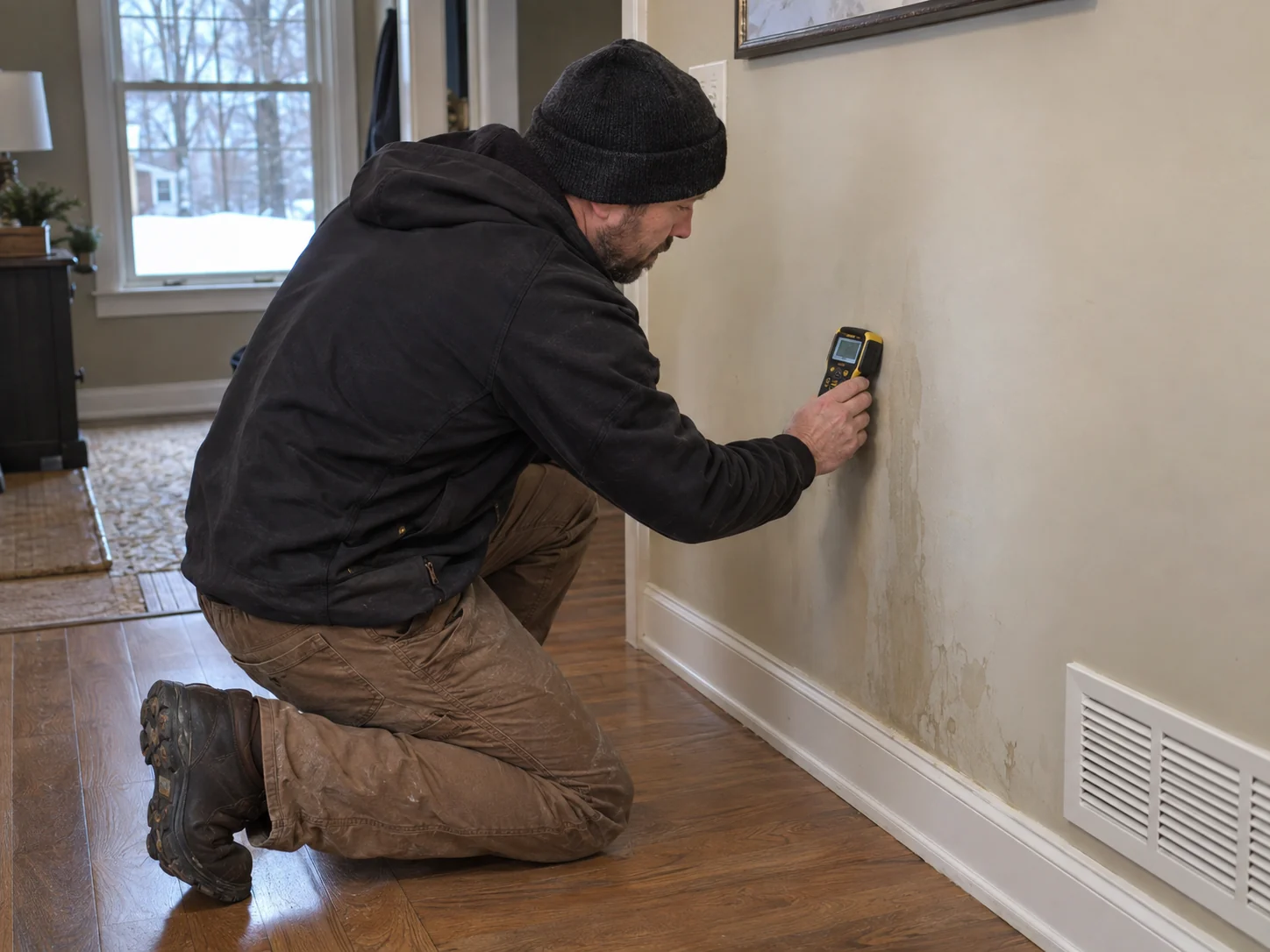
How Should You Respond to a Burst Pipe Hidden Behind Drywall?
When a frozen pipe bursts inside a wall, the first priorities are stopping the water supply, avoiding electrical hazards, protecting nearby contents when it is safe, and arranging emergency plumbing and water damage restoration. Repairing the broken pipe stops additional water, but it does not automatically remove water that has already entered drywall, insulation, framing, flooring, ceilings, or adjoining rooms.
A pipe can freeze inside an exterior wall, basement, crawl space, ceiling cavity, garage wall, or another poorly insulated area. The pipe may split while frozen but not release a large amount of water until temperatures rise and the ice begins to thaw. Once the blockage melts, pressurized water can escape into the wall cavity and spread through the structure before the leak becomes visible.
The visible stain or puddle may therefore represent only part of the loss. Moisture inspection, controlled wall access, water extraction, and structural drying may be necessary before the wall is repaired and closed.
Quick Answer
If a frozen pipe bursts inside a wall, shut off the water supply when it is safe, avoid wet electrical components, document visible damage, and call for emergency plumbing repair. After the pipe is repaired, the wall cavity and surrounding materials should be checked for hidden moisture. Wet drywall, insulation, framing, flooring, and ceilings may require extraction, drying, controlled removal, or reconstruction depending on the extent of the water damage.
Key Takeaways
- A frozen pipe may split before you notice active leaking.
- Major water release often begins when the frozen section thaws.
- Shutting off the water supply can help stop additional damage.
- Repairing the pipe does not dry water already trapped inside the wall.
- Drywall, insulation, framing, baseboards, flooring, and ceilings may all be affected.
- Water can travel away from the actual pipe break before becoming visible.
- Electrical outlets, switches, wiring, and fixtures may require additional caution when water enters a wall cavity.
- Walls should not be patched or closed until wet materials have been evaluated and retained materials are appropriately dry.
Table of Contents
- Why frozen pipes burst inside walls
- Warning signs of a hidden burst pipe
- What to do immediately after discovering the leak
- Where water can travel inside the wall
- Which materials may be damaged
- When the wall may need to be opened
- How emergency burst-pipe repair works
- How hidden water is extracted and dried
- What may be dried or replaced
- Mistakes to avoid
- How long repair and restoration may take
- What affects the restoration cost
- Insurance documentation considerations
- How to reduce future frozen-pipe risk
- Northern Illinois and Southern Wisconsin considerations
- Frequently asked questions
Why Do Frozen Pipes Burst Inside Walls?
Water inside a pipe can freeze during prolonged cold conditions, particularly when plumbing is located in poorly insulated or exposed areas of the building.
Common vulnerable locations include:
- Exterior walls
- Basement walls and utility spaces
- Crawl spaces
- Garages
- Attics
- Ceiling cavities
- Walls behind cabinets and vanities
- Areas near exterior hose connections
- Unheated additions or enclosed porches
A Frozen Pipe May Not Leak Immediately
A pipe can become damaged while frozen without producing an obvious leak at that moment. Ice may temporarily restrict the opening.
When temperatures rise and the frozen section thaws, water pressure can force water through the damaged pipe and into the surrounding wall cavity.
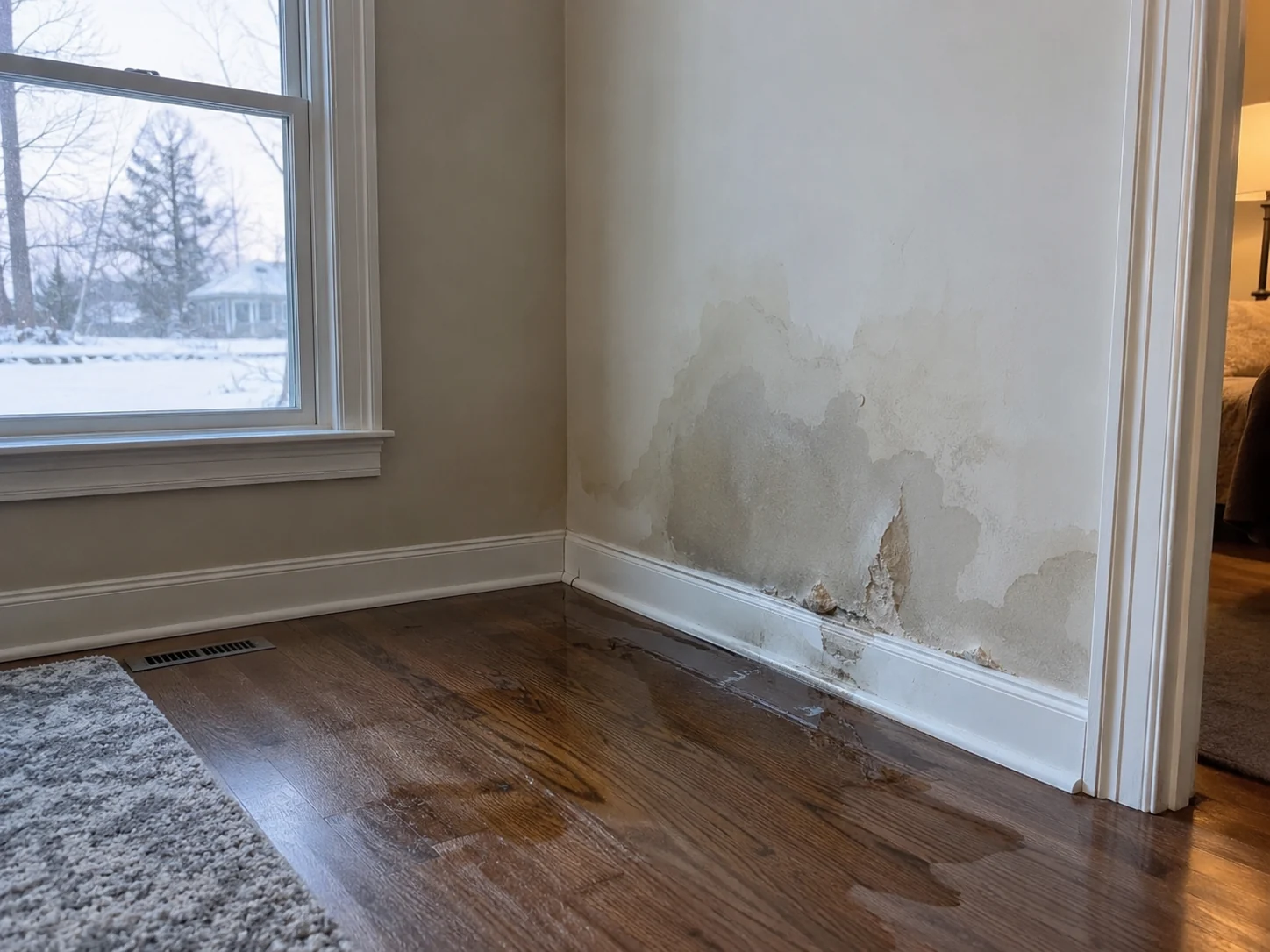
Pressurized Supply Lines Can Release Significant Water
When a pressurized plumbing supply line ruptures, water may continue flowing until the line is isolated or the building water supply is shut off.
Inside a closed wall, that water can spread into insulation, drywall, framing, flooring, ceilings, and adjoining rooms before enough damage becomes visible to reveal the source.
What Are the Warning Signs of a Burst Pipe Behind Drywall?
A pipe failure hidden inside a wall may first appear as a change in the wall, ceiling, floor, water pressure, or sound of the plumbing system.
Possible Warning Signs Include:
- Water stains appearing on drywall
- Paint bubbling or peeling
- Soft, swollen, or damp drywall
- Water running from beneath a baseboard
- Wet carpet or flooring near an exterior wall
- Water staining on the ceiling below
- Unexplained dripping or running-water sounds
- A sudden reduction in water pressure
- Unexpected water meter activity
- Musty odor developing after a winter freeze
- Water appearing as outdoor temperatures begin to rise
The Leak May Appear Far From the Broken Pipe
Water follows framing, pipes, drywall seams, joists, insulation, and gravity. A visible stain may appear several feet from the actual break.
This is why opening only the area where water first becomes visible may not reveal the complete damage boundary.
What Should You Do Immediately When a Frozen Pipe Bursts?
-
Shut off the water supply when it is safe.
Use the appropriate local shutoff valve when the affected line can be isolated. If the source cannot be identified or controlled quickly, shut off the building’s main water supply if you can do so safely.
-
Use electrical caution.
Do not touch wet outlets, switches, light fixtures, appliances, extension cords, or exposed wiring. Avoid standing water when electrical equipment may be involved.
-
Call for emergency plumbing repair.
McMahon Services provides 24/7 emergency plumbing services for frozen pipes, burst pipes, plumbing leaks, and related water damage.
-
Document the visible damage.
Take photographs or video of stains, dripping water, wet flooring, damaged drywall, ceilings, cabinets, fixtures, and nearby contents.
-
Move unaffected contents when safe.
Relocate furniture, boxes, electronics, rugs, artwork, and other belongings away from spreading water.
-
Arrange water extraction when necessary.
If significant water has entered the room, McMahon Services provides professional water extraction after flooding and major water losses.
-
Inspect connected areas.
Check the room below, the opposite side of the wall, flooring edges, cabinets, closets, and adjoining spaces for additional signs of moisture.
-
Do not close the wall immediately after pipe repair.
The cavity should be evaluated and wet materials addressed before drywall and finishes are replaced.
Safety Warning: Do not cut into wet drywall or a wall cavity without considering electrical wiring, plumbing, damaged materials, accumulated water, and possible mold. If the wall is heavily saturated, bulging, or near electrical components, keep clear of the area until it can be evaluated safely.
Where Can Water Travel After a Pipe Bursts Inside a Wall?
Water released inside a wall cavity does not necessarily remain beside the damaged pipe. It can move downward, sideways, and into adjoining building assemblies.
Hidden water may reach:
- The back side of drywall
- Wall insulation
- Wood studs and plates
- Electrical boxes and wiring pathways
- Baseboards and trim
- Cabinets and vanities
- Hardwood, laminate, vinyl, tile, or carpet
- Underlayment and subflooring
- The ceiling below an upper-floor leak
- Rooms on the opposite side of the wall
Insulation Can Hold Water Inside the Wall
Wet insulation can restrict airflow and keep surrounding drywall and framing damp. The wall surface may begin drying while moisture remains deeper inside the cavity.
Water May Reach the Floor Before It Becomes Obvious
Water frequently collects at the bottom of the wall around the wall plate, baseboard, flooring edge, and subfloor. This can create hidden floor damage even when no large puddle is visible.
McMahon Services provides additional information about concealed moisture in its guide to hidden water damage behind walls.
What Materials Can Be Damaged by a Burst Pipe Inside a Wall?
| Material | Possible Damage | Restoration Consideration |
|---|---|---|
| Drywall | Staining, swelling, softness, damaged paper facing, sagging | Structurally sound drywall may sometimes dry; deteriorated material may require removal. |
| Insulation | Saturation, compression, reduced performance, prolonged moisture | Removal may be needed to expose and dry the wall cavity. |
| Wood framing | Elevated moisture, staining, swelling, possible microbial growth after prolonged dampness | Sound framing may often be retained when it can be cleaned and dried. |
| Baseboards and trim | Warping, swelling, finish failure, separation | Solid wood may sometimes be retained; swollen composite trim may require replacement. |
| Flooring | Cupping, buckling, swelling, staining, adhesive failure | Inspection should determine whether water has reached underlayment and subflooring. |
| Electrical components | Water exposure, corrosion, damaged fixtures or wiring | Qualified electrical evaluation may be needed before affected components are used. |
| Cabinets and vanities | Swelling, delamination, staining, hidden moisture | Access may be necessary when water travels behind or beneath built-in components. |
Does the Wall Need to Be Opened After a Frozen Pipe Bursts?
Not every burst pipe requires extensive demolition, but controlled wall access is frequently necessary when the damaged plumbing and wet materials are located behind drywall.
Wall Access May Be Necessary When:
- The pipe repair cannot be completed without opening the wall
- Insulation is wet
- Drywall is soft, swollen, or deteriorated
- Water has reached electrical components
- Moisture readings remain elevated
- The complete water boundary cannot be confirmed
- A persistent musty odor develops
- Water has reached both sides of the wall
- Mold growth is visible or suspected
Controlled Access Helps Avoid Unnecessary Demolition
The purpose of opening a wall is not simply to remove as much drywall as possible. Access should expose the broken pipe and affected materials while limiting unnecessary disruption.
Moisture readings, plumbing layout, visible staining, wall construction, and the condition of the materials can help determine where access is needed.
How Is a Frozen Burst Pipe Behind Drywall Professionally Repaired?
Emergency repair begins with stopping the water and identifying the damaged section of plumbing.
1. Isolate the Water Supply
The affected branch or main water line is shut off as appropriate so the damaged pipe can be repaired safely.
2. Locate the Frozen or Damaged Pipe
The plumber evaluates the plumbing layout, visible water damage, pipe access, freeze location, and surrounding building materials.
3. Create Controlled Access
Drywall, trim, cabinets, or other finishes may need to be opened or removed to reach the damaged plumbing.
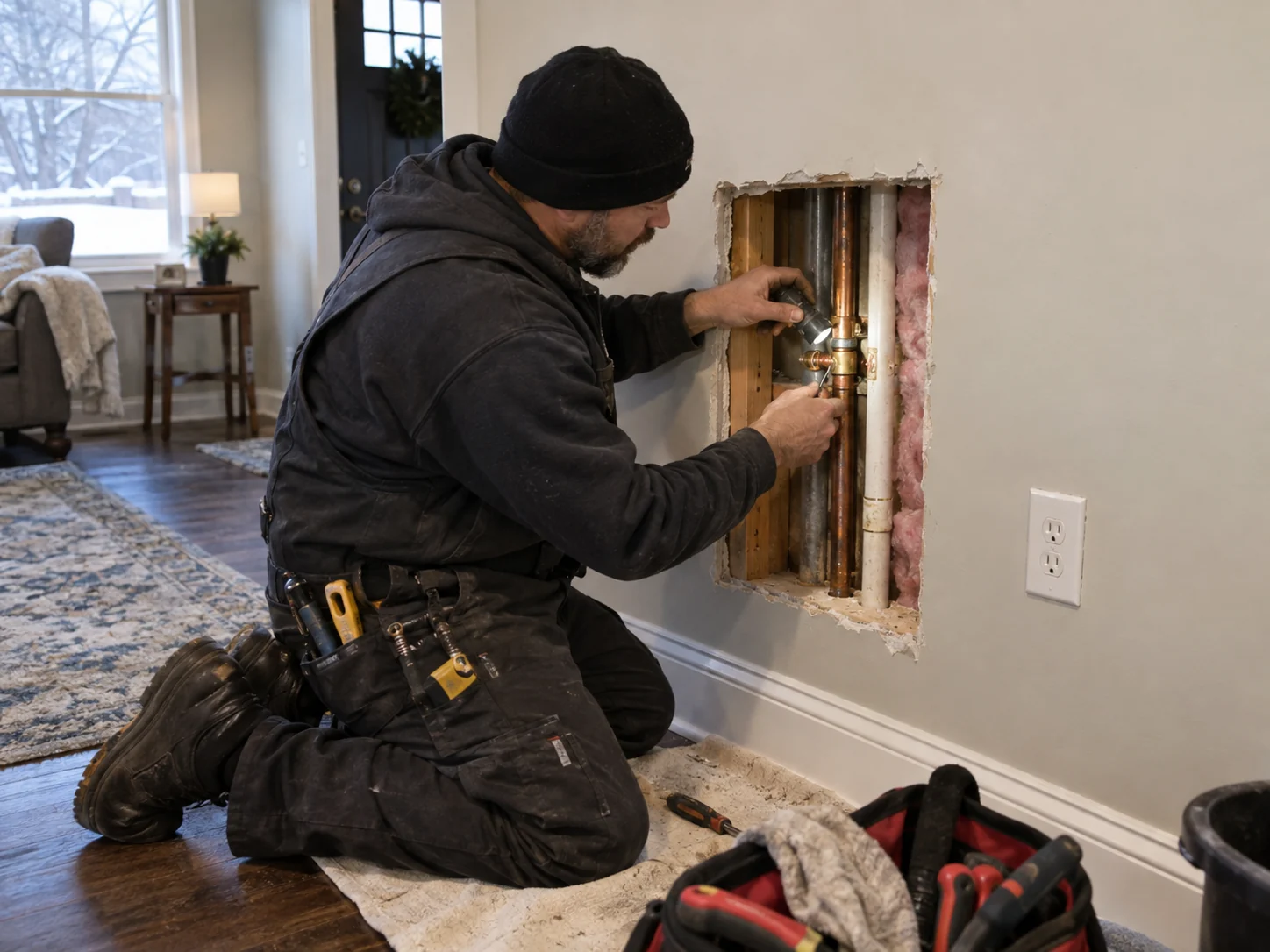
4. Repair or Replace the Damaged Pipe Section
The appropriate repair depends on the pipe material, location, extent of damage, accessibility, and plumbing system condition.
5. Check for Additional Freeze Damage
One visible rupture may not be the only vulnerable area. Plumbing in nearby exterior walls or unheated spaces may also require inspection after a severe freeze.
6. Restore Water Carefully
After repair, the plumbing system can be checked for leakage before restoration work proceeds.
How Is Water Damage Dried After a Pipe Bursts Inside a Wall?
Once the plumbing source is controlled, restoration focuses on removing water, identifying hidden moisture, and drying materials that can be retained.
1. Extract Standing Water
Visible water is removed from flooring and affected rooms when necessary.
2. Map the Moisture Boundary
Drywall, insulation, framing, flooring, ceilings, cabinets, and adjoining rooms may be evaluated to determine how far the water traveled.
3. Remove Materials That Cannot Be Restored
Soft drywall, saturated insulation, swollen composite materials, and other deteriorated products may require controlled removal.
4. Dry Retained Materials
Air movement and dehumidification may be used to dry framing, flooring, wall cavities, and other retained building materials.
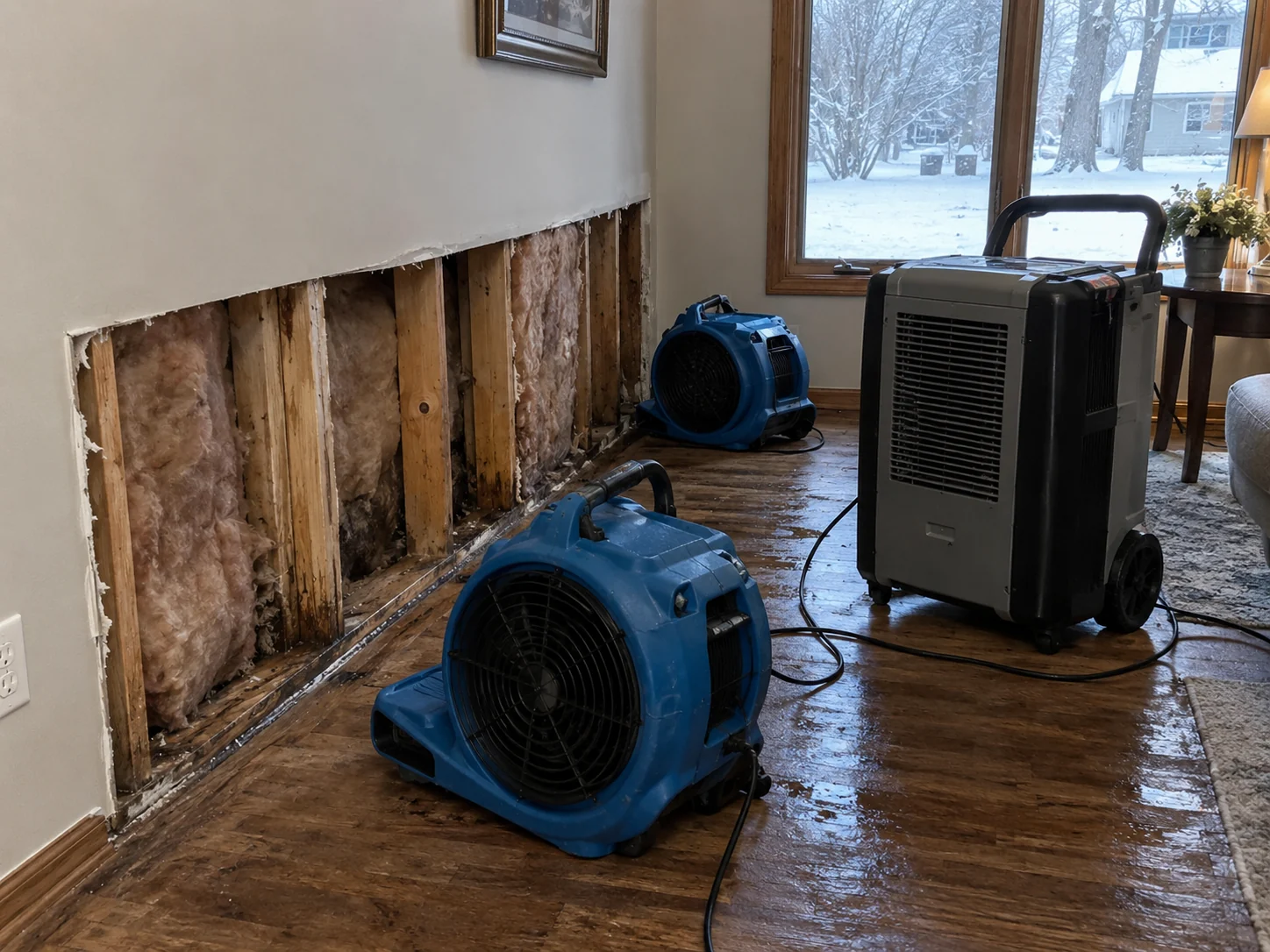
5. Monitor Drying Progress
Moisture conditions are checked during the drying process to determine whether retained materials are responding appropriately.
6. Reconstruct the Opened Area
Once plumbing repairs are complete and retained materials are appropriately dry, insulation, drywall, trim, paint, flooring, and other finishes can be restored.
McMahon Services provides water and sewage damage restoration for extraction, moisture inspection, structural drying, damaged-material removal, and restoration after burst-pipe losses.
Which Materials Can Be Dried and Which May Need Replacement?
| Material | May Be Retained When | Replacement Is More Likely When |
|---|---|---|
| Drywall | Firm, structurally sound, limited clean-water exposure, and drying appropriately | Soft, swollen, sagging, crumbling, mold-affected, or unable to dry |
| Insulation | Limited exposure and capable of appropriate drying | Saturated, compressed, contaminated, or preventing cavity drying |
| Wood framing | Structurally sound and able to be cleaned and dried | Structurally deteriorated or otherwise unsuitable to retain |
| Baseboards and trim | Material remains stable and can be dried | Swollen, warped, delaminated, or permanently damaged |
| Flooring | Material remains stable and hidden layers can be dried | Buckled, swollen, delaminated, contaminated, or trapping moisture beneath it |
The decision should be based on the actual condition of the material rather than water exposure alone.
What Mistakes Should You Avoid After a Frozen Pipe Bursts?
- Do not assume the problem is solved when the pipe is repaired. Water may remain inside walls, insulation, floors, and ceilings.
- Do not immediately patch the drywall opening. The cavity should be inspected and dried first.
- Do not ignore minor staining. A small stain can indicate a larger hidden moisture area.
- Do not use wet electrical fixtures. Wiring or boxes inside the wall may have been exposed to water.
- Do not install new insulation over wet framing. Retained structural materials should reach an appropriate dry condition before the wall is closed.
- Do not paint over water damage before evaluating the wall. Paint can hide staining without correcting trapped moisture.
- Do not randomly cut holes into the wall. Plumbing, electrical wiring, structural components, and concealed damage may be present.
- Do not discard damaged materials before documentation. Photographs and records may be useful for insurance review.
How Long Does Burst-Pipe Repair and Water Damage Restoration Take?
The timeline depends on the pipe location, amount of water released, materials affected, access requirements, drying progress, and reconstruction scope.
| Timeline Factor | Why It Matters |
|---|---|
| Pipe location | Plumbing behind cabinets, tile, ceilings, or exterior walls may require additional access. |
| Amount of water released | Larger losses can affect multiple rooms and building assemblies. |
| Length of exposure | Water that remains hidden longer can penetrate more materials. |
| Insulation condition | Wet insulation may need removal before the cavity can dry properly. |
| Drying progress | Reconstruction should wait until retained materials are appropriately dry. |
| Reconstruction scope | Drywall, insulation, flooring, trim, cabinets, and paint may add repair stages. |
A small localized pipe break may require a shorter project than a rupture that sends water through several wall cavities, floors, or levels of the building.
What Affects the Cost of Repairing a Frozen Burst Pipe and Water Damage?
The overall cost depends on both the plumbing repair and the resulting property damage.
Common cost factors include:
- Location and accessibility of the broken pipe
- Pipe material and required plumbing repair
- Amount of water released
- Number of affected rooms
- Water extraction requirements
- Drywall and insulation removal
- Flooring or subfloor damage
- Electrical involvement
- Cabinet or built-in removal
- Structural drying and moisture monitoring
- Mold remediation if prolonged moisture creates additional concerns
- Reconstruction and finish work
A small pipe opening can still create extensive property damage when water runs for a long period or travels through concealed walls and floors.
A site-specific inspection is needed before a reliable repair and restoration scope can be established.
What Should You Document for an Insurance Claim?
Insurance coverage depends on the policy, circumstances, maintenance history, and cause of loss. Property owners should contact their insurance carrier or representative for coverage questions.
When conditions are safe, document:
- The date and time the damage was discovered
- The apparent frozen or burst pipe location
- Visible water and water staining
- Damaged drywall, ceilings, flooring, cabinets, and contents
- Rooms beside and below the affected wall
- The plumbing repair and damaged pipe section
- Moisture readings and drying records
- Photographs before and after wall access
- Materials removed during restoration
- Plumbing invoices and restoration estimates
- Reconstruction costs
Avoid disposing of major damaged materials before documentation unless removal is immediately necessary for safety or property protection.
How Can You Reduce the Risk of Another Frozen Pipe?
After the emergency has been stabilized, the cause of the freeze should be considered before the wall is completely reconstructed.
Possible Preventive Measures Include:
- Insulating vulnerable plumbing lines
- Improving insulation in exterior wall cavities
- Sealing cold-air leaks around plumbing penetrations
- Maintaining adequate indoor heat during severe cold
- Opening cabinet doors where plumbing is located against cold exterior walls when appropriate
- Disconnecting exterior hoses before freezing weather
- Correcting unheated or poorly insulated plumbing areas
- Having repeatedly vulnerable plumbing evaluated before winter
Do Not Rebuild Without Addressing the Freeze Condition
Replacing drywall without addressing inadequate insulation, air leakage, or vulnerable pipe placement can leave the plumbing exposed to the same problem during the next severe cold period.
Why Are Frozen and Burst Pipes a Major Concern in Northern Illinois and Southern Wisconsin?
Homes and businesses throughout Hainesville, Lake County, Northern Illinois, Southern Wisconsin, and surrounding communities can experience prolonged periods of freezing weather that place plumbing systems under significant stress.
Regional risk factors may include:
- Subzero winter temperatures
- Rapid temperature drops
- Plumbing located in exterior walls
- Older buildings with limited insulation
- Unheated garages, crawl spaces, and utility areas
- Cold air entering around foundation or wall penetrations
- Heating-system failures during winter
- Vacant properties with reduced heat
A frozen plumbing line may remain unnoticed until the weather begins to warm. Once the ice thaws, a damaged section can release water rapidly into wall cavities, floors, ceilings, and adjacent rooms.
McMahon Services provides 24/7 emergency plumbing and water damage restoration throughout Northern Illinois, Southern Wisconsin, and surrounding service areas.
Professional Tip: After a frozen pipe is repaired, do not close the wall simply because active leaking has stopped. Check the insulation, framing, drywall, flooring, and adjoining areas for hidden moisture, and allow retained materials to reach an appropriate dry condition before reconstruction.
Get Help With a Frozen or Burst Pipe Inside a Wall
A frozen pipe that bursts behind drywall can create both an immediate plumbing emergency and a hidden water damage problem. Water may spread through insulation, framing, flooring, ceilings, cabinets, and adjacent rooms before the full extent of the loss becomes visible.
McMahon Services & Construction Corp can coordinate emergency plumbing repair, water extraction, moisture inspection, controlled wall access, structural drying, damaged-material removal, and restoration after a frozen or burst pipe.
The team serves homes and businesses throughout Hainesville, Lake County, Northern Illinois, Southern Wisconsin, and surrounding communities.
Call McMahon Services at (847) 566-4568 for 24/7 help with frozen pipes, burst pipes, hidden wall water damage, extraction, drying, and restoration.
Frequently Asked Questions About Frozen Pipes Bursting Inside Walls
What should I do first if a frozen pipe bursts inside a wall?
Shut off the affected water supply when it is safe, avoid wet electrical components, move vulnerable belongings away from spreading water, and contact an emergency plumber. The wall and surrounding materials should also be evaluated for hidden water damage.
Can a frozen pipe burst without leaking immediately?
Yes. A pipe may become damaged while ice is still blocking the line. Water leakage may become more obvious as the ice thaws and normal water pressure returns.
Does drywall always need to be removed after a burst pipe?
No. Drywall may sometimes be retained when exposure is limited and the material remains structurally sound and can be dried completely. Removal is more likely when drywall is soft, swollen, sagging, mold-affected, or blocking access to wet insulation and framing.
How do you know whether water is still inside the wall?
Possible signs include elevated moisture readings, soft drywall, staining, musty odor, wet baseboards, flooring damage, or moisture appearing on the opposite side of the wall or ceiling below. Professional moisture inspection may be needed because concealed materials can remain wet after the surface appears dry.
Can wet insulation stay inside the wall?
It depends on the insulation type, amount of water, material condition, and whether it can dry appropriately. Saturated insulation may need removal because it can retain moisture against drywall and framing.
How long does a wall take to dry after a burst pipe?
There is no universal drying time. The duration depends on the amount of water, insulation, framing, flooring, temperature, humidity, access, and drying conditions. Reconstruction should proceed based on actual moisture conditions rather than a fixed number of days.
Can mold grow after a frozen pipe bursts?
Mold may develop when drywall, insulation, framing, dust, flooring, or other materials remain damp. Prompt water removal, moisture inspection, and structural drying help reduce prolonged moisture conditions.
Who should I call when a frozen pipe bursts behind drywall?
An emergency plumber is needed to locate and repair the damaged pipe, while a water damage restoration company may be needed to handle extraction, hidden moisture inspection, drying, material removal, and repairs. McMahon Services can coordinate both plumbing and water damage restoration after a burst-pipe emergency.




0 Comments