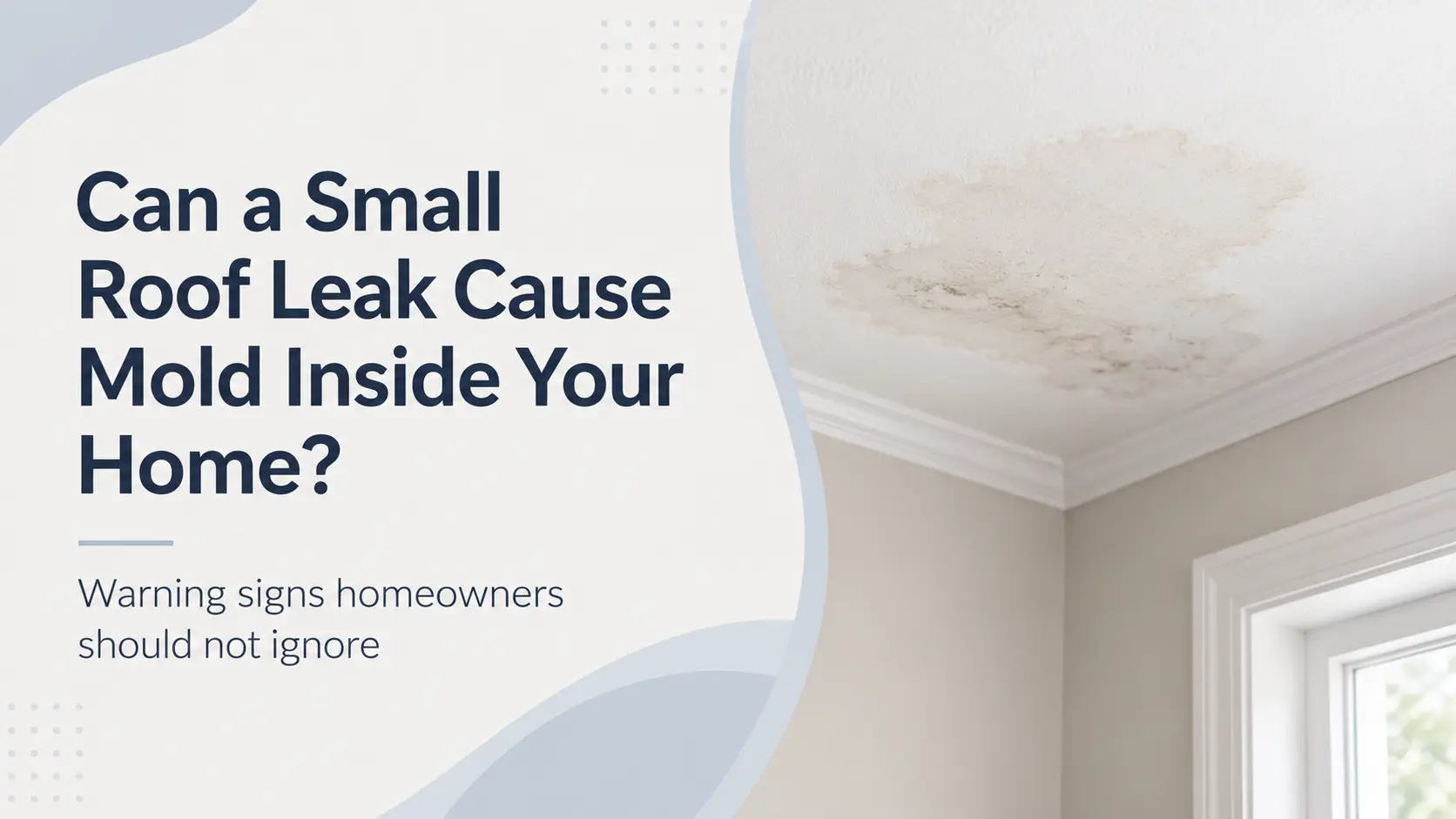
Can a Small Roof Leak Cause Mold?
A small roof leak can cause mold inside your home if moisture reaches the attic, insulation, drywall, ceiling materials, or wall cavities and is not dried properly. Even if the leak only appears during heavy rain, the hidden moisture can create damage over time.
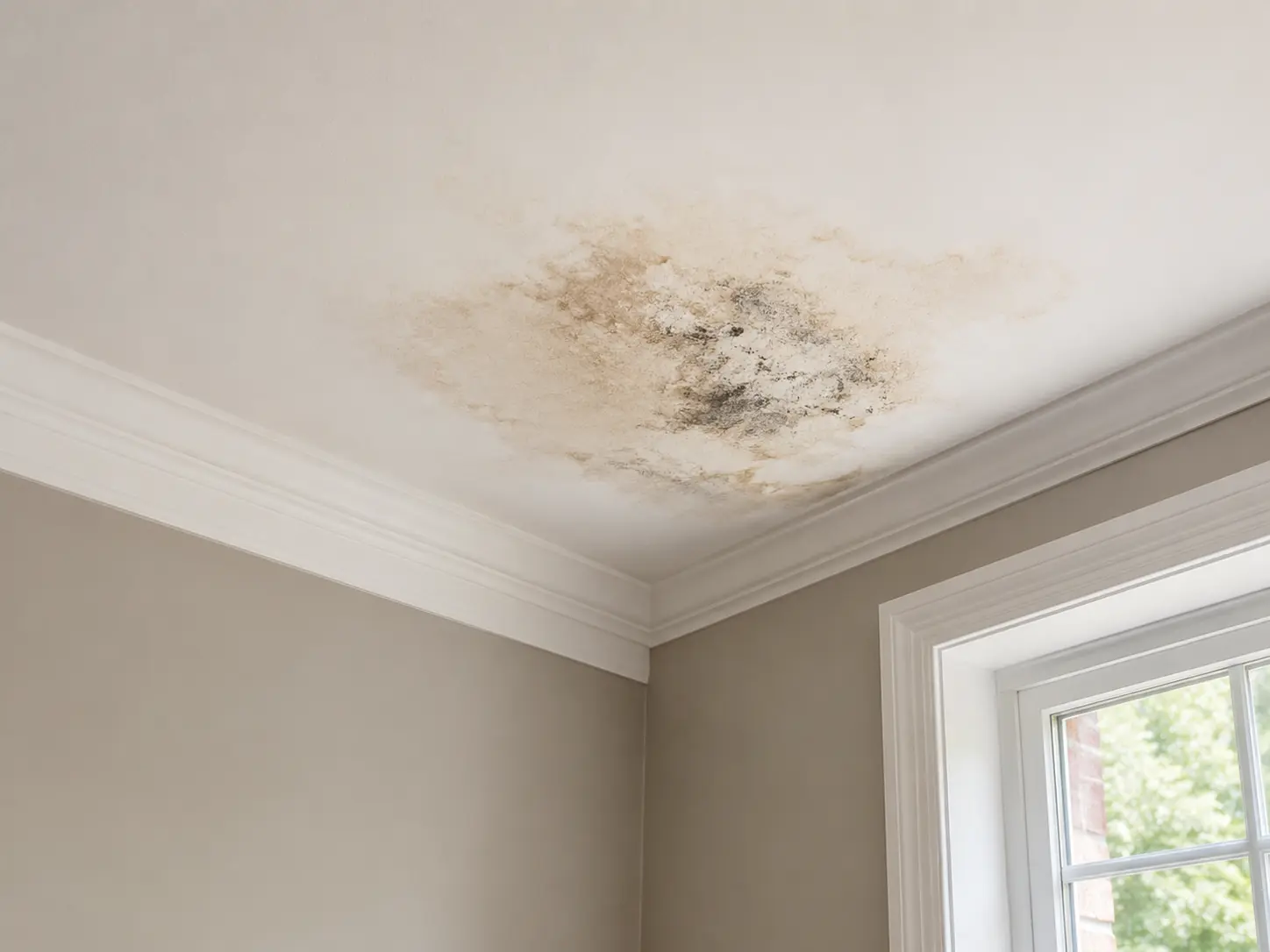
Many property owners do not realize there is a problem until they notice a ceiling stain, musty odor, peeling paint, soft drywall, or dark spots near an attic access, upper wall, or roofline. By that point, the leak may have already affected more than the visible surface.
For homeowners, landlords, property managers, and commercial property owners in Hainesville, Lake County, Northern Illinois, and Southern Wisconsin, the goal is to respond early. A roof leak can become a roofing issue, a storm damage issue, a water damage issue, and a mold concern if the source is not found and the affected materials are not evaluated.
Key Takeaway
A small roof leak should not be ignored. If water enters through the roof and reaches insulation, wood framing, drywall, or ceiling materials, it can create hidden moisture conditions where mold may develop. The safest next step is to find the source, document the damage, and have the affected area checked before repainting or patching over the stain.
Can a Small Roof Leak Cause Mold?
Yes. A small roof leak can create mold risk when moisture is trapped in areas that do not dry quickly. This can include attic insulation, roof decking, ceiling drywall, wall cavities, wood framing, and materials behind finished surfaces.
The leak may not be constant. Some roof leaks only happen during wind-driven rain, heavy storms, melting snow, or ice-related conditions. That can make the problem harder to find because the ceiling may look dry by the time someone checks it.
Mold needs moisture to grow, so the main issue is not always the size of the leak. The bigger concern is how long materials stay damp and whether the moisture source keeps returning. The EPA explains that moisture control is a key part of mold control in homes, which is why leaks should be corrected instead of covered up with paint or ceiling repairs. Property owners can review the EPA guide to mold and moisture for additional homeowner guidance.
If the leak may be connected to roof damage, siding damage, flashing issues, or storm-related openings, McMahon Services & Construction Corp can help property owners through storm damage restoration, roofing, and siding services.
Quick Answer
A small roof leak can cause mold if water reaches porous materials and the area stays damp. Ceiling stains, musty odors, attic moisture, peeling paint, and recurring dark spots are signs the leak may have created a deeper moisture problem.
Warning Signs That a Roof Leak Reached Inside
A roof leak does not always create a dramatic drip from the ceiling. In many homes and commercial buildings, the first signs are subtle. Water may move along rafters, insulation, pipes, framing, or wall cavities before showing up in a visible area.
Common Signs to Watch For
- Ceiling stains: Yellow, brown, or gray stains may appear after water travels through drywall or ceiling materials.
- Musty odors: A damp smell in an upstairs room, attic, closet, or ceiling area can point to trapped moisture.
- Peeling paint or bubbling texture: Moisture can loosen paint, plaster, or ceiling texture.
- Soft drywall: A ceiling or upper wall that feels weak, swollen, or spongy may have absorbed water.
- Damp insulation: Wet attic insulation can hold moisture and slow the drying process.
- Dark spots near vents or rooflines: Marks around ceiling penetrations, vents, skylights, chimneys, or wall corners should be checked.
- Recurring stains after painting: If a stain returns, the moisture source may still be active.
Homeowners should avoid assuming that a small stain means a small problem. Water can travel before it becomes visible, so the damaged area may not be directly under the roof opening.
How Storm Damage Can Make Roof Leaks Worse
Storms can create or expose roof problems that were not obvious before. Wind, hail, fallen branches, damaged shingles, flashing gaps, siding damage, clogged gutters, and roof edge issues can all allow water to enter the building envelope.
In Northern Illinois and Southern Wisconsin, seasonal weather changes can make small openings worse over time. Heavy rain may reveal a leak, while freeze and thaw cycles can stress roof materials and exterior components. If water enters repeatedly, the affected materials may stay damp long enough to create odor, staining, or mold concerns.
For roof-related concerns, McMahon Services also provides roofing services for property owners who need help with roofing repair, replacement, or storm-related roof issues.
Storm Damage Reminder
A storm-damaged roof can lead to mold when water enters the attic or ceiling system and remains trapped in insulation, drywall, or framing. The leak source should be repaired and the interior moisture should be evaluated before the area is closed or repainted.
When a Roof Leak Becomes Water Damage
A roof leak becomes a water damage concern when moisture affects building materials inside the property. This may include ceiling drywall, attic insulation, wood framing, flooring, electrical areas, wall cavities, or personal property stored in the attic.
Water damage restoration is different from basic roof repair. Roof repair focuses on stopping water from entering the structure. Restoration focuses on what happened after the water got inside. Both may be needed when a leak has affected interior materials.
The IICRC S500 water damage restoration standard describes procedures and precautions used in professional water damage restoration. This is important because hidden water damage may involve moisture detection, material evaluation, drying decisions, and repair planning.
If the leak has already affected ceilings, walls, flooring, insulation, or stored contents, McMahon Services can help through water and sewage damage restoration services.
What Should You Do If You Smell Mold After a Roof Leak?
A musty smell after a roof leak should be treated as a warning sign. It does not automatically confirm a large mold problem, but it often means moisture is present or was present long enough to affect materials.
Do not cover the odor with air fresheners, paint, or surface cleaning alone. If the moisture source remains active, the smell may return. The CDC provides mold cleanup guidance that includes safety cautions around cleaning products and the importance of drying affected areas properly.
If mold is visible, spreading, or returning after cleaning, professional remediation may be needed. McMahon Services provides mold remediation services for properties where moisture damage and mold concerns are connected.
Safe Steps to Take
- Take photos of stains, damaged materials, and affected rooms.
- Look for roof, attic, ceiling, or wall areas where water may have entered.
- Avoid disturbing visible mold growth if the affected area is larger or near porous materials.
- Do not repaint until the moisture source is fixed and the area is evaluated.
- Move stored items away from damp areas if it is safe to do so.
- Call a professional if the odor is strong, the stain is spreading, or the leak source is unclear.
When Should You Call for Help?
You should call for help when a roof leak has caused a ceiling stain, musty odor, soft drywall, damp insulation, visible mold, or repeated staining after rain. You should also call if the leak is connected to storm damage, a missing shingle, roof flashing, siding damage, or water entering near vents, chimneys, skylights, or roof edges.
For rental properties, commercial buildings, and managed facilities, early documentation is especially important. Photos, dates, affected rooms, weather conditions, and visible signs can help clarify what happened and what needs attention.
McMahon Services & Construction Corp is based at 44 W Belvidere Rd, Hainesville, IL 60030, and serves property owners throughout the surrounding region. The company is open 24 hours for emergency restoration needs and can be reached at 847-566-4568.
Quick Decision Guide
Call a restoration or roofing professional if a roof leak leaves stains, odors, soft drywall, damp insulation, or visible mold. The roof opening should be addressed, and the affected interior materials should be checked before repairs are finished.
Frequently Asked Questions About Roof Leaks and Mold
Can one small roof leak really cause mold?
Yes. Even a small leak can create mold risk if moisture reaches porous materials and does not dry properly. The risk increases when the leak happens more than once or stays hidden in an attic, ceiling, or wall cavity.
How do I know if a roof leak reached my attic?
Common signs include damp insulation, darkened wood, musty odor, staining near rafters, water marks around vents or chimneys, and ceiling discoloration below the attic area.
Should I call a roofer or a restoration company first?
If water is actively entering, the roof opening needs attention. If water already affected ceilings, insulation, drywall, flooring, or indoor materials, restoration help may also be needed. In many situations, both roofing and restoration support are important.
Can I just paint over a ceiling stain from a roof leak?
No. Painting over a stain may hide the visible mark, but it does not fix the leak or dry hidden moisture. The source should be corrected and the affected materials should be evaluated first.
What should I do if I smell mold after rain?
Document the odor, check nearby ceiling and attic areas if safe, and avoid disturbing damaged materials. A musty smell after rain may mean moisture is entering through the roof or exterior building components.
Conclusion
A small roof leak can cause mold inside your home if moisture reaches hidden materials and is not handled correctly. The visible stain may be small, but the affected area can include attic insulation, ceiling drywall, framing, or wall cavities.
The best response is to take the leak seriously, find the source, document the damage, and avoid covering the problem before it is checked. For property owners in Hainesville, Lake County, Northern Illinois, and Southern Wisconsin, McMahon Services & Construction Corp can help with storm damage restoration, roofing concerns, water damage restoration, and mold remediation when these issues overlap.
For 24-hour restoration support, call 847-566-4568 or visit McMahon Services & Construction Corp.




0 Comments