Smoke Odor After Fire: Why It Lingers and What to Do
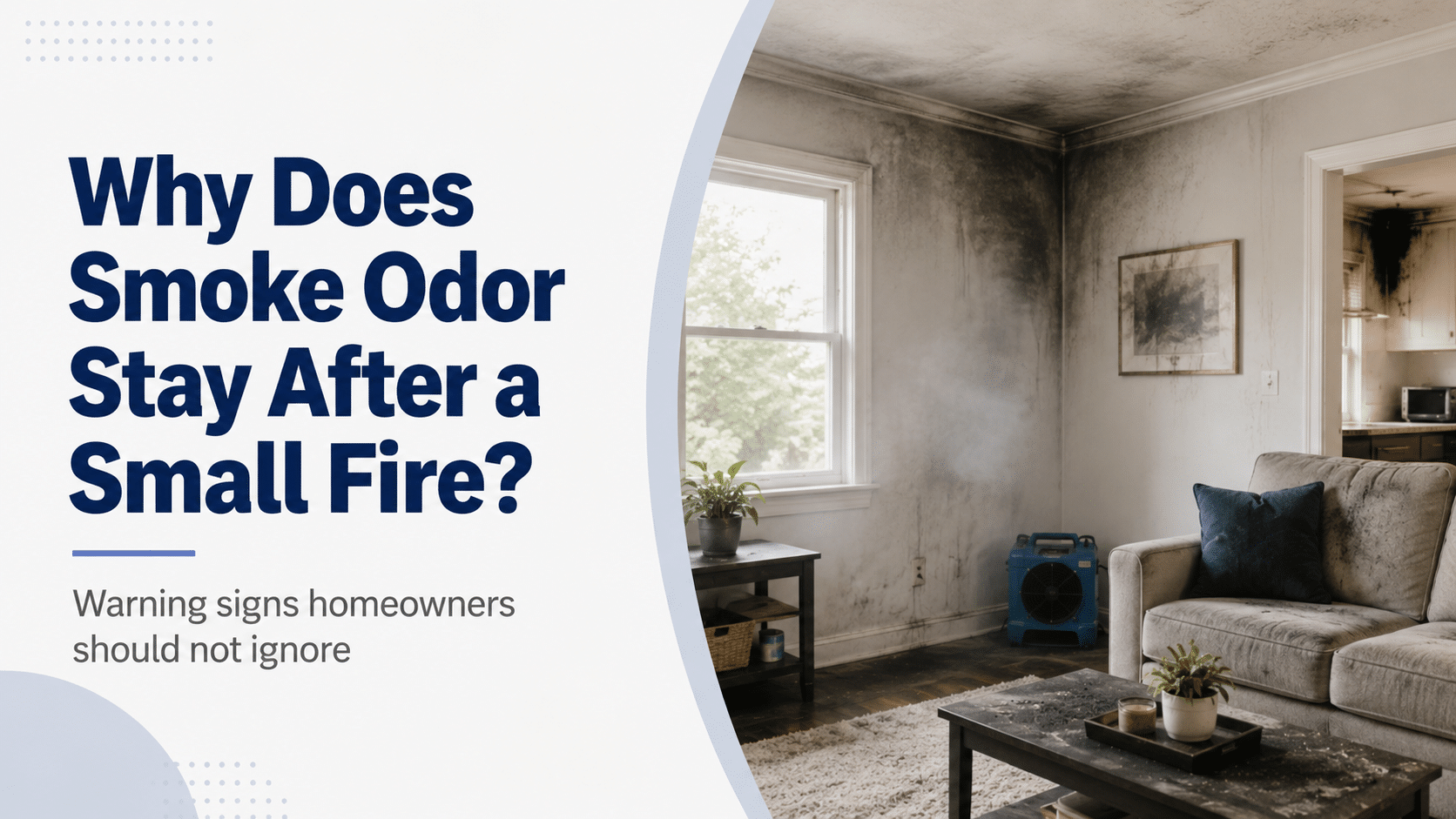
Smoke odor after fire can remain inside a home or commercial property because smoke particles, soot residue, and odor compounds settle into walls, ceilings, fabrics, carpets, furniture, cabinets, insulation, and HVAC pathways. Even a relatively small fire can leave a strong, recurring smell if smoke traveled beyond the room where the fire started.
Many property owners expect the odor to disappear once the fire is extinguished, the windows are opened, or visible soot is wiped away. Those steps may provide temporary improvement. However, when smoke residue reaches porous materials or concealed areas, the smell may return after the building is closed, the HVAC system begins running, or indoor temperature and humidity change.
For homeowners, landlords, property managers, and business owners in Hainesville, Lake County, Northern Illinois, and Southern Wisconsin, lingering smoke odor often means that additional cleanup is needed. The source may involve soot residue, affected contents, soft materials, HVAC movement, or building components that require professional fire and smoke damage restoration.
Key Takeaway
Smoke odor can remain after a small fire because smoke does not only affect the visibly burned area. It may spread into fabrics, carpet padding, wall and ceiling surfaces, cabinets, ducts, insulation, and hidden spaces. If the smell continues returning after basic cleaning and ventilation, surface cleaning alone may not be enough.
Why Does Smoke Odor Stay After a Fire?
Smoke odor stays because smoke carries fine particles, soot, and residues that settle on many different surfaces. Some residue appears as visible black or gray soot. Other residue is less noticeable and may become embedded in porous materials, soft contents, or areas that are difficult to reach through ordinary household cleaning.
After a fire, odor may remain in drywall, paint, trim, cabinets, flooring, carpet, upholstery, mattresses, clothing, curtains, insulation, and stored belongings. Smoke can also move upward into attics or travel through hallways, doorways, vents, and return-air pathways.
The American Red Cross provides fire cleanup guidance for addressing soot and smoke after a fire. However, when residue has spread through multiple rooms or entered porous materials, professional evaluation may still be necessary.
McMahon Services & Construction Corp provides fire and smoke damage restoration for properties affected by smoke, soot, persistent odor, fire suppression water, and related cleanup needs.
Quick Answer
Smoke odor remains after a fire because smoke particles and soot residue can settle into porous materials, fabrics, carpets, walls, ceilings, cabinets, insulation, and air pathways. If the smell returns after cleaning, odor-producing residue may still be present.
Can a Small Fire Still Cause Smoke Damage?
Yes. A small fire can create smoke damage when smoke spreads into nearby rooms, closets, hallways, vents, attics, or upper levels. A contained kitchen fire, appliance fire, electrical incident, fireplace problem, or small bedroom fire may affect areas that were never directly touched by flames.
The amount and type of smoke damage depend on several factors, including airflow, open doors, HVAC activity, room layout, fire temperature, and the materials that burned. Plastic, grease, fabric, wood, rubber, and synthetic materials can each create different types of smoke residue and odor.
Property owners should also consider damage caused during firefighting efforts. Even a relatively small fire may result in soot, smoke odor, wet materials, damaged contents, and water intrusion in the same area.
Why Fire Size Can Be Misleading
The visible burn area may be limited, but smoke can move throughout the property before the fire is controlled. A small fire can therefore create a larger cleaning and odor-removal problem than property owners initially expect.
Which Materials Hold Smoke Odor the Most?
Porous and absorbent materials generally retain smoke odor more than sealed, nonporous surfaces. This is why a room may continue smelling smoky even after countertops, appliances, or hard flooring have been wiped down.
Common Materials That May Retain Smoke Odor
- Carpet and padding: Smoke particles can settle into carpet fibers and the padding below the visible surface.
- Upholstered furniture: Sofas, chairs, mattresses, cushions, and fabric-covered furniture may absorb smoke odor.
- Window coverings: Curtains, drapes, fabric shades, and blinds can collect smoke residue.
- Drywall and painted surfaces: Walls and ceilings may retain soot film and odor compounds.
- Cabinets and wood surfaces: Smoke may settle into unfinished wood, joints, hardware openings, and cabinet interiors.
- Clothing and linens: Fabrics can continue releasing smoke odor after the fire.
- Insulation and attic materials: Hidden areas may retain odor when smoke travels upward through the structure.
- Books, documents, and stored contents: Paper and cardboard absorb smoke odor easily and may require specialized handling.
McMahon Services also provides restoration and cleaning services for properties where smoke, fire, water, mold, or storm damage affects building materials and contents.
Can Air Ducts Spread Smoke Odor After a Fire?
Smoke odor may continue moving through a property if particles entered the HVAC system or settled around vents, return-air openings, filters, and ductwork. This does not occur in every fire, but the system should be considered when odor appears in rooms far from the original source or becomes stronger when heating or cooling equipment runs.
Replacing an HVAC filter may help reduce some airborne particles, but it does not automatically remove residue from vents, returns, or duct surfaces. The affected rooms and materials must also be evaluated because the HVAC system may be moving odor from another contaminated source.
The EPA explains in its guide to air cleaners in the home that source control and ventilation are important parts of improving indoor air, while filtration serves as a supplement. After a fire, this means the smoke residue causing the odor should be addressed rather than relying only on sprays, candles, filters, or portable air cleaners.
If vents, return-air areas, carpets, or soft surfaces may be retaining smoke odor, McMahon Services provides air duct cleaning and carpet cleaning as part of broader property cleaning support.
Why Regular Cleaning May Not Remove Smoke Odor
Regular cleaning may reduce light surface residue, but it may not reach smoke particles inside porous materials, wall and ceiling cavities, cabinet interiors, insulation, carpet padding, or HVAC pathways. Smoke odor may also become more noticeable when indoor air warms, humidity increases, or affected materials release trapped compounds back into the room.
Air fresheners, scented sprays, candles, and fragrances may cover the odor temporarily, but they do not remove its source. Painting too soon can also create problems when soot or odor-producing residue remains beneath the new coating.
The IICRC S700 fire and smoke damage restoration standard describes professional principles and procedures for assessing fire residues and odors. The appropriate cleaning approach may depend on the type of fire, the materials that burned, the residue pattern, the affected surfaces, and how far smoke traveled.
Signs Basic Cleaning May Not Be Enough
- The smoke smell returns after windows and doors are closed
- Odor becomes stronger when the heating or cooling system operates
- Walls, ceilings, appliances, or cabinets have visible soot film
- Carpets, curtains, upholstery, or mattresses still smell after cleaning
- Smoke odor is present in rooms away from the original fire
- The fire also caused water damage from suppression efforts
- The smell becomes stronger during warm or humid weather
What Should You Do About Lingering Smoke Odor?
The first priority after any fire is safety. Do not enter an unsafe structure or disturb damaged electrical systems, unstable materials, or heavy soot deposits. Once the area has been cleared for entry, property owners can begin documenting the affected rooms and contents.
Practical Steps After a Small Fire
- Take photos and videos of soot, smoke staining, damaged contents, and affected rooms.
- Identify where the odor is strongest and whether it changes when the HVAC system runs.
- Avoid aggressively wiping soot because improper cleaning can spread or embed residue.
- Do not repaint or seal surfaces before the underlying residue is evaluated and cleaned.
- Separate affected fabrics and contents from clean areas when it is safe to do so.
- Check for water damage caused by sprinklers, hoses, or other suppression efforts.
- Contact a fire and smoke restoration professional when odor persists or affects multiple materials.
Prompt documentation and professional assessment can help determine whether the property needs surface cleaning, contents cleaning, odor treatment, air duct attention, material removal, or repair work.
When Should Property Owners Call for Professional Help?
Property owners should call for help when smoke odor is strong, recurring, or present throughout multiple rooms. Professional evaluation is also appropriate when soot is visible, porous contents smell smoky, the HVAC system may be involved, or the fire created water damage from suppression efforts.
For landlords, property managers, and business owners, lingering smoke odor can affect tenants, customers, employees, inventory, and the ability to safely reopen a space. Early documentation and a coordinated cleanup plan can make the recovery process more manageable.
McMahon Services & Construction Corp is based at 44 W Belvidere Rd, Hainesville, IL 60030, and serves property owners throughout Hainesville, Lake County, Northern Illinois, and Southern Wisconsin. The company is available 24 hours for emergency restoration needs and can be reached at 847-566-4568.
Quick Decision Guide
Call a fire and smoke damage restoration company if smoke odor remains after ventilation and basic cleaning, spreads through the property, returns when the HVAC system operates, or is connected to visible soot, damaged contents, or water damage.
Frequently Asked Questions About Smoke Odor After Fire
Why does my house still smell like smoke after a small fire?
Your house may still smell like smoke because residue settled into porous materials, walls, ceilings, carpet, upholstery, cabinets, insulation, or HVAC pathways. The fire may have been small, but smoke can travel beyond the visibly burned area.
Can smoke odor go away on its own?
Very light odor may fade with proper cleaning and ventilation. Strong or recurring smoke odor usually remains when residue is trapped in affected materials or hidden areas. If the smell keeps returning, the source should be identified and addressed.
Can air fresheners remove smoke odor?
No. Air fresheners and scented products may temporarily cover the smell, but they do not remove soot, smoke particles, or contaminated materials.
Can smoke odor remain inside air ducts?
Yes. Smoke residue may remain around filters, vents, return-air openings, or ductwork if the HVAC system operated during or after the fire. Odor becoming stronger when the system runs is one possible warning sign.
Should I repaint walls that smell like smoke?
Not before the affected surfaces are evaluated and properly cleaned. Painting over smoke residue may hide staining temporarily without removing the odor source.
Does a small kitchen fire require smoke damage restoration?
It may. A small kitchen fire can spread grease-related smoke, soot, and odor into cabinets, ceilings, appliances, nearby rooms, and HVAC pathways. Professional restoration may be appropriate when ordinary cleaning does not remove the residue or smell.
Who should I call for smoke odor after a fire in Hainesville or Lake County?
Property owners in Hainesville, Lake County, Northern Illinois, and Southern Wisconsin can contact McMahon Services & Construction Corp for fire and smoke damage restoration, odor cleanup, contents support, and related restoration guidance.
Get Help With Lingering Smoke Odor and Fire Damage
Smoke odor after fire can remain inside a property because smoke particles and soot residue settle into walls, ceilings, carpets, furniture, cabinets, air pathways, insulation, and hidden spaces. Even a small fire can create widespread odor when smoke moves beyond the original source.
Avoid relying only on fragrances or cosmetic repairs. Document the affected areas, note where the odor is strongest, and check whether the smell remains in soft materials, building surfaces, contents, and HVAC pathways. If the odor continues returning, professional fire and smoke damage restoration may be needed.
For 24-hour fire and smoke damage restoration support in Hainesville, Lake County, Northern Illinois, and Southern Wisconsin, call McMahon Services & Construction Corp at 847-566-4568 or visit McMahon Services & Construction Corp.




0 Comments