
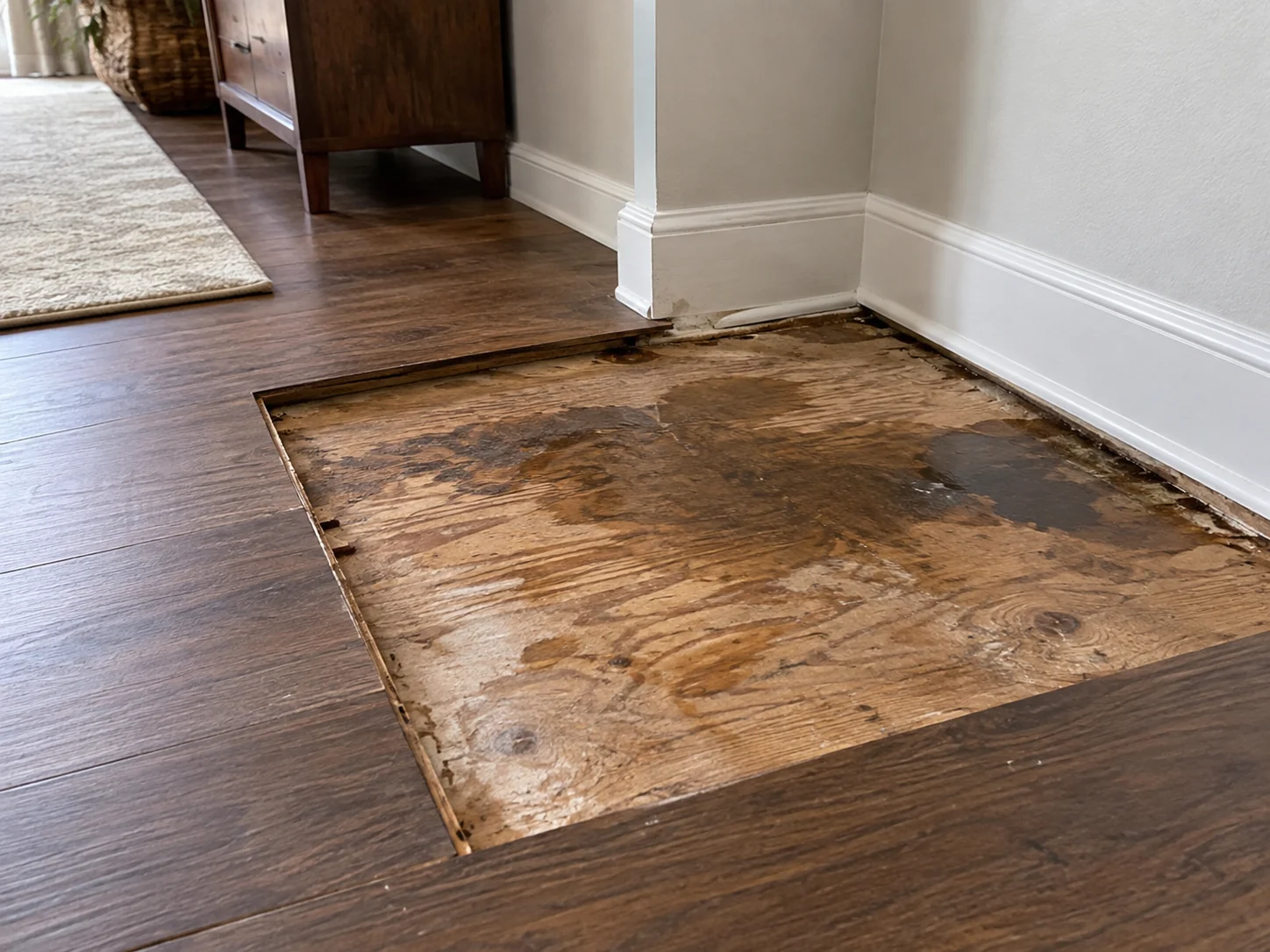
What Signs Show That a Water-Damaged Subfloor Can No Longer Be Saved?
A wet subfloor does not always need to be replaced, but replacement becomes more likely when the material is swollen, soft, delaminated, structurally weakened, contaminated, mold-affected, or unable to reach an appropriate dry condition after professional drying. A subfloor that remains structurally sound and was exposed to a limited amount of clean water may sometimes be dried and retained, depending on the material, moisture level, duration of exposure, and access beneath the finished flooring.
The challenge is that subfloor damage is often hidden. Hardwood, laminate, vinyl, tile, carpet, cabinets, and baseboards may conceal the extent of the water. The finished floor may begin cupping, buckling, staining, separating, or developing odor before the condition of the subfloor is fully understood.
For that reason, the decision to dry or replace a wet subfloor should be based on moisture testing, material condition, contamination, structural performance, and whether the affected area can be properly accessed and dried.
Quick Answer
A wet subfloor may be saved when the water source is clean, the damage is discovered quickly, the plywood or OSB remains structurally sound, and moisture levels decrease with proper drying. Replacement is more likely when the subfloor is swollen, soft, spongy, delaminated, permanently warped, mold-affected, contaminated, or structurally weakened. Moisture testing and access beneath the finished flooring are often necessary before deciding whether to dry or remove the material.
Key Takeaways
- A wet subfloor does not automatically need replacement.
- Plywood and OSB can sometimes be dried when exposure is limited and structural integrity remains intact.
- Soft, swollen, delaminated, crumbling, or permanently warped areas are more likely to require removal.
- Water may remain trapped beneath hardwood, laminate, vinyl, tile, carpet, cabinets, or underlayment.
- Moisture testing helps identify wet materials but should be considered along with physical condition and structural performance.
- Contaminated water can make replacement more likely because porous subfloor materials may absorb contaminants.
- Drying the finished floor surface alone may not adequately dry the subfloor beneath it.
- Subfloor replacement and flooring reconstruction should not begin until the water source has been corrected and retained materials are dry.
Table of Contents
- What a subfloor is and why water damage matters
- How subfloors become wet
- Signs a wet subfloor may need replacement
- When a wet subfloor may be dried
- How plywood and OSB respond to water
- How moisture becomes trapped under flooring
- What to do after discovering a wet floor
- Mistakes to avoid
- How professional moisture testing works
- How a wet subfloor is professionally dried
- How damaged subflooring is replaced
- What may be saved or replaced
- How long subfloor drying and repair may take
- What affects the restoration cost
- Insurance documentation considerations
- Northern Illinois and Southern Wisconsin considerations
- Frequently asked questions
What Is a Subfloor and Why Does Water Damage Matter?
The subfloor is the structural layer installed over floor joists and beneath the finished flooring. Depending on the building, it may consist of plywood, oriented strand board, plank decking, or another structural panel system.
The subfloor supports flooring materials such as:
- Hardwood
- Engineered wood
- Laminate
- Luxury vinyl plank
- Sheet vinyl
- Tile
- Carpet and padding
When water reaches the subfloor, the concern is not only staining or surface moisture. Prolonged exposure can affect panel strength, fasteners, adhesives, joints, floor flatness, and the materials installed above it.
Subfloor Damage Can Affect the Finished Floor
A damaged subfloor may cause the finished flooring to move, buckle, crack, separate, or feel uneven. Tile may crack, hardwood can cup or crown, laminate can swell, and vinyl may loosen when the layer beneath it changes shape.
McMahon Services explains related flooring problems in its guide to water-damaged hardwood floors.
How Does a Subfloor Become Wet?
Subfloor water damage can result from a sudden event or a slow leak that remains hidden beneath the finished floor.
Common Sources Include:
- Burst or leaking plumbing pipes
- Dishwasher supply or drain leaks
- Refrigerator water-line leaks
- Washing-machine overflows
- Toilet supply or wax-ring failures
- Bathtub or shower leaks
- Sink and vanity plumbing leaks
- Water heater failures
- Basement flooding
- Roof or storm water entering lower levels
- Sewage backups
- HVAC condensate leaks
Slow Leaks Can Cause Significant Hidden Damage
A large flood is usually easy to identify. A slow leak beneath a dishwasher, toilet, refrigerator, tub, or cabinet may be more difficult to detect because flooring and underlayment can conceal the damage.
By the time the finished floor begins swelling or producing an odor, the subfloor may have been wet for an extended period.
What Signs Suggest a Wet Subfloor Needs to Be Replaced?
Replacement becomes more likely when the subfloor has experienced permanent physical deterioration or cannot perform its structural function reliably.
Warning Signs Include:
- Soft or spongy areas underfoot
- Visible sagging between floor joists
- Swelling at panel edges
- Delamination or separation of plywood layers
- OSB that has expanded and remains distorted
- Crumbling or deteriorated material
- Permanent warping or unevenness
- Loose flooring caused by subfloor movement
- Persistent musty odor
- Visible mold growth
- Contamination from sewage or unsanitary water
- Moisture that remains elevated despite drying efforts
A Spongy Floor Can Indicate Structural Deterioration
A subfloor that feels soft when walked on may have lost stiffness due to prolonged moisture exposure, panel deterioration, damaged joints, or weakened fasteners.
This condition should be evaluated carefully because the problem may extend beyond the visible surface.
Swelling Does Not Always Reverse After Drying
Some wood-based panels expand when they absorb moisture. Even after the material dries, it may not return completely to its original thickness or flatness.
If swelling creates uneven flooring, weak joints, or installation problems for replacement flooring, partial or complete subfloor replacement may be necessary.
When Can a Wet Subfloor Be Dried Instead of Replaced?
A wet subfloor may sometimes be retained when the water exposure is limited and the material remains structurally sound.
Drying May Be More Appropriate When:
- The water source is clean
- The leak or flood was discovered quickly
- The subfloor remains firm and structurally stable
- There is no significant swelling or delamination
- There is no visible mold or contamination
- The affected area can be accessed for drying
- Moisture readings show consistent drying progress
- The finished flooring can be removed or dried without trapping moisture
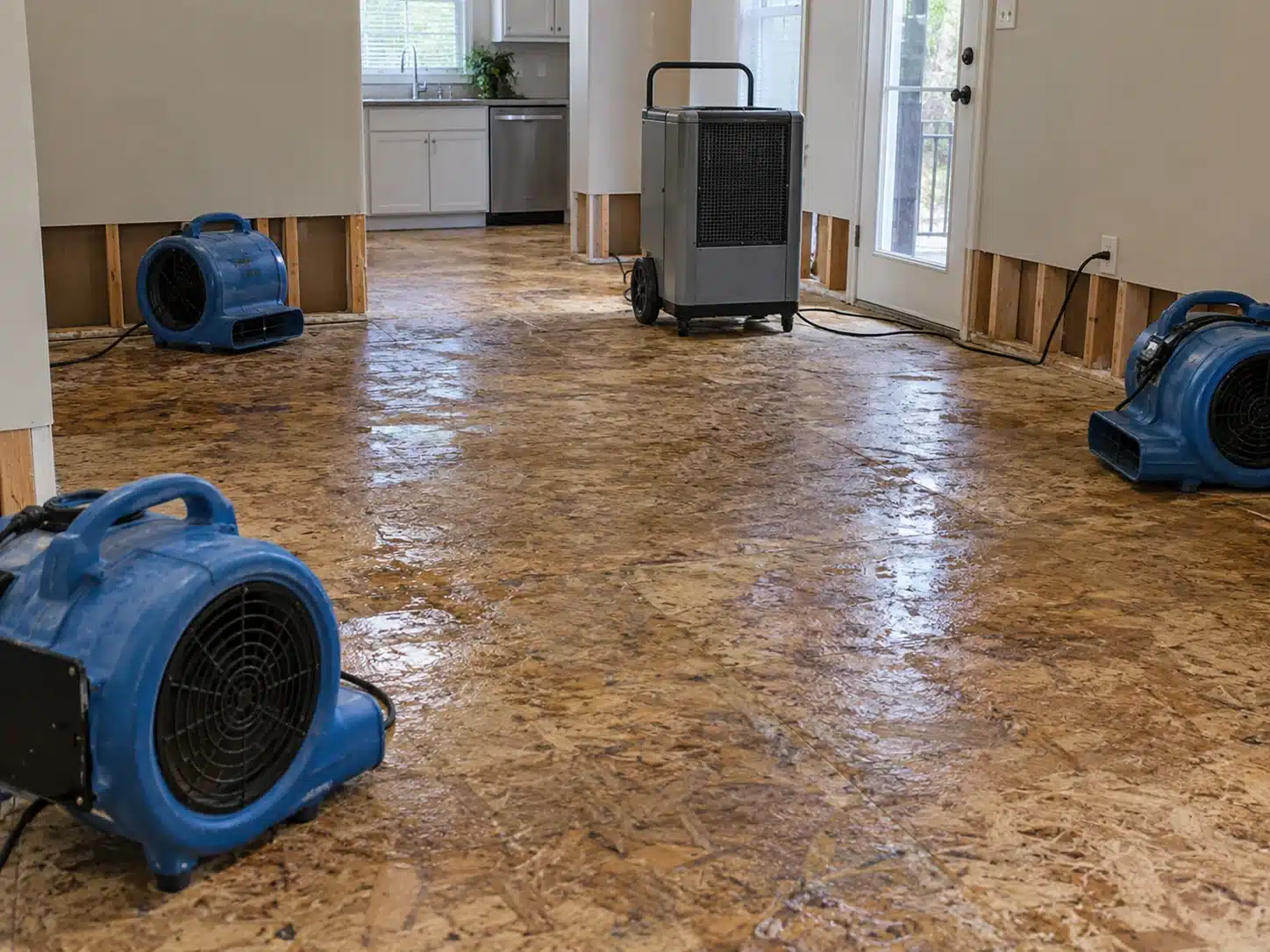
Drying Must Reach the Actual Wet Material
Running a household fan across the finished floor does not necessarily dry the subfloor. Flooring, padding, underlayment, vapor-resistant finishes, cabinets, and adhesives may restrict evaporation.
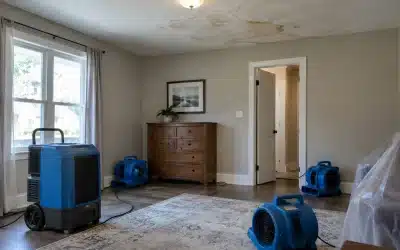
Effective drying may require removal of finished flooring, air movement above or below the assembly, dehumidification, or access through a basement, crawl space, or lower ceiling.
How Do Plywood and OSB Respond to Water Damage?
Plywood and oriented strand board are both common subfloor materials, but they can respond differently to water exposure.
Plywood
Plywood consists of multiple wood veneers bonded together. Limited moisture exposure may sometimes be dried successfully when the panels remain flat and bonded.
Replacement becomes more likely if the layers separate, edges swell significantly, or the panel loses strength.
OSB
Oriented strand board consists of wood strands bonded with resin. OSB can absorb water at panel edges and may swell after prolonged exposure.
Some swelling may remain even after drying, especially when the edges have expanded significantly. Material condition should be evaluated before new flooring is installed.
Material Type Alone Does Not Decide the Outcome
Neither plywood nor OSB automatically requires replacement after becoming wet. The decision depends on exposure duration, contamination, structural condition, swelling, delamination, mold, and drying performance.
How Does Moisture Become Trapped Under Flooring?
Water can move through seams, perimeter gaps, floor penetrations, damaged grout, appliance openings, and plumbing penetrations before reaching the subfloor.
Once underneath the finished floor, evaporation may be restricted.
Materials That Can Trap Moisture Include:
- Vinyl flooring
- Laminate
- Engineered flooring
- Hardwood
- Carpet padding
- Tile and underlayment
- Flooring membranes
- Cabinet bases
- Built-in vanities
Water can remain concealed even after the visible surface feels dry.
McMahon Services discusses this problem further in its guide to mold under flooring after a water leak.
What Should You Do After Discovering a Wet Floor or Subfloor?
-
Stop the water source when it is safe.
Shut off the leaking fixture, appliance, or plumbing supply when possible and arrange repair of the original source.
-
Use electrical caution.
Do not enter standing water when outlets, appliances, extension cords, or electrical equipment may be involved.
-
Document the damage.
Photograph standing water, flooring changes, appliances, plumbing fixtures, cabinets, baseboards, and nearby rooms.
-
Move unaffected contents.
Relocate furniture, rugs, electronics, boxes, and other items if they can be moved safely.
-
Arrange water extraction.
Standing water should be removed promptly to reduce additional absorption into flooring and structural materials.
-
Request moisture testing.
Professional inspection can help determine whether the finished floor, underlayment, subfloor, walls, or adjoining rooms remain wet.
-
Determine whether flooring needs to be lifted or removed.
Access may be necessary when water is trapped beneath hardwood, laminate, vinyl, carpet, tile, or other floor systems.
McMahon Services provides water and sewage damage restoration for water extraction, moisture inspection, structural drying, damaged-material removal, and restoration.
Safety Warning: Do not remove flooring or subfloor materials if electrical hazards, sewage contamination, unstable flooring, mold, asbestos-containing materials, or unknown structural conditions may be present. Professional evaluation may be necessary before demolition begins.
What Mistakes Should You Avoid With a Wet Subfloor?
- Do not assume the subfloor is dry because the finished floor looks dry. Moisture may remain trapped beneath the surface.
- Do not install new flooring over elevated moisture. Trapped moisture can damage the replacement materials.
- Do not ignore soft or spongy areas. These may indicate structural deterioration.
- Do not rely only on household fans. Airflow may not reach moisture trapped beneath flooring or cabinets.
- Do not cover odor with cleaning products or fragrance. Persistent odor may indicate trapped moisture or microbial growth.
- Do not assume every wet subfloor needs demolition. Structurally sound material may sometimes be dried.
- Do not assume every wet subfloor can be saved. Swollen, contaminated, delaminated, or deteriorated materials may require replacement.
- Do not discard damaged flooring before documentation. Photographs and material records may be useful for insurance review.
How Is a Wet Subfloor Professionally Tested for Moisture?
Professional moisture inspection helps identify the extent of the water damage and monitor drying progress.
1. Visual Inspection
Technicians look for buckling, cupping, swelling, discoloration, separated seams, loose flooring, soft areas, odor, and other signs of water exposure.
2. Moisture Measurements
Moisture meters may be used to compare affected flooring and subfloor materials with nearby areas that were not exposed to water.
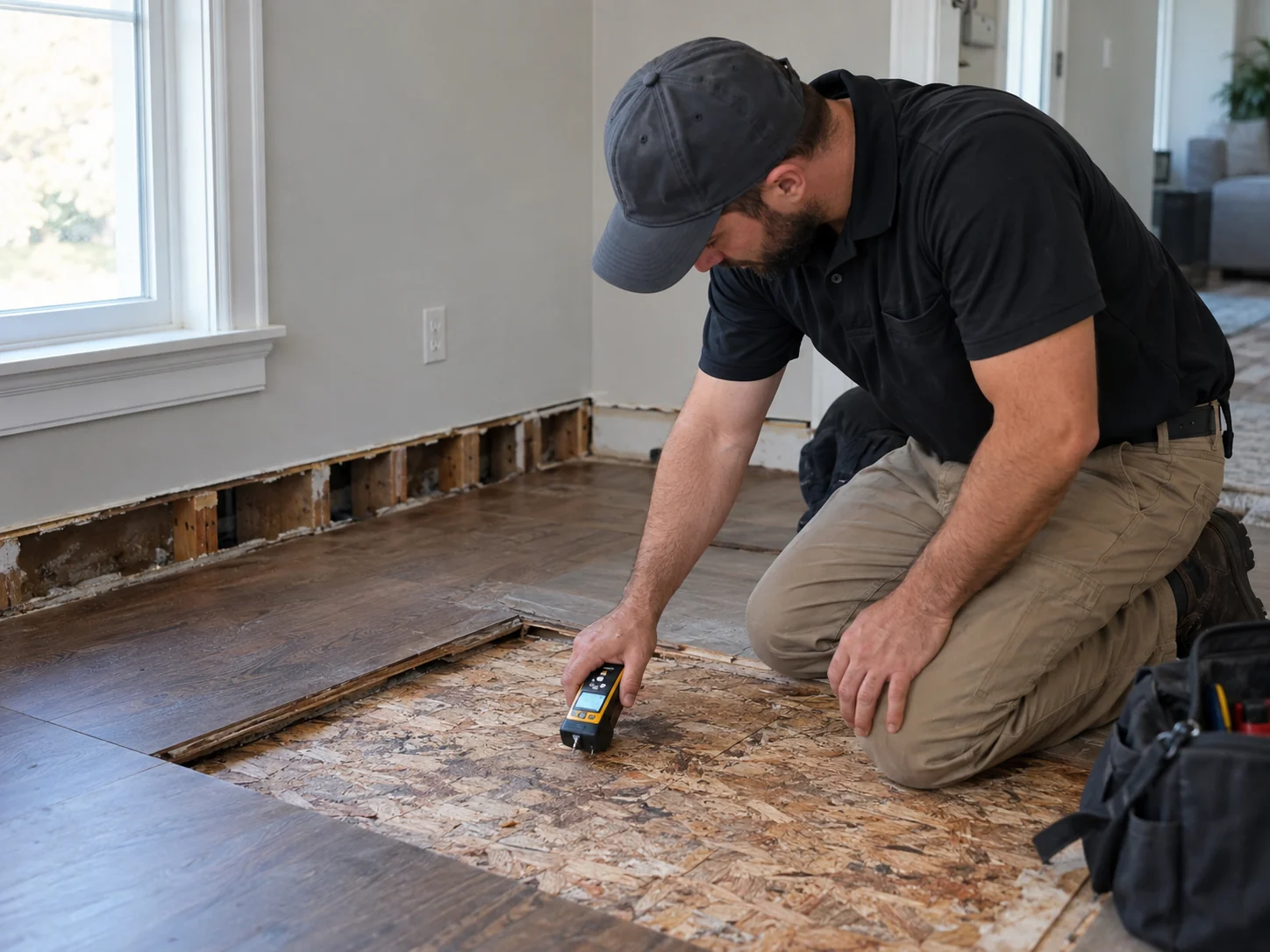
3. Comparison With Unaffected Materials
Readings are often evaluated relative to similar dry materials elsewhere in the structure rather than interpreted as a single universal number.
4. Inspection From Below When Accessible
Basements, crawl spaces, or lower-level ceilings may provide access to the underside of the subfloor. This can help identify staining, swelling, damp framing, or water pathways.
5. Repeated Monitoring
Moisture conditions may be checked during the drying process to determine whether affected materials are responding or whether additional access or removal is necessary.
A Moisture Meter Does Not Determine Structural Strength by Itself
Moisture readings are important, but they are only one part of the evaluation. Material firmness, swelling, delamination, fastener condition, contamination, and structural performance should also be considered.
How Is a Wet Subfloor Professionally Dried?
The drying approach depends on the floor covering, water source, amount of water, access, and condition of the subfloor.
1. Stop the Source
The plumbing leak, appliance failure, flood source, or other water problem must be corrected before drying can be completed.
2. Extract Standing Water
Visible water is removed from the floor and adjoining areas.
3. Create Access to Wet Materials
Carpet, padding, laminate, vinyl, hardwood, underlayment, or other materials may need to be lifted or removed when they prevent the subfloor from drying.
4. Establish Air Movement and Dehumidification
Professional drying equipment may be used to move moisture from wet materials into the air, while dehumidification removes moisture from the environment.
5. Dry From Above or Below
Depending on the construction, drying may occur from the finished-floor side, from a basement or crawl space below, or from both directions.
6. Monitor Moisture Levels
Drying should continue until retained materials reach an appropriate condition based on the building, material, and comparison readings.
How Is a Water-Damaged Subfloor Replaced?
When the subfloor is too damaged to retain, removal must be coordinated with flooring demolition, structural inspection, drying, and reconstruction.
1. Remove the Finished Flooring
Hardwood, laminate, vinyl, tile, carpet, or other flooring is removed as needed to expose the affected area.
2. Identify the Complete Damage Boundary
The repair area should extend far enough to reach structurally sound, dry material and provide proper support for replacement panels.
3. Remove Damaged Subfloor Panels
Swollen, soft, delaminated, mold-affected, contaminated, or structurally compromised sections are removed.
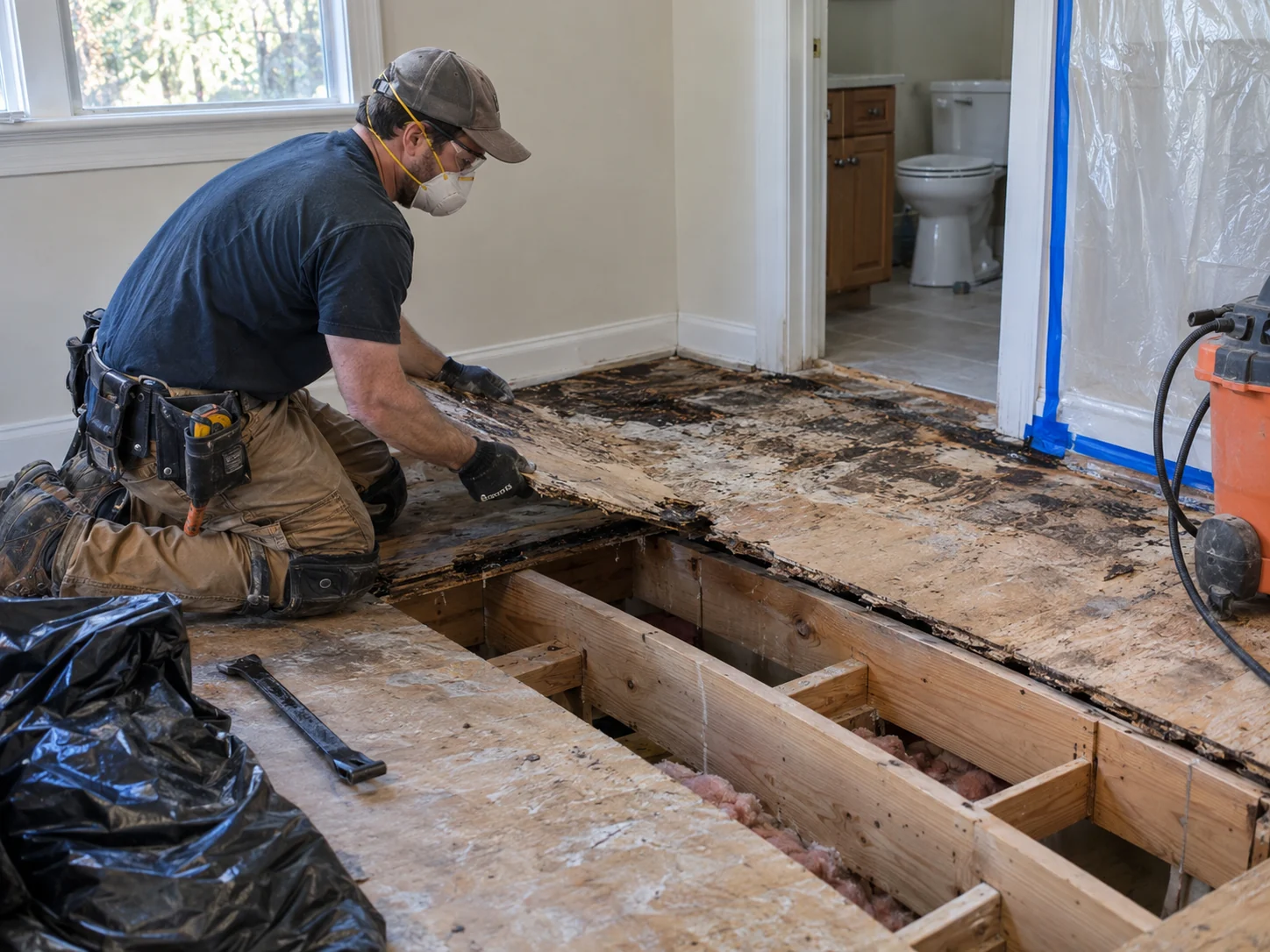
4. Inspect Floor Joists and Framing
Exposed framing should be evaluated for elevated moisture, staining, mold, deterioration, and structural damage.
5. Dry and Repair the Structure
Retained framing should be dried before new structural panels are installed. Damaged supports, blocking, or joists may require repair when necessary.
6. Install New Subfloor
Replacement panels are installed with appropriate support, fastening, thickness, and layout for the floor system.
7. Restore the Finished Floor
After the subfloor is restored and the assembly is ready, hardwood, tile, carpet, vinyl, laminate, or other flooring can be installed.
McMahon Services provides cleanup and rebuilding after water damage when the project requires both mitigation and permanent reconstruction.
Which Flooring Materials May Be Saved or Need Replacement?
| Material | May Be Retained When | Replacement Is More Likely When |
|---|---|---|
| Plywood subfloor | Firm, bonded, structurally sound, and able to dry completely | Delaminated, soft, permanently warped, mold-affected, contaminated, or structurally weakened |
| OSB subfloor | Limited swelling, structurally sound, and drying appropriately | Severe edge swelling, crumbling, permanent distortion, contamination, or loss of strength |
| Hardwood flooring | Limited clean-water exposure and boards can be dried without permanent damage | Severe buckling, splitting, contamination, extensive mold, or permanent distortion |
| Laminate flooring | Very limited exposure with no swelling or joint damage | Swollen cores, separated edges, bubbling, or trapped water beneath panels |
| Carpet and padding | Clean-water exposure and materials can be properly cleaned and dried | Contamination, prolonged saturation, mold, odor, or material deterioration |
| Tile | Tile remains bonded and the substrate can be dried without removal | Loose tile, damaged underlayment, trapped moisture, or subfloor removal is necessary |
Material decisions should be based on contamination, structural condition, drying potential, dimensional stability, and whether the flooring system can be restored reliably.
How Long Does Wet Subfloor Drying or Replacement Take?
There is no universal timeline. A small clean-water leak discovered quickly may require a shorter drying period than a long-term appliance leak or flood affecting multiple flooring layers and rooms.
| Timeline Factor | Why It Matters |
|---|---|
| Water source | Plumbing, appliance, roof, or sewage issues must be corrected before restoration is completed. |
| Length of exposure | Longer exposure increases absorption and the likelihood of structural deterioration. |
| Flooring type | Tile, hardwood, laminate, vinyl, and carpet require different access and drying methods. |
| Subfloor material | Plywood and OSB respond differently to prolonged moisture and swelling. |
| Drying progress | Replacement flooring should not be installed over materials that remain wet. |
| Reconstruction scope | Subfloor replacement, flooring installation, trim work, and cabinet repairs can extend the project. |
The project should progress based on source correction, moisture conditions, structural integrity, and reconstruction requirements rather than a fixed number of days.
What Affects the Cost of Wet Subfloor Repair or Replacement?
The restoration cost depends on the complete water-damage scope, not only the square footage of subfloor that appears wet.
Common cost factors include:
- The water source and plumbing or appliance repair required
- The number of rooms affected
- The type of finished flooring
- Whether flooring can be saved or must be removed
- The amount of subfloor requiring replacement
- Whether floor joists or framing are wet or damaged
- Contamination or mold remediation requirements
- Cabinets, vanities, or built-ins that restrict access
- Water extraction and structural drying
- Flooring reconstruction and finish work
A relatively small leak can become a larger project when water spreads beneath cabinets or flooring across several rooms. A larger visible wet area may sometimes be more accessible and easier to dry.
A site-specific evaluation is necessary before developing a reliable repair scope.
What Should You Document for an Insurance Claim?
Insurance coverage depends on the policy and cause of loss. Sudden accidental water damage may be treated differently from long-term seepage, maintenance problems, repeated leaks, or groundwater intrusion.
When conditions are safe, document:
- The date and time the water damage was discovered
- The suspected source of the leak or flood
- Visible standing water
- Damaged flooring and baseboards
- Soft, swollen, or buckled floor areas
- Appliances, plumbing fixtures, or cabinets involved
- Moisture readings and drying records
- Photographs before flooring removal
- Photographs of the exposed subfloor
- Materials removed and why they could not be retained
- Plumbing or appliance repair invoices
- Restoration and reconstruction estimates
Do not discard significant flooring or structural materials before documenting them unless immediate removal is required for safety or contamination control.
Why Is Wet Subfloor Damage a Concern in Northern Illinois and Southern Wisconsin?
Homes and businesses throughout Hainesville, Lake County, Northern Illinois, Southern Wisconsin, and surrounding communities face several conditions that can lead to water reaching flooring and subfloor systems.
Regional risks include:
- Frozen and burst plumbing pipes
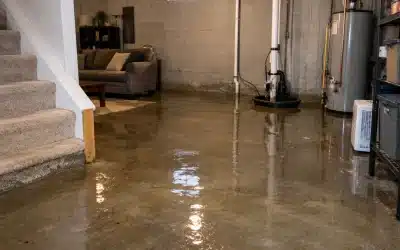
- Basement flooding during heavy rain
- Sump pump failures
- Snowmelt and storm-related water intrusion
- Appliance and plumbing failures in older homes
- Seasonal humidity and condensation issues
- Water intrusion affecting hardwood and finished basements
Winter plumbing failures may release water into kitchens, bathrooms, basements, or upper-floor rooms. Heavy rain and sump pump failures can also saturate basement floor systems and finished spaces.
McMahon Services provides water damage restoration, structural drying, flooring evaluation, and cleanup and rebuild services throughout Northern Illinois, Southern Wisconsin, and surrounding service areas.
Professional Tip: Before installing replacement flooring, confirm that the water source has been repaired, the subfloor is structurally sound, affected materials have reached an appropriate dry condition, and any swollen, contaminated, or deteriorated sections have been addressed.
Get Help With a Wet or Water-Damaged Subfloor
A wet subfloor may be dried and retained in some situations, while other losses require partial or complete removal. The correct approach depends on contamination, moisture levels, material condition, structural integrity, flooring access, and how quickly the water damage is addressed.
McMahon Services & Construction Corp can coordinate water extraction, moisture testing, structural drying, flooring removal, mold remediation when necessary, damaged subfloor replacement, and reconstruction.
McMahon Services serves homes and businesses throughout Hainesville, Lake County, Northern Illinois, Southern Wisconsin, and surrounding communities.
Call McMahon Services at (847) 566-4568 for 24/7 help with wet subfloors, water-damaged flooring, structural drying, subfloor replacement, and property restoration.
Frequently Asked Questions About Wet Subfloors
Does a wet subfloor always need to be replaced?
No. A subfloor may sometimes be dried and retained when the water is clean, exposure is limited, the material remains structurally sound, and moisture levels return to an appropriate condition. Replacement is more likely when the material is swollen, soft, delaminated, contaminated, mold-affected, or structurally weakened.
How can I tell if my subfloor is damaged?
Possible signs include soft or spongy areas, swelling, uneven floors, buckling or separating finished flooring, musty odor, visible mold, and elevated moisture readings. In some cases, the finished flooring must be removed before the subfloor can be fully evaluated.
Can plywood subfloor dry after a water leak?
Yes, plywood may sometimes dry successfully when the exposure is limited and the layers remain bonded and structurally sound. Delaminated, warped, contaminated, or significantly deteriorated plywood may require replacement.
Can OSB subfloor be saved after getting wet?
Sometimes. OSB may be retained when swelling is limited, the panel remains structurally stable, and drying is successful. Severe edge swelling, crumbling, permanent distortion, or contamination can make replacement more appropriate.
How do professionals check moisture in a subfloor?
Professionals may use moisture meters, visual inspection, comparison readings, and access from above or below the floor assembly. Moisture measurements are considered along with swelling, softness, delamination, odor, contamination, and structural condition.
Can mold grow under flooring after a leak?
Yes. Mold may develop when subflooring, underlayment, flooring, dust, or other materials remain damp. Moisture can be trapped beneath flooring even when the visible surface appears dry.
Can new flooring be installed over a previously wet subfloor?
New flooring should not be installed until the water source has been repaired and the retained subfloor has reached an appropriate dry condition. Damaged, swollen, contaminated, or structurally unsound sections should be repaired or replaced first.
Who should I call for a wet or damaged subfloor?
A water damage restoration company can evaluate moisture, drying needs, contamination, flooring removal, and structural damage. When replacement is necessary, reconstruction work may include subfloor panels, finished flooring, trim, cabinets, and related repairs. McMahon Services can coordinate both water damage restoration and rebuilding.




0 Comments