
Can Mold Grow Inside Walls After a Plumbing Leak?
Mold inside walls can develop when a plumbing leak wets drywall, insulation, wood framing, dust, wallpaper, or other materials inside a concealed wall cavity. The leak may come from a supply pipe, drainpipe, plumbing connection, appliance line, shower valve, toilet connection, or pipe that develops condensation.
The wall surface may look dry while moisture remains behind the drywall. Because wall cavities have limited airflow, wet materials may dry slowly and create conditions where mold can grow. The first warning signs may be a musty odor, recurring stain, bubbling paint, softened drywall, warped baseboard, or unexplained moisture near a plumbing fixture.
Repairing the pipe stops additional water, but it does not automatically dry or restore materials that were already affected. The wall, insulation, framing, flooring, and adjoining rooms should be evaluated before the opening is patched or repainted.
Quick Answer
Mold inside walls may be present when a plumbing leak has remained active or concealed long enough to wet drywall, insulation, framing, or nearby flooring. Possible signs include a musty odor with no visible source, recurring wall stains, bubbling paint, soft drywall, warped trim, and elevated moisture readings. Stop the leak, document the damage, avoid cutting into suspected mold without precautions, and arrange professional moisture inspection and remediation when the affected area is concealed, extensive, or recurring.
Key Takeaways
- A wall can appear dry while insulation, framing, or the back of the drywall remains wet.
- Slow plumbing leaks may cause more concealed damage than a brief visible spill.
- A musty odor without visible growth may indicate hidden moisture or mold.
- Moisture meters can identify damp materials, but they do not identify mold species.
- Cutting open a wall without containment may release contaminated dust into the room.
- Drywall, insulation, and other porous materials may require removal when they are mold-affected or deteriorated.
- Cleaning visible growth without repairing the leak and drying the wall allows the problem to return.
- Drying, remediation, plumbing repairs, and reconstruction should be coordinated before the wall is closed.
Table of Contents
- How mold grows inside walls
- Plumbing problems that can wet wall cavities
- Where water may travel inside a wall
- Warning signs of hidden wall mold
- Wall materials that may be affected
- What to do after discovering a leak
- Mistakes to avoid
- When a wall may need to be opened
- Whether mold testing is necessary
- How professional remediation works
- What may be saved or removed
- How long remediation and repairs may take
- What affects the restoration cost
- Insurance documentation considerations
- Northern Illinois and Southern Wisconsin risks
- Frequently asked questions
How Does Mold Grow Inside Walls?
Mold spores are naturally present in indoor and outdoor environments. Indoor mold growth becomes a concern when moisture reaches materials that can support growth and remains there.
A wall cavity may contain several materials that absorb or retain moisture:
- Drywall paper facing
- Wood studs and framing
- Fiberglass or cellulose insulation
- Wallpaper and adhesive
- Dust and organic debris
- Wood or composite baseboards
- Paper-backed vapor barriers or coverings
- Flooring and subflooring at the base of the wall
The U.S. Environmental Protection Agency identifies the back of drywall, wallpaper, paneling, and wall areas around leaking or condensing pipes as possible locations for hidden mold.
Review the EPA guide to hidden mold and household moisture.
Wall Cavities Have Limited Airflow
A small surface spill may dry through normal airflow. Water inside a closed wall behaves differently. Insulation, drywall, paint, wallpaper, cabinets, tile, and other finishes can slow evaporation.
The room-facing side of the wall may feel dry while the back of the drywall or surrounding insulation remains damp. This concealed moisture can support mold and gradually damage the materials.
A Slow Leak Can Remain Hidden for Weeks
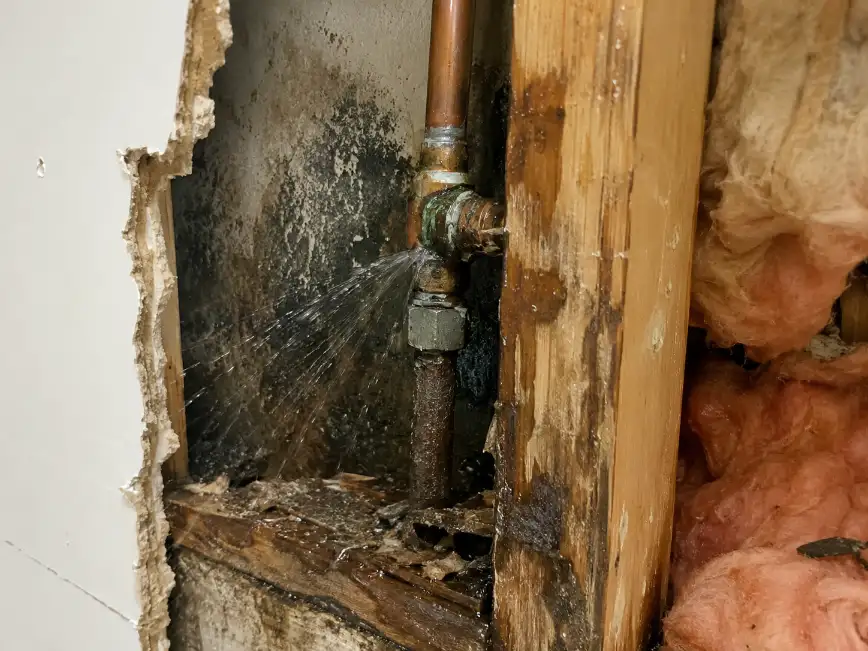
A burst pipe usually creates an obvious emergency. A loose fitting, corroded pipe, leaking valve, or damaged drain connection may release only a small amount of water at a time.
Slow leaks can remain unnoticed because water is absorbed by insulation, drywall, wood, or flooring before it reaches the visible surface. The first sign may be an odor or a stain rather than active dripping.
Pipe Condensation Can Also Wet Walls
Cold-water pipes can collect condensation when humid air reaches their surface. If the pipe is inside a wall, repeated condensation may wet insulation, drywall, or framing without a broken pipe.
Insulation, air sealing, indoor humidity, and pipe temperature may all contribute. The correct solution depends on distinguishing condensation from an active plumbing leak.
Which Plumbing Problems Can Cause Hidden Wall Mold?
Plumbing lines and connections are commonly routed through kitchens, bathrooms, laundry rooms, utility spaces, basements, and ceilings. A failure can release water directly into concealed areas.
Common Sources Include:
- Leaking hot- or cold-water supply pipes
- Corroded copper, galvanized, or other piping
- Loose fittings and connections
- Damaged shower valves or bathtub plumbing
- Toilet supply-line and flange leaks
- Sink drain or supply-line leaks
- Dishwasher and refrigerator supply lines
- Washing-machine plumbing connections
- Frozen and burst pipes
- Drainpipes leaking inside walls or ceilings
- Condensate drain failures
- Pipes that repeatedly collect condensation
McMahon Services provides 24/7 emergency plumbing services for supply leaks, frozen pipes, burst pipes, sewage concerns, and related water damage.
Supply-Line Leaks and Drain Leaks Are Different
A pressurized supply line can continue releasing water until the line is shut off or repaired. Even a small opening may produce significant concealed water damage.
A drainpipe may leak only when a sink, shower, toilet, dishwasher, or washing machine is used. This intermittent pattern can make the source harder to identify.
Water from a sanitary supply line may initially present different contamination concerns from water released through a drain or sewage system. However, water condition can change after it contacts dirty cavities, insulation, flooring, or other materials.
Plumbing Fixtures Can Leak Into Adjacent Rooms
A shower leak may first appear as a stain in a hallway or closet. A kitchen pipe may wet the wall behind a cabinet. An upper-floor bathroom leak may appear in the ceiling below.
The visible stain is not always directly beside the plumbing failure because water can follow pipes, framing, seams, and low areas before becoming visible.
Where Can Water Travel Inside a Wall?
Water follows gravity and the path of least resistance. Once it enters a wall cavity, it may travel vertically and horizontally through framing, insulation, drywall seams, utility openings, and floor assemblies.
Concealed water may affect:
- The back of the drywall
- Wood studs, plates, and blocking
- Fiberglass, cellulose, or foam insulation
- Electrical boxes and wiring pathways
- Baseboards and trim
- Carpet and carpet padding
- Hardwood, laminate, vinyl, or tile flooring
- Underlayment and subflooring
- Cabinets, vanities, and built-in furniture
- The ceiling on the level below
- Rooms on the opposite side of the wall
The Visible Stain May Be Far From the Leak
Water may run along a pipe, floor joist, wall stud, or ceiling component before reaching the finished surface. A stain several feet from a plumbing fixture may still be connected to that fixture.
This is why repairing only the area where the stain appears may not address the original source or the complete moisture boundary.
Insulation Can Hold Moisture Against Framing
Wet insulation can slow drying and keep drywall and wood materials damp. It may also conceal the extent of a leak from both sides of the wall.
When insulation cannot be dried, cleaned, or evaluated in place, controlled wall access may be required.
Water Can Reach the Floor Assembly
Water moving down a wall often collects near the bottom plate, baseboard, flooring edge, and subfloor. A wall leak can therefore create flooring damage even when no large puddle appears.
McMahon Services explains how hidden water may move through walls, insulation, ceilings, and flooring in its guide to hidden water damage and warning signs.
What Are the Warning Signs of Mold Behind Drywall?
Hidden mold may not be visible from the room. Homeowners should look for patterns involving odor, wall condition, plumbing use, and recurring moisture.
Possible Warning Signs Include:
- A persistent musty or earthy odor
- Odor that becomes stronger near a bathroom, kitchen, or laundry wall
- Yellow, brown, gray, or dark wall stains
- Paint that bubbles, blisters, cracks, or peels
- Wallpaper that lifts or separates
- Drywall that feels soft, swollen, cool, or damp
- Warped or separating baseboards
- Recurring staining after painting
- Visible mold near a plumbing penetration
- Water appearing when a particular fixture is used
- Higher moisture readings compared with nearby walls
- Flooring damage along the base of the wall
- Unexplained humidity in a cabinet, closet, or enclosed room
A Musty Smell Without Visible Mold Matters
The EPA notes that hidden mold may be suspected when a building smells moldy but the source cannot be seen, particularly when there has been water damage.
Air fresheners, scented sprays, candles, and paint may cover the smell temporarily. They do not correct the leak, dry the wall, or remove affected materials.
Recurring Stains Usually Indicate an Unresolved Problem
A stain that returns after painting may mean the leak is still active, the wall was not fully dried, or damaged materials remain behind the finish.
Before repainting, the source should be corrected and the wall should be evaluated for moisture, deterioration, and mold.
Mold Color Does Not Identify the Species
Black, green, gray, brown, white, or orange growth may appear on damp materials. Color alone does not reliably identify the mold species or determine the complete extent of contamination.
The practical priorities are finding the moisture source, identifying the affected materials, controlling disturbance, and determining what can be cleaned or must be removed.
Which Wall Materials May Be Affected?
| Material | Possible Damage | Restoration Consideration |
|---|---|---|
| Drywall | Staining, swelling, softening, damaged paper facing, crumbling, and mold growth | Sound drywall may sometimes be dried. Deteriorated or mold-affected sections may require controlled removal. |
| Fiberglass insulation | Water retention, reduced performance, debris, odor, and contamination | Wet or contaminated insulation may require removal to inspect and dry the cavity. |
| Cellulose insulation | Absorption, settling, prolonged dampness, odor, and microbial growth | Saturated or mold-affected material may be difficult to restore in place. |
| Wood framing | Elevated moisture, staining, mold growth, swelling, and deterioration after prolonged exposure | Structurally sound framing may be cleaned and dried after access is created. |
| Wallpaper and adhesive | Peeling, staining, trapped moisture, odor, and hidden growth on the reverse side | Removal may release spores when mold is present underneath, so controlled procedures may be needed. |
| Baseboards and trim | Swelling, warping, finish failure, separation, and mold growth | Sound wood may be restorable. Swollen composite trim may require replacement. |
| Electrical components | Water exposure, corrosion, damaged insulation, and unsafe operation | Affected outlets, switches, wiring, and boxes require qualified electrical evaluation. |
| Flooring and subfloor | Swelling, staining, adhesive failure, warping, odor, and mold growth | Inspection should extend beyond the wall when water reached the floor assembly. |
What Should You Do After Discovering a Plumbing Leak?
-
Stop the water source when it is safe.
Close the appropriate shutoff valve or stop using the affected fixture. Contact an emergency plumber when the source cannot be safely isolated.
-
Use electrical caution.
Do not touch wet outlets, switches, fixtures, appliances, or exposed wiring. Do not enter standing water when electrical equipment may be involved.
-
Document the visible condition.
Photograph stains, dripping water, peeling paint, damaged flooring, plumbing fixtures, baseboards, cabinets, and adjacent rooms.
-
Note when the moisture appears.
Record whether water appears continuously or only when a shower, sink, toilet, dishwasher, or washing machine is used.
-
Move unaffected contents away.
Relocate furniture, boxes, rugs, electronics, and personal belongings when they can be moved safely.
-
Arrange water extraction when needed.
Visible standing water should be removed promptly. McMahon Services provides professional water extraction and moisture inspection for affected rooms and structural materials.
-
Inspect connected areas.
Check the opposite side of the wall, the room below, cabinets, closets, flooring edges, and nearby baseboards.
-
Request professional evaluation for concealed damage.
Recurring odor, visible mold, wet insulation, soft drywall, electrical involvement, or an unknown moisture boundary should be professionally assessed.
Safety Warning: Do not cut into a wall that may contain electrical wiring, plumbing, mold, contaminated water, or structural damage. Avoid disturbing extensive or concealed mold growth without suitable containment and protective procedures.
What Mistakes Should You Avoid?
- Do not patch the wall immediately after repairing the pipe. The cavity and surrounding materials must be inspected and dried first.
- Do not paint over stains or visible mold. Paint does not repair the leak or remove affected materials.
- Do not assume the wall is dry because the surface feels dry. Moisture may remain behind the drywall or inside insulation.
- Do not drill random holes into the wall. Hidden wiring, pipes, contaminated materials, and structural components may be present.
- Do not use a household fan on visible or suspected mold. Uncontrolled airflow may spread contaminated dust into adjoining areas.
- Do not rely only on bleach. Applying a chemical does not dry the wall cavity or remove mold from damaged porous materials.
- Do not remove mold-affected wallpaper carelessly. Growth on the reverse side may be disturbed and released into the room.
- Do not install new baseboards or flooring over damp materials. Concealed moisture can create recurring damage.
- Do not discard damaged materials before documentation. Photographs and samples may help with repair matching and insurance review.
Does the Wall Need to Be Opened?
Not every leak requires extensive demolition. Limited water exposure may sometimes be inspected and dried without removing a large section of drywall.
Controlled wall access may be necessary when:
- Insulation inside the wall is wet
- Drywall is soft, swollen, crumbling, or mold-affected
- A musty odor remains after the leak is repaired
- Moisture readings remain elevated
- Visible growth appears around openings or baseboards
- The plumbing repair requires access inside the wall
- Water reached electrical boxes or wiring
- The complete moisture boundary cannot be confirmed
- Wallpaper or wall coverings conceal affected surfaces
- Water or mold is suspected on both sides of the drywall
Controlled Access Is Different From Random Demolition
A professional may select an access location based on moisture readings, plumbing layout, visible damage, wall construction, and safety conditions.
The goal is to expose affected materials while limiting unnecessary damage and controlling the spread of dust or mold.
Baseboard Removal May Reveal Additional Damage
Removing a baseboard may expose the bottom edge of drywall, wall plates, flooring, and moisture staining. However, baseboard access may not be enough when wet insulation or mold extends higher inside the cavity.
Cabinets and Tile Can Restrict Access
Kitchen and bathroom walls may be covered by cabinets, vanities, backsplashes, tile, shower surrounds, or mirrors. These finishes can conceal moisture and complicate wall access.
The restoration plan may require coordination among plumbers, remediators, electricians, cabinet professionals, tile installers, and reconstruction contractors.
Is Mold Testing Necessary Before Remediation?
Mold testing is not automatically required in every situation. When visible growth is present and the moisture source is known, the priority may be correcting the water problem and properly removing affected materials.
The EPA states that when visible mold growth is present, sampling is usually unnecessary. There are also no federal limits for airborne mold that can be used to determine whether a building complies with a federal mold standard.
Review the EPA guidance on mold sampling and testing.
Testing or Independent Assessment May Be Considered When:
- The source of an odor is unclear
- No visible growth is present but hidden mold is suspected
- The affected boundary is disputed
- The property has complex occupancy or liability concerns
- A remediation protocol is required
- An insurance carrier or another party requests documentation
- Post-remediation verification is part of the project plan
Testing should have a clear purpose. A sample alone does not repair the leak, dry the structure, or remove contaminated materials.
A Moisture Meter Does Not Test for Mold
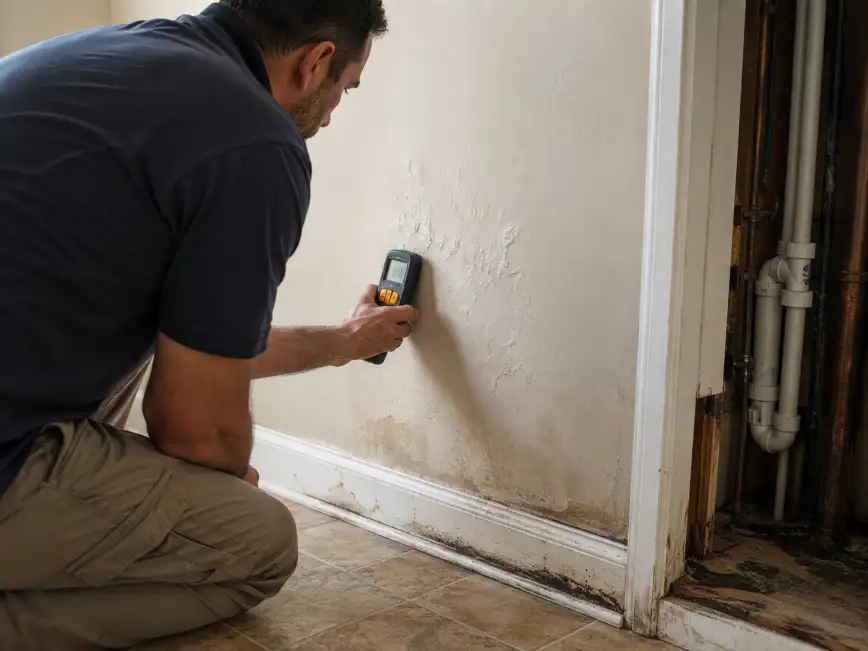
A moisture meter measures or estimates moisture conditions in specific materials. Elevated readings can help identify areas that require additional investigation.
The instrument does not identify mold species or confirm that mold is present. It is one tool used with visual observations, odor, building history, material condition, and professional judgment.
How Is Hidden Mold Inside a Wall Professionally Remediated?
Professional remediation should address the water source, affected materials, work-area protection, cleaning, drying, verification, and reconstruction.
The ANSI/IICRC S520-2024 mold remediation standard describes professional procedures and precautions for mold-affected structures, systems, and contents.
1. Safety and Initial Assessment
The property is evaluated for electrical hazards, contaminated water, damaged plumbing, unstable materials, affected occupants, and access limitations.
2. Plumbing Source Correction
The leaking pipe, connection, valve, drain, appliance line, or fixture must be repaired. Recurring condensation may require insulation, air sealing, humidity control, or another building-system correction.
3. Moisture Mapping
Technicians evaluate the wall, baseboards, flooring, cabinets, ceiling, adjoining rooms, insulation, and other possible water pathways.
Moisture readings help determine which areas require additional inspection, drying, or controlled access.
4. Work-Area Protection
Containment and air-management procedures may be established before mold-affected materials are disturbed. The scope depends on the location, extent, occupancy, and project conditions.
5. Controlled Wall Access
Drywall, baseboards, wallpaper, insulation, cabinets, or finishes may be opened or removed to expose the affected cavity.
Removal should extend as needed to reach damaged material and provide suitable access for cleaning and drying.
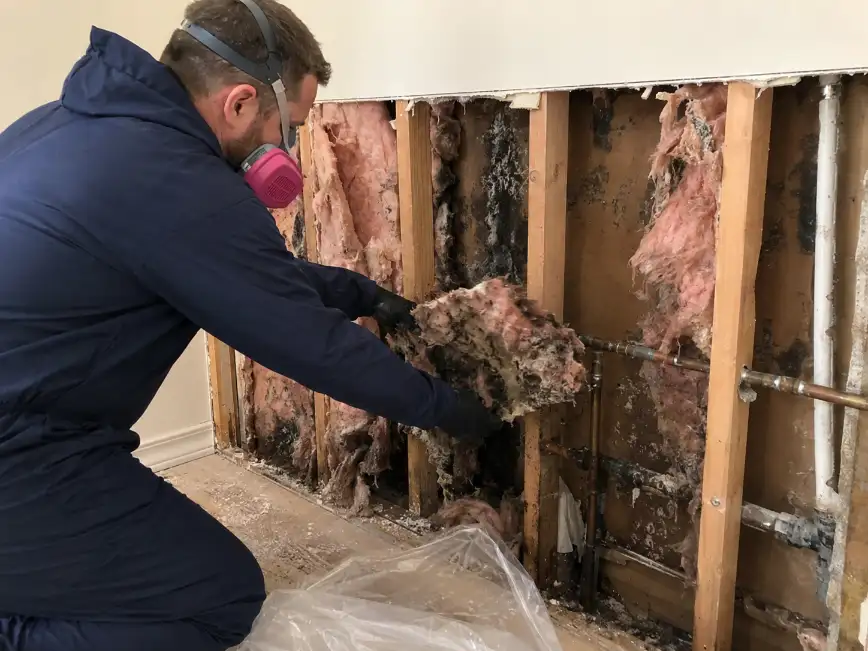
6. Removal of Materials That Cannot Be Restored
Mold-affected drywall, wet insulation, deteriorated trim, damaged composite materials, and other porous products may require controlled removal.
The EPA explains that mold can grow within the spaces and crevices of porous materials, making complete cleaning difficult or impossible in some cases.
Review the EPA basic mold-cleanup guidance.
7. Cleaning of Retained Materials
Structurally sound framing and other retained materials may be cleaned using procedures selected for the surface and project conditions.
HEPA-filtered equipment may be used as part of dust and particulate control. Simply killing mold without removing affected residue is not considered a complete solution.
8. Structural Drying
The wall cavity, framing, floor plate, flooring, subfloor, and adjacent materials must be dried before reconstruction.
Professional air movement and dehumidification may be used when appropriate, with moisture readings monitored throughout the drying process.
9. Inspection and Project Verification
Before rebuilding, the area is evaluated for remaining moisture, visible residue, damaged materials, and unresolved odor.
Some projects may include independent post-remediation verification based on the project requirements.
10. Reconstruction
After remediation and drying, removed insulation, drywall, baseboards, paint, flooring, cabinets, tile, and other finishes can be replaced.
McMahon Services provides cleanup and rebuilding after mold and water damage when the project requires both remediation and permanent construction repairs.
Which Materials Can Be Saved or May Need Removal?
Materials May Be More Likely to Be Retained When:
- They remain structurally sound
- Water exposure was limited and addressed promptly
- The surface is accessible for cleaning
- The material can be dried completely
- There is no significant deterioration or delamination
- Cleaning can remove visible residue without damaging the material
- Moisture readings show appropriate drying progress
Removal May Be More Likely When:
- Drywall is soft, swollen, crumbling, or mold-affected through the paper facing
- Insulation is wet, contaminated, compressed, or unable to dry
- Composite trim or cabinets are swollen and structurally weakened
- Wallpaper conceals extensive growth
- Flooring or subflooring is deteriorated or mold-affected
- Sewage or contaminated water entered porous materials
- Persistent odor remains inside the material
- The material prevents access to affected framing or plumbing
Material decisions should be based on condition, water source, contamination, accessibility, construction, and the ability to clean and dry the item safely.
How Long Does Hidden Wall Mold Remediation Take?
There is no universal timeline. A small plumbing leak affecting one limited wall cavity may require a shorter project than a slow leak that damaged multiple rooms, insulation, flooring, cabinets, and framing.
| Timeline Factor | Why It Matters |
|---|---|
| Leak location | Plumbing behind tile, cabinets, showers, or built-ins may be harder to access. |
| Length of exposure | A long-term leak may affect more materials and adjoining areas. |
| Affected materials | Drywall, insulation, wood, flooring, and cabinets have different cleaning and drying requirements. |
| Extent of mold growth | Growth affecting several cavities or rooms requires a broader remediation plan. |
| Plumbing repairs | The source must be repaired before drying and reconstruction can be completed. |
| Drying progress | Rebuilding should wait until retained materials reach an appropriate dry condition. |
| Verification requirements | Independent assessment or post-remediation verification may add project stages. |
| Reconstruction scope | Replacing tile, cabinets, flooring, drywall, and paint extends the overall project. |
The completion date should be based on source correction, remediation, drying results, verification, and reconstruction requirements rather than a predetermined number of days.
What Affects the Cost of Hidden Wall Mold Removal?
The cost depends on the complete restoration scope, not only the visible size of the stain.
Common cost factors include:
- The plumbing repair required
- The number of affected walls and rooms
- Whether ceilings or floors are also affected
- The amount of drywall and insulation requiring removal
- Cabinet, tile, countertop, or fixture removal
- Containment and air-management requirements
- Water extraction and structural drying
- Electrical or HVAC involvement
- Independent assessment or verification
- Flooring, drywall, trim, tile, and paint reconstruction
- Accessibility and occupancy conditions
A small visible patch can still involve extensive work when the plumbing is behind a shower, cabinet, or finished wall. A larger visible area may be more accessible and easier to evaluate.
A site-specific inspection is required before providing a reliable restoration and reconstruction scope.
What Should You Document for an Insurance Claim?
Insurance coverage depends on the policy and cause of loss. A sudden pipe failure may be handled differently from long-term seepage, corrosion, repeated condensation, or maintenance-related leakage.
When conditions are safe, document:
- The apparent plumbing source
- The date and time the leak was discovered
- Visible water, stains, mold, and damaged materials
- Rooms located beside, below, and opposite the leak
- Damaged drywall, insulation, flooring, cabinets, and contents
- Plumbing repair invoices and reports
- Moisture readings and drying records
- Restoration and mold-remediation documentation
- Photographs before and after controlled wall access
- Materials removed and the reason they could not be retained
- Reconstruction estimates and repair records
- Temporary housing or loss-of-use expenses when applicable
Do not discard damaged drywall, flooring, insulation, trim, or contents before documenting them unless immediate removal is required for safety or contamination control.
The difference between emergency mitigation, restoration, and permanent repairs is explained in McMahon Services’ guide to water mitigation, restoration, and reconstruction.
Why Is Hidden Wall Mold a Concern in Northern Illinois and Southern Wisconsin?
Homes and businesses in Hainesville, Lake County, Northern Illinois, Southern Wisconsin, and surrounding communities experience seasonal conditions that can contribute to concealed plumbing and moisture problems.
Common regional risks include:
- Frozen and burst pipes during severe cold
- Pipes located inside poorly insulated exterior walls
- Condensation on cold plumbing lines
- Seasonal humidity changes
- Heating failures that expose plumbing to freezing temperatures
- Snowmelt or storm water entering wall assemblies
- Basement and crawl-space moisture affecting lower walls
- Older plumbing materials and connections
A frozen pipe may begin leaking only after it thaws. Water can then spread through an exterior wall, insulation, flooring, or ceiling before the failure is discovered.
During summer, warm humid air can contribute to condensation on cold pipes, especially in basements, utility rooms, wall cavities, and poorly ventilated areas.
McMahon Services provides professional mold removal and remediation services and 24/7 water damage restoration throughout Northern Illinois, Southern Wisconsin, and surrounding service areas.
Professional Tip: Repairing the pipe is only the first step. Before closing the wall, confirm that wet insulation has been addressed, affected materials have been cleaned or removed, and the framing, flooring, and wall cavity have reached an appropriate dry condition.
Get Help With Mold Inside Walls
Mold inside walls can remain concealed behind drywall, insulation, cabinets, tile, wallpaper, and baseboards after a plumbing leak. Surface cleaning and repainting will not correct moisture or contamination inside the cavity.
McMahon Services & Construction Corp can coordinate plumbing repairs, water extraction, moisture mapping, controlled wall access, mold remediation, structural drying, damaged-material removal, and reconstruction.
The team serves homes and businesses throughout Hainesville, Lake County, Northern Illinois, Southern Wisconsin, and surrounding communities.
Call McMahon Services at (847) 566-4568 for 24/7 help with plumbing leaks, hidden water damage, mold behind drywall, and property restoration.
Frequently Asked Questions About Mold Inside Walls
How can I tell whether mold is inside a wall?
Possible signs include a persistent musty odor, recurring water stains, bubbling paint, peeling wallpaper, soft drywall, warped baseboards, elevated moisture readings, and visible growth near plumbing openings. Professional inspection may be necessary because the affected materials can remain hidden.
How quickly can mold grow after a plumbing leak?
Mold growth can begin when wet materials remain damp, although the timing varies with temperature, moisture, material type, airflow, and other conditions. Water extraction and drying should begin as quickly as conditions safely allow.
Does drywall always need to be removed after a leak?
No. Drywall may sometimes be dried when exposure is limited, the material remains structurally sound, and no mold or contamination is present. Removal is more likely when drywall is soft, swollen, crumbling, mold-affected, or blocking access to wet insulation and framing.
Can a moisture meter find mold inside a wall?
A moisture meter can identify or estimate elevated moisture in building materials, but it does not detect mold or identify a mold species. Readings are used with visual observations, odor, water-loss history, material condition, and professional inspection.
Should I cut open the wall myself to look for mold?
Cutting into a wall may disturb mold, damaged materials, electrical wiring, plumbing, or contaminated water. Suspected concealed mold should be approached carefully, especially when the affected area is extensive, the wall contains utilities, or occupants have health concerns.
Can bleach remove mold from inside a wall?
Bleach applied to the visible surface does not reach hidden insulation, framing, or the back of drywall. It also does not repair the leak or dry the wall cavity. Mold-affected porous materials may require controlled removal rather than surface treatment.
Is mold testing necessary before hidden mold remediation?
Not always. When visible mold is present and the moisture source is known, testing may not be necessary. Testing or independent assessment may be considered when the source is unclear, the affected boundary is disputed, or project requirements call for a remediation protocol or verification.
Who should I call for suspected mold behind drywall?
Contact a professional mold remediation and water damage restoration company to evaluate concealed moisture, affected materials, containment, drying, and repairs. A plumber may also be needed to stop the original leak, while electricians and reconstruction contractors may be involved when utilities or finishes are damaged.




0 Comments